
Four Treasures Reference Database
Record No. 27528
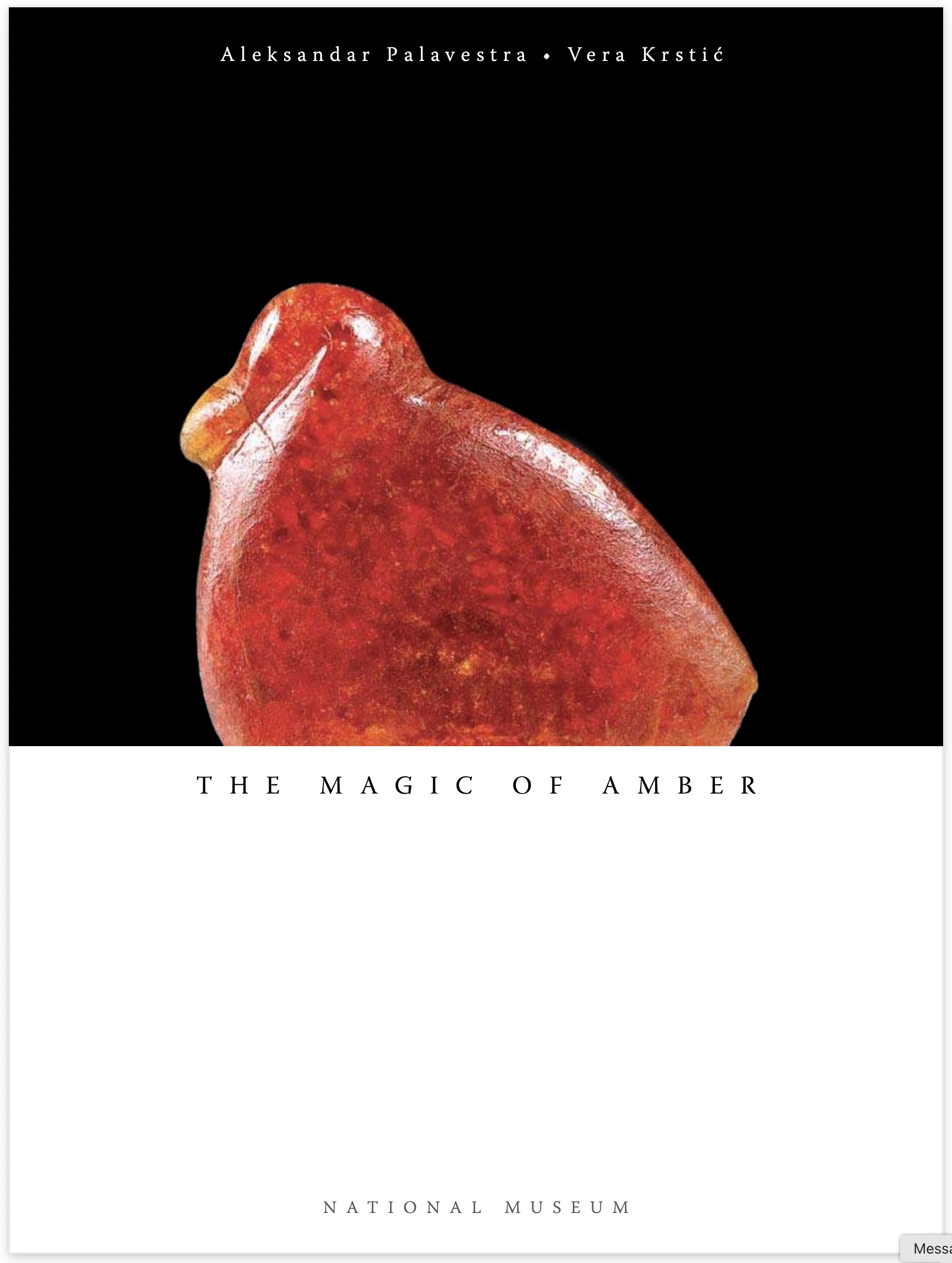
The Magic of Amber
Book
Palavestra, A. and Krstic´, V. (2006) The Magic of Amber. Belgrad, National Museum
Sinkankas/Born No.: NIS/NIB | RWHL
gems, amber, amber identification, Baltic Sea, Europe, Kalingrad, Königsberg, Serbia, history of amber
It was long time ago, in 1969 when Đorđe Mano Zisi and Ljubiša Popović revealed in their book Novi Pazar. Illyrian-Greek Find all the richness and diversity of the contents of one of the most interesting princely graves from the Iron Age in Serbia, unique primarily for its amber objects. Since wholeness of representation did not allow more detailed analyses of finds and study particular phenomena, these tasks had to wait for future researchers. Around 8,000 amber items, as results of the repeated examination and superior expert and scientific processing revealed, classify the find from Novi Pazar as being among the richest, the most diverse and the most important finds of prehistoric amber finds ever. There were excavated beads of geometric and figural type, masks bearing Archaic smile, anthropomorphic adornments such as priestesses or corae. Among the most interesting are the finds of extremely important triangular plates with shallow incised mythological scenes which were found nowhere else. Aleksandar Palavestra and Vera Krstić have been engaged in a difficult task to make this little known, very rich, complex and heterogeneous whole accessible to scholars and the public. Their research, however, has not ended by the comprehensive analysis and completely new interpretation of the Novi Pazar find; in which the finds were morphologically and functionally identified, interpreted both as to their provenance and as elements of costumes and customs of central-Balkan tribes in the Early Iron Age. Aimed at thorough understanding of importance of amber, which due to its beauty, colour and translucency, rarity, natural properties and workability was the favourite material for manufacturing jewellery, for objects used in magic and ritual rites and as means of trade and exchange, the research of the find from Novi Pazar turned into a more complex endeavor and presentation of various and outstanding amber items from the territory of Serbia and other parts of the Balkans, covering the time span from the 2nd millennium BC until the 15th century AD.