
Four Treasures Reference Database
Record No. 27541
Le gemme gnostico-magiche
The Gnostic-magical gems
Catalog
Massara, F.P. (2005) Le gemme gnostico-magiche. [The Gnostic-magical gems] Palermo: Museo Archeologico Regionale
Sinkankas/Born No.: NIS/NIB | Language: in Italian | RWHL*
gems, glyptic, engraved gems, agate, cameo, intaglio
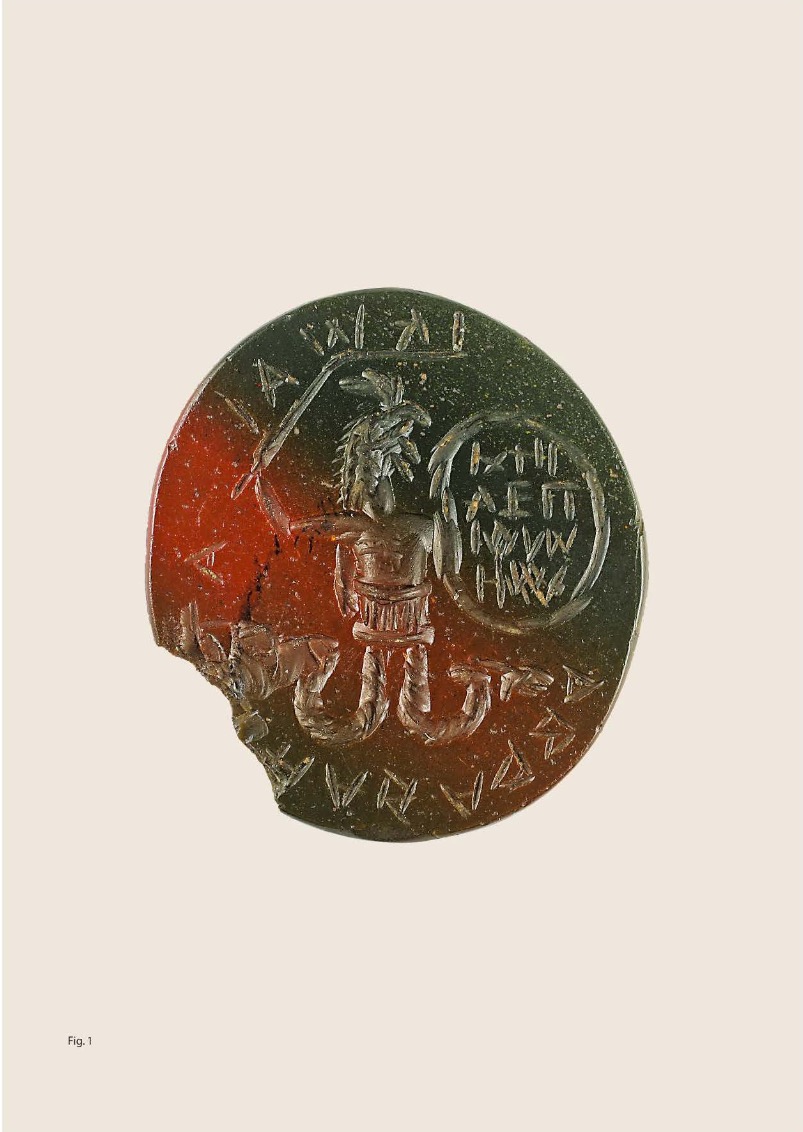
A particular class of gems, within the broad glyptic production of the Roman Imperial era, is marked by singular characteristics that go beyond the simple aesthetic value assigned to ornament: the “Gnostic” or more accurately “Gnostic-magical” gems constitute a most important testimony to magical practices, religious beliefs, and syncretic philosophical currents spread between the 1st and 5th centuries A.D. The first identification and naming of these artifacts is owed to scholars of the 17th and 18th centuries, who believed they could group together under one typology the gems engraved with images of deities, mostly from the Egyptian pantheon, accompanied by long and mysterious inscriptions in the Greek alphabet. The connection with Gnosticism—the heresy par excellence—arose easily on the basis of many writings by the Church Fathers, in which direct links between heresiarchs and magical practices are emphasized. Magic, astrology, and divination, with their full corollary, are strongly condemned by Christian communities as relics of paganism and diabolical illusion: already from the episode of Simon Magus, who tried to imitate the miracles of the Apostles by offering a sum of money (Acts of the Apostles 8:9–25), and who then, according to the Apocryphal Acts of Peter, attempted a blasphemous flight borne up by demons, we move to the explicit words of Ignatius of Antioch, martyred around the year 110, who writes in the Letter to the Ephesians: “God appeared in human form for a newness of eternal life; all magic was undone, every bond of wickedness was broken, […] the ancient empire (the power of the idols) fell.”