
Four Treasures Reference Database
Record No. 27578
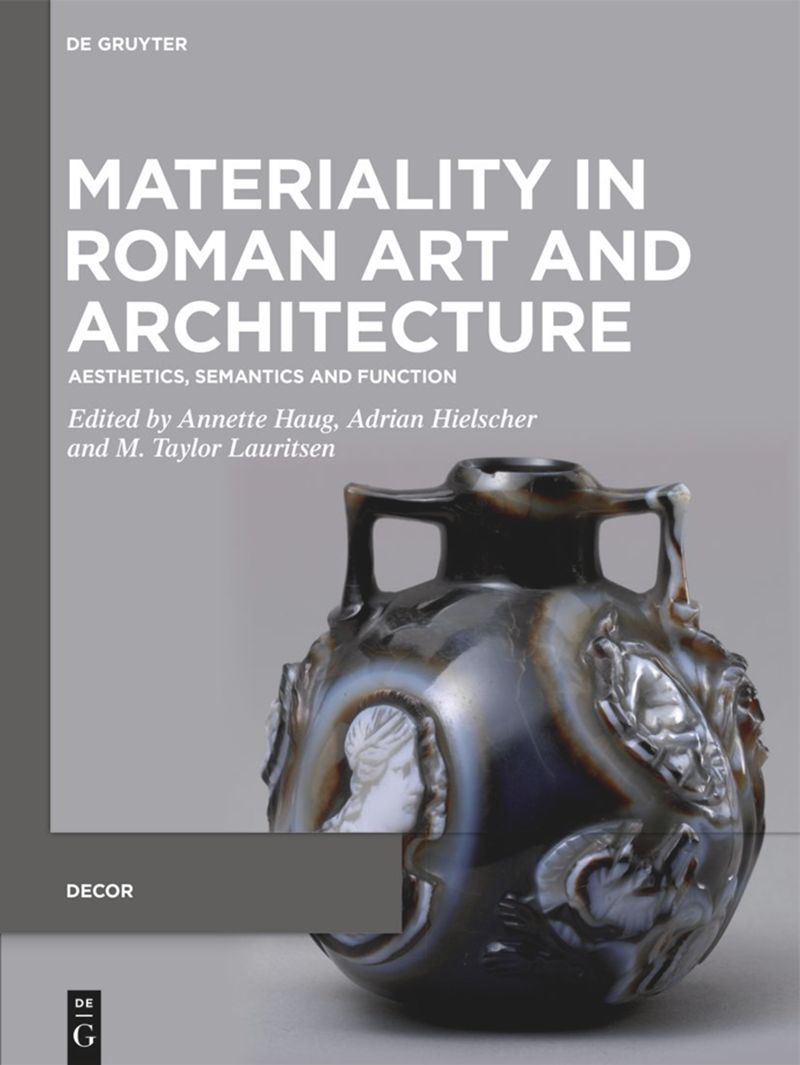
Materiality as decor: Aesthetics, semantics and function
Book Section
Haug, A. and Hielscher, A. (2022) Materiality as decor: Aesthetics, semantics and function. In: Materiality in Roman Art and Architecture, Berlin: De Gruyter, pp. 3–24.
gems, archaeology, archaeogemology, anthropology
The materiality of things has always received special attention in Classical archaeology. During the last two decades, however, this aspect of things, combined with a new interest in media, has become a focal point in all of the humanities, captured by the catchphrase the ‘material turn’. This has led to a new and more specific form of attention to material phenomena, which focuses upon the physicality of human beings, their relationship to the materially ‘arranged’ space, and, in this connection, also examines the overarching ‘thingness’ of the world in which they live. In recourse to phenomenological approaches, especially that of Martin Heidegger, material substantiality and the ‘object character’ of our environment has moved into the foreground of humanistic, cultural and social scholarship. In this research tradition, it is recognised that things resist a one-dimensional, functional appropriation. These insights into the ‘power’ of things inspire material culture studies to examine their biographies, their ‘social life’, and their psychosocial and economic relevance. No less important, this intensive tendency towards ‘thingness’ is also a reaction to recent social developments: on the one hand, the current social discourse is confronted with a rapidly advancing digitalisation and the accompanying dematerialisation of our life-worlds, and on the other hand, it is equally confronted by a flood of material objects (products, goods and commodities).