
Four Treasures Reference Database
Record No. 27594
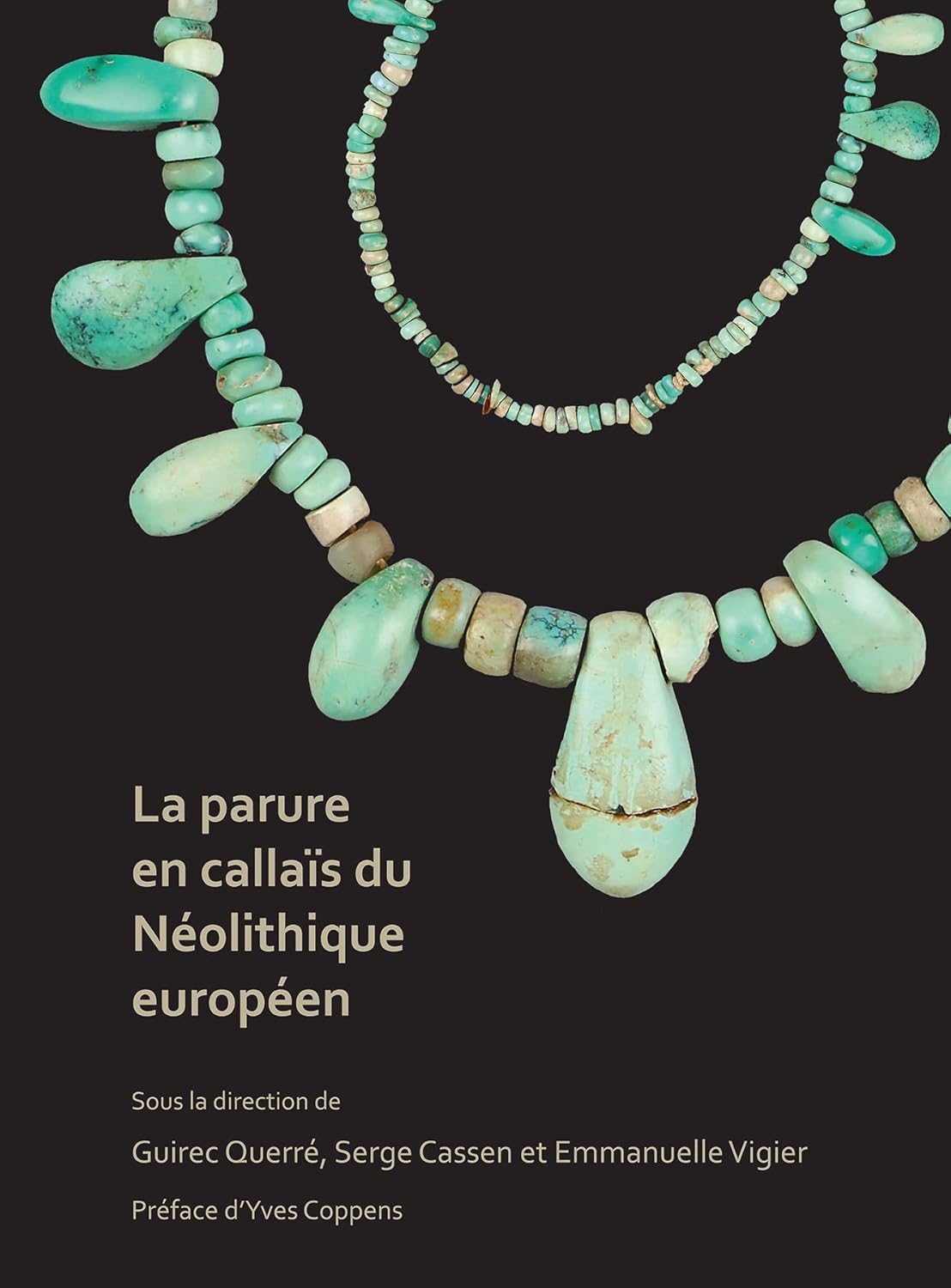
Archaeomineralogy of turquoise in Eurasia
Book Section
Kostov, R.I. (2019) Archaeomineralogy of turquoise in Eurasia. In: La parure en callaïs du Néolithique européen, Oxford: Archaeopress, pp. 387–396.
ISBN/ISSN: 9781790000000 | Sinkankas/Born No.: NIS/NIB | RWHL
gems, variscite, Spain, Iberia, turquoise, callais, alpine jade, fibrolite, amber, jet, beads, archaeology, archaeogemology, analytical, advanced gemology, PIXE-PIGE, LA-ICP-MS, Eurasia, Neolithic
A review is made on the deposits, distribution, and finds of turquoise CuAl₆(PO₄)₄(OH)₈·4H₂O from prehistoric times to the early medieval period across a region spanning from Southeast Europe (Bulgaria, Eastern Rhodopes, Late Neolithic to Chalcolithic period, end of the sixth–fifth millennium BC) to Central Asia (1 – Kyzyl Kum desert area, Neolithic period, sixth millennium BC; 2 – Iranian plateau area). A Turquoise Route (replacing the Lazurite Route) can be proposed for Central Asia, with the Kyzyl Kum area as an early source, supplying raw material and turquoise artefacts westward and southward over the centuries. Western European, Anatolian and Caucasus mountain regions, the Levant, the Sinai Peninsula, and Chinese turquoise-bearing areas are also discussed, with examples of turquoise artefacts. Some earlier finds (eighth–seventh millennium BC) also require mineralogical analysis to determine their probable sources. Across Europe and Asia, turquoise deposits or occurrences have been reported in 33 countries. Six main genetic types of turquoise deposits are distinguished—Kuraminsk, Kyzyl Kum, Taushan, Kalmakir, Kioster, and Sinai type—which form the basis for further mineralogical, geochemical, and archaeomineralogical studies aimed at fingerprinting the source areas of turquoise artefacts.