
Four Treasures Reference Database
Record No. 27625
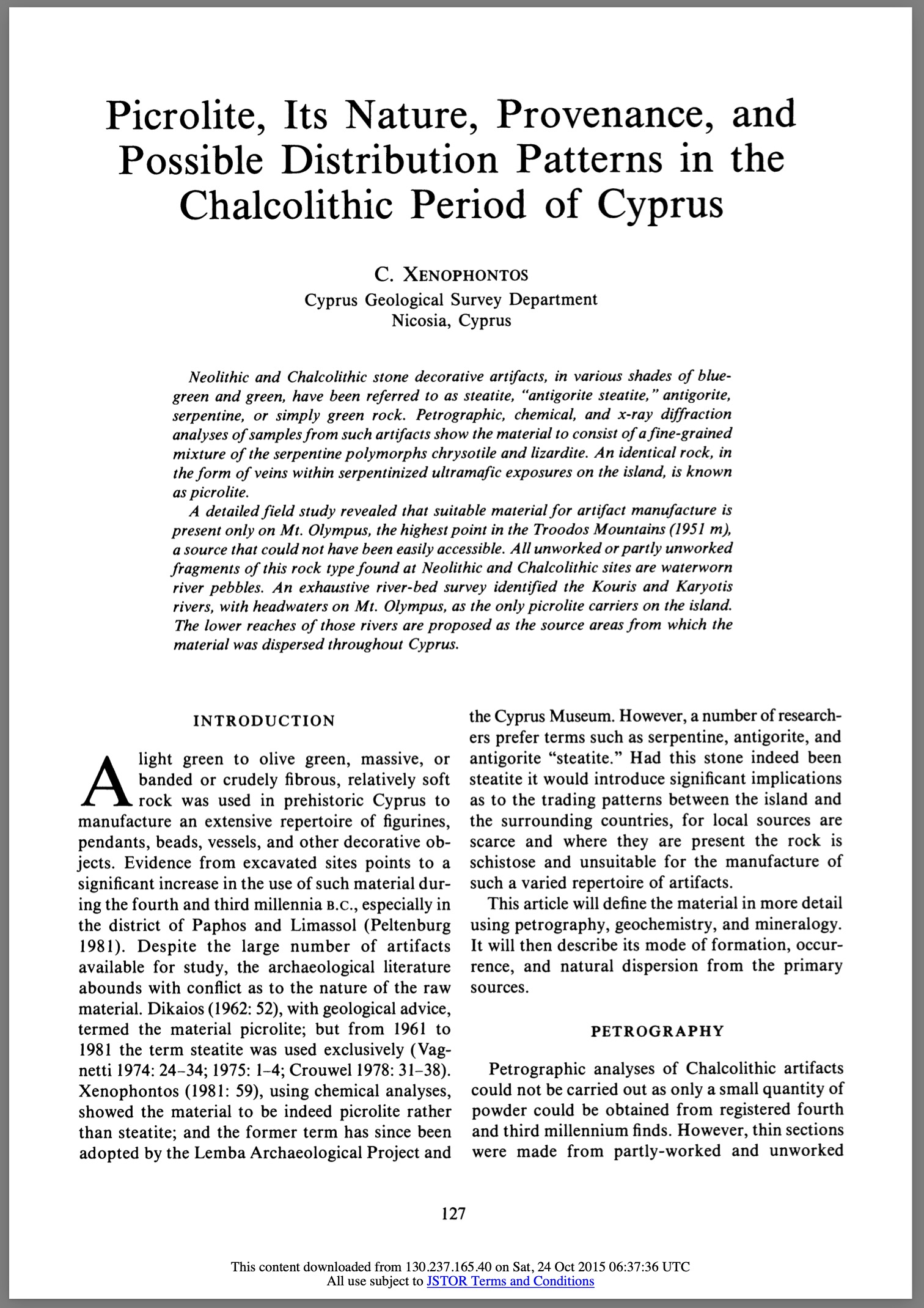
Picrolite, its nature, provenance, and possible distribution patterns in the Chalcolithic Period of Cyprus
Journal Article
Xenophontos, C. (1991) Picrolite, its nature, provenance, and possible distribution patterns in the Chalcolithic Period of Cyprus. Bulletin of the American Schools of Oriental Research, Nos. 282/283, May–August, pp. 127–138.
gems, archaeology, archaeogemology, Cyprus, malachite, picrolite
Neolithic (Stone Age) and Chalcolithic (Copper Age) stone decorative artifacts, in various shades of blue-green and green, have been referred to as steatite, “antigorite steatite,” antigorite, serpentine, or simply green rock. Petrographic, chemical, and x-ray diffraction analyses of samples from such artifacts show the material to consist of a fine-grained mixture of the serpentine polymorphs chrysotile and lizardite. An identical rock, in the form of veins within serpentinized ultramafic exposures on the island, is known as picrolite. A detailed field study revealed that suitable material for artifact manufacture is present only on Mt. Olympus, the highest point in the Troodos Mountains (1951 m), a source that could not have been easily accessible. All unworked or partly unworked fragments of this rock type found at Neolithic and Chalcolithic sites are waterworn river pebbles. An exhaustive river-bed survey identified the Kouris and Karyotis rivers, with headwaters on Mt. Olympus, as the only picrolite carriers on the island. The lower reaches of those rivers are proposed as the source areas from which the material was dispersed throughout Cyprus.