
Four Treasures Reference Database
Record No. 27753
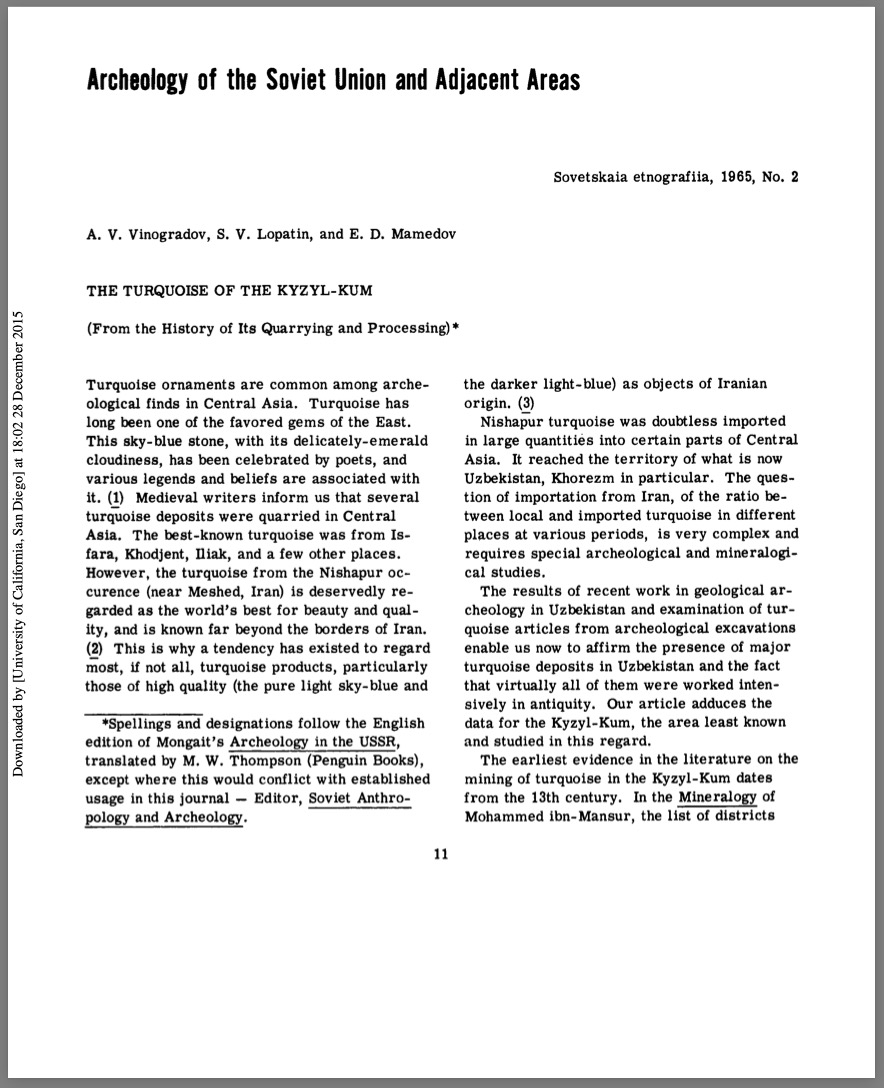
The turquoise of the Kyzyl-Kum
Journal Article
Vinogradov, V., Lopatin, S.V. and Mamedov, E.D. (1966) The turquoise of the Kyzyl-Kum. Soviet Anthropology and Archeology, Vol. 4, No. 4, pp. 11–28.
gems, turquoise, Iran, Persian turquoise, archaeology, archaeogemology, history of turquoise mining and processing
Turquoise ornaments are common among archeological finds in Central Asia. Turquoise has long been one of the favored gems of the East. This sky-blue stone, with its delicately-emerald cloudiness, has been celebrated by poets, and various legends and beliefs are associated with it. (1) Medieval writers inform us that several turquoise deposits were quarried in Central Asia. The best-known turquoise was from Isfara, Khodjent, Iliak, and a few other places. However, the turquoise from the Nishapur occurence (near Meshed, Iran) is deservedly regarded as the world's best for beauty and quality, and is known far beyond the borders of Iran. (2) This is why a tendency has existed to regard most, if not all, turquoise products, particularly those of high quality (the pure light sky-blue and the darker light-blue) as objects of Iranian origin.