
Four Treasures Reference Database
Record No. 27895
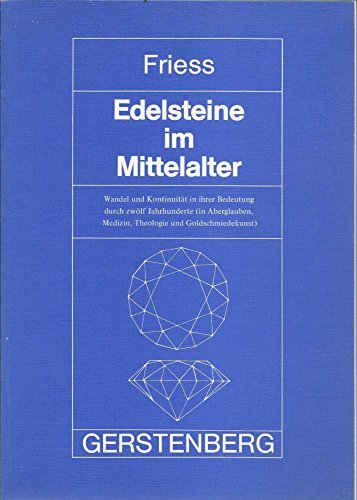
Edelsteine im Mittelalter. Wandel und Kontinuität in ihrer Bedeutung durch zwölf Jahrhunderte (in Aberglauben, Medizin, Theologie und Goldschmiedekunst)
Precious Stones in the Middle Ages: Change and continuity in their significance across twelve centuries (in superstition, medicine, theology, and goldsmithing)
Book
Friess, G. (1980) Edelsteine im Mittelalter. Wandel und Kontinuität in ihrer Bedeutung durch zwölf Jahrhunderte (in Aberglauben, Medizin, Theologie und Goldschmiedekunst). [Precious Stones in the Middle Ages: Change and continuity in their significance across twelve centuries (in superstition, medicine, theology, and goldsmithing)] Gerstenberg, Hildesheim, 206 pp.
ISBN/ISSN: 9783810000000 | Sinkankas/Born No.: 2252; NIB | Language: in German | not seen
Close Abstract
Hide Keywords
Copy Reference
gems, early lapidaries, early gemology, early mineralogy, lore, medicine
For modern people, for whom precious stones are almost exclusively valued as jewelry, it is somewhat difficult to grasp the different mindset of Late Antiquity and the early Middle Ages. The author of the present study has succeeded remarkably well in doing so. She demonstrates that in those times, precious stones were not only fashioned into ornaments by goldsmiths; they also consistently carried symbolic meaning, which varied depending on the “intellectual context.” In Antiquity, precious stones were attributed healing and magical powers, with special emphasis often placed on their apotropaic effect. With the spread of Christianity, the symbolic value of precious stones also changed; they became Christian symbols, capable of representing Christ himself, the apostles, and saints, or were understood as allegorical symbols of Christian virtues.