
Four Treasures Reference Database
Record No. 27931
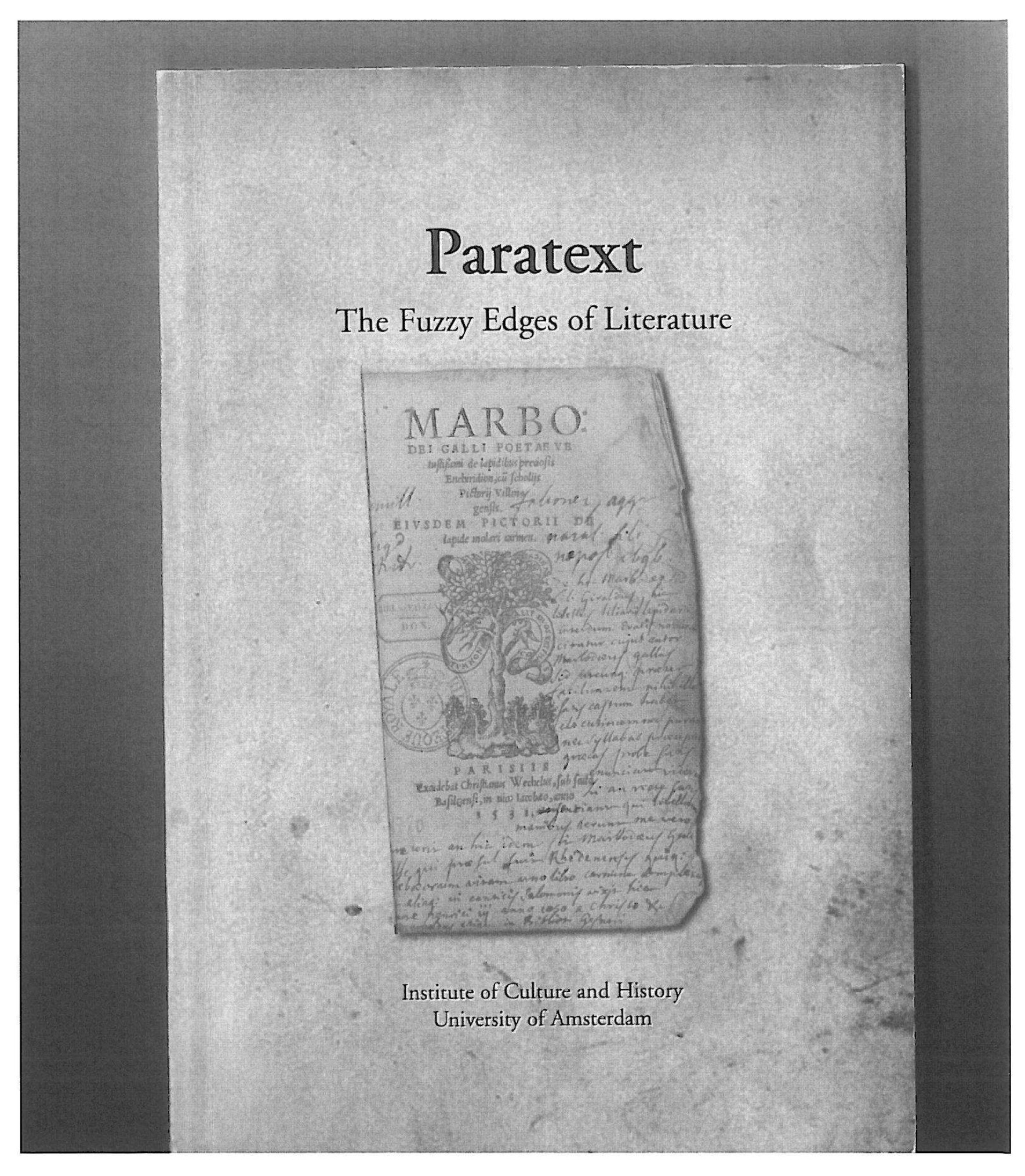
A medieval lapidary and its halo during the Renaissance. Paratexts of the Liber Lapidum of Marbodus of Rennes
Book Section
Chayes, E. (2004) A medieval lapidary and its halo during the Renaissance. Paratexts of the Liber Lapidum of Marbodus of Rennes. In: Paratext | The Fuzzy Edges of Literature, Amsterdam: University of Amsterdam, pp. 87–104.
Sinkankas/Born No.: NIS/NIB | RWHL
gems, early lapidaries, early gemology, early mineralogy, Albertus Magnus, Marbode
There are texts that light upon a peculiarly lasting future, above all thanks to the Protean membrane that their readers invent around them. Along with this “envelope” I wish to speak, of course, of that “pragmatic halo [surrounding] the literary work,” a metaphor adopted in 1987 by Gérard Genette. In what follows I will evoke one such proteiform and enduring text that dates from the end of the eleventh century, and its paratexts added five centuries later. My interest thus lies in allographic peritexts and with textual appropriation by different prefacers and editors. As the title states, we are concerned with the Liber lapidum of Marbodus, Bishop of Rennes (d. 1123). From the outset its circulation in manuscript was vast, and numerous French and Latin lapidaries, inspired by this one, saw the light. Following the birth of printing, its diffusion conveyed it across many editions. Between 1511 and 1585, learned humanists could consult seven of these. I will examine here three editions of the Liber lapidum: that of Pictor of Willigen, appearing at Fribourg in 1531; that of Alardus of Amsterdam (Cologne: Hero Alopecius, 1539); and that of Henri Ranzovius (Leipzig: Georgius Defnerus, 1585). I will be more closely concerned with their publishing strategies and with the working of one allographic peritext on another.