
Four Treasures Reference Database
Record No. 28077
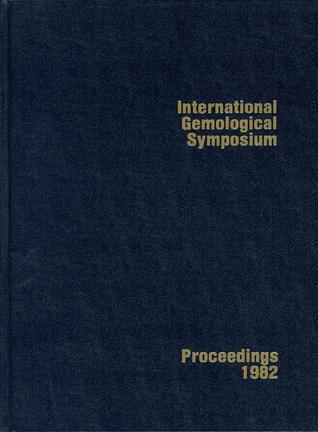
International Gemological Symposium Proceedings
Edited Book
Eash, D.M., editor (1982) International Gemological Symposium Proceedings.. Santa Monica, CA., Gemological Institute of America, 568 pp..
ISBN/ISSN: 9780870000000 | Sinkankas/Born No.: 3128; NIB | RWHL*
corundum, ruby, sapphire, tsavorite, garnet, tourmaline, tanzanite, Kenya.12, Tanzania.12, East Africa, geology.11, gems, andalusite, apatite, beryl, diamond, diopside, euclase, feldspar, fluorite, iolite, idocrase, hematite, kyanite, lazulite, obsidian, olivine, peridot, opal, quartz, rhodonite, rutile, sphalerite, sphene, turquoise, zircon, gem localites, general gemology, pearls, emerald, Brazil, Colombia
This substantial volume collects the papers presented at the Gemological Institute of America’s 1982 International Gemological Symposium, bringing together research and practical observations from gemologists, mineralogists, scientists, dealers, and other specialists. The proceedings provide a broad survey of gemology at the beginning of the 1980s, covering natural and synthetic gemstones, gemstone identification, inclusions and microscopy, treatments and their detection, diamond research, colored stones, pearls, mining and geographic sources, instrumentation, cutting, and developments affecting the gem trade. Particular attention is given to the rapidly developing problems created by synthetic and treated materials and to the analytical and observational techniques required to distinguish them from their natural counterparts. Individual contributions also document important gem deposits and varieties and demonstrate the increasing application of mineralogical, chemical, spectroscopic, and microscopic methods to practical gem identification. As a whole, the proceedings provide a useful snapshot of the state of gemological research and laboratory practice in the early 1980s and record a period in which treatment detection, synthetic gem identification, and increasingly sophisticated scientific instrumentation were becoming central concerns of professional gemology.