
Four Treasures Reference Database
Record No. 28237
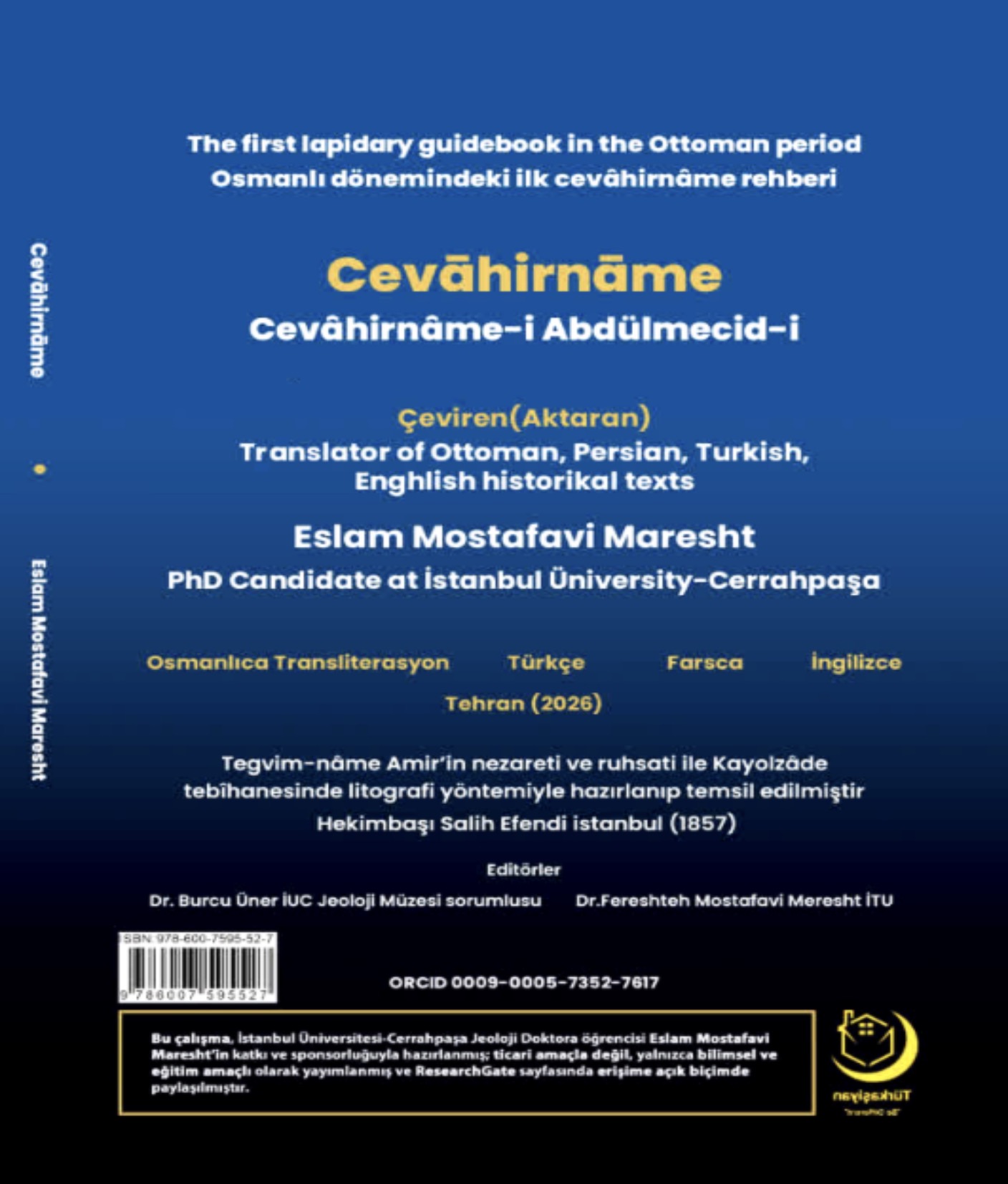
Cevâhirnâme-i Abdülmecid-i: The First Lapidary Guidebook in the Ottoman period
Book
Maresht, E.M. (2026) Cevâhirnâme-i Abdülmecid-i: The First Lapidary Guidebook in the Ottoman period. Teheran, Novin Kushan, 148 pp.
ISBN/ISSN: 9786010000000 | Sinkankas/Born No.: NIS/NIB | Language: In Turkish, Farsi and English | RWHL*
gems, history of gemology, Arabic mineralogy, gem prices, corundum, ruby, sapphire, diamond, emerald, pearl, turquoise, amber, coral, agate, jade
Cevâhirnâmes are significant scientific and cultural texts within the Islamic intellectual tradition, particularly during the Ottoman period. Precious and semi-precious stones were valued not only for their aesthetic and economic importance but also for their perceived medical and therapeutic properties. Numerous works titled Cevâhirnâme were produced to describe the origin, classification, physical and chemical characteristics, and healing qualities of these stones. One of the most important examples of this tradition is the Cevâhirnâme-i Abdülmecid-i (Guidebook), compiled in 1857 by Chief Physician Salih Efendi under the patronage of Sultan Abdülmecid. Considered the first systematic gemological study in the Turkish-Islamic world, the work represents one of the final examples of the classical cevâhirnâme tradition. The book consists of twelve chapters devoted to stones such as diamond, ruby, emerald, pearl, turquoise, amber, coral, agate, and jade, examining their physical properties alongside their temperaments (mizaj) and effects on the human body. By combining traditional humoral medicine with empirical observations of gemstones, the Cevâhirnâme-i Abdülmecid-i serves as a valuable historical source that bridges traditional Islamic medicine and early modern gemology, reflecting the scientific, medical, and cultural knowledge of the late Ottoman period.