
Four Treasures Reference Database
Record No. 28364
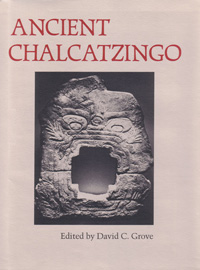
Chalcatzingo jade and fine stone objects
Book Section
Thompson, C.W. (1987) Chalcatzingo jade and fine stone objects. In: Ancient Chalcatzingo, Austin: University of Texas Press, pp. 295–304.
Sinkankas/Born No.: NIS/NIB | RWHL
jade, jadeite, fei cui, Central America, Guatemala, gems, turquoise, greenstone, Mexico, Maya, Mayan
Beginning in the thirteenth century BC, the Olmec of southern Veracruz and Tabasco created sculptural forms that were revolutionary in the New World. They not only carved multi-ton public monuments of basalt; they also made jade objects, the first well-documented occasion in the Americas of the working of this refractory stone. The art of the Olmec is profoundly serious, rational, “great” art, and it is in no way derivative. To anyone who has seen and held Olmec jades, their strange artistic excellence is immediately apparent: in the grace, restraint, decorum of their lines, in their logarithmic curves and smooth, closed forms. Olmec jades are tactile as well as visual objects because of the extremely high polish with which they were finished. (The ancient Chinese had a term for this quality of jade: pa wan; literally, “hold and enjoy.”) The word jade derives from the Spanish piedra de ijada (“stone of the side”), for the stone was believed to have curative powers for liver ailments and side pains. Today the word jade is a general term and encompasses two varieties of the stone: nephrite and jadeite. This chapter uses jade and jadeite interchangeably.