
Four Treasures Reference Database
Record No. 28399
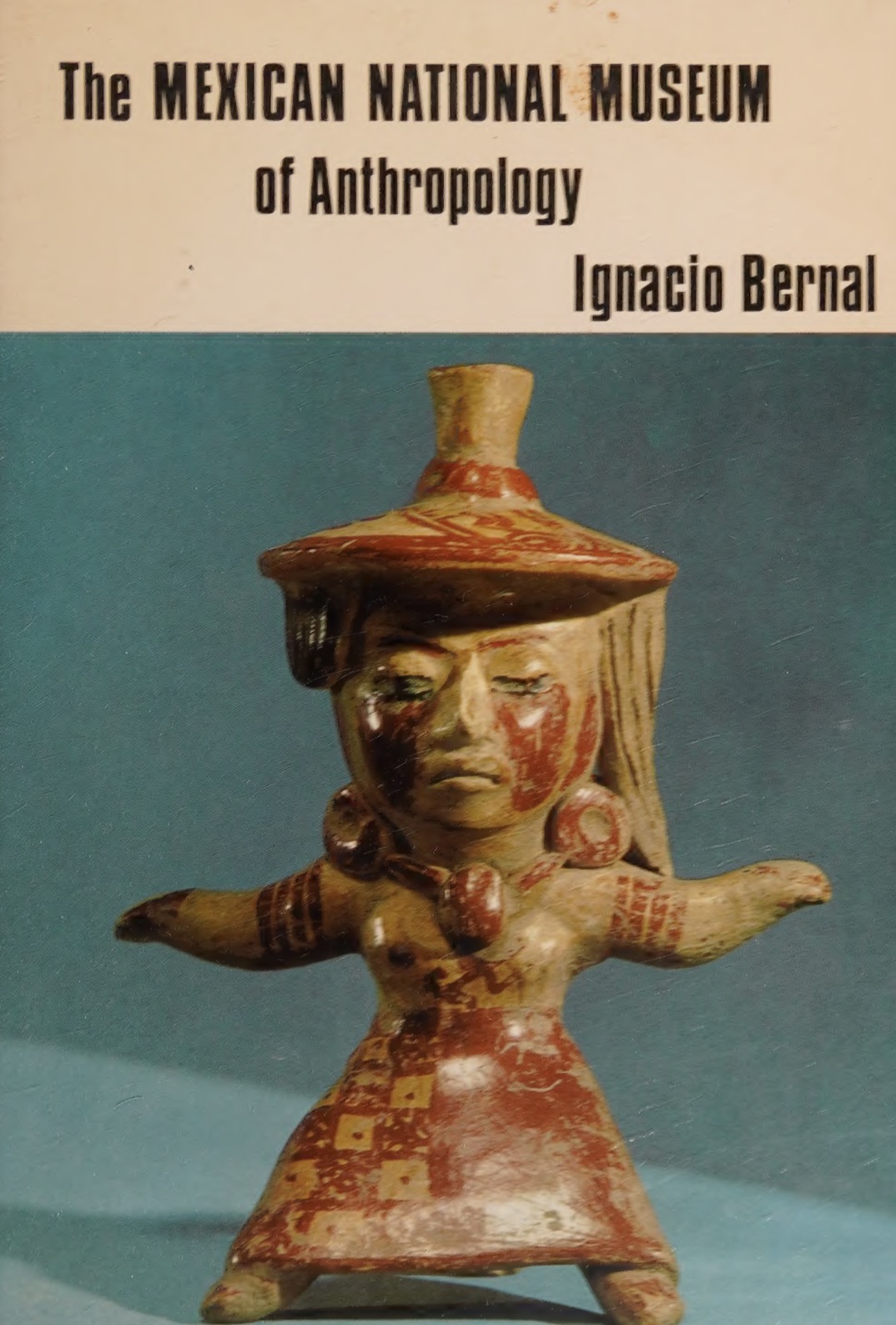
The Mexican National Museum of Anthropology
Book
Bernal, I. (1968) The Mexican National Museum of Anthropology. London, Thames and Hudson, 216 pp.
ISBN/ISSN: 9683801013 | Sinkankas/Born No.: NIS/NIB | RWHL
gems, jade, jadeite, fei cui, Mesoamerica, Mexico, Guatemala, Costa Rica, Mayans, Olmecs, Aztecs, archaeology, history, archaeogemology
The study of anthropology — although not yet known by that name — has been pursued in Mexico for many centuries. Soon after the Spanish conquest, friars, missionaries, conquerors and descendants of the indigenous nobility who had received a European-style education began recording their experiences, compiling grammars and vocabularies of the various languages spoken in Mesoamerica and writing histories of their ancestors. By the middle of the sixteenth century, enterprising scholars had begun assembling what they could of ancient myths and legends, customs and traditions, creating an exceptionally rich corpus of documents of many kinds. The most remarkable of these scholars, Fray Bernardino de Sahagún (c. 1499–1590), drew assiduously upon a wide variety of local sources and gathered so much material that he was able to compose a vast ethnological treatise on the region that, in my opinion, remains without equal. The purpose of this immense labour of investigation and preservation was not solely academic. For the Spaniards, it arose from the need to understand the conquered peoples upon whom the new colony was founded; for the indigenous population, it was a means of recalling past glories and at times obtaining favours and advantages from the new political authorities. By the beginning of the seventeenth century, however, this great intellectual movement had come to an end.