
Four Treasures Reference Database
Record No. 28402
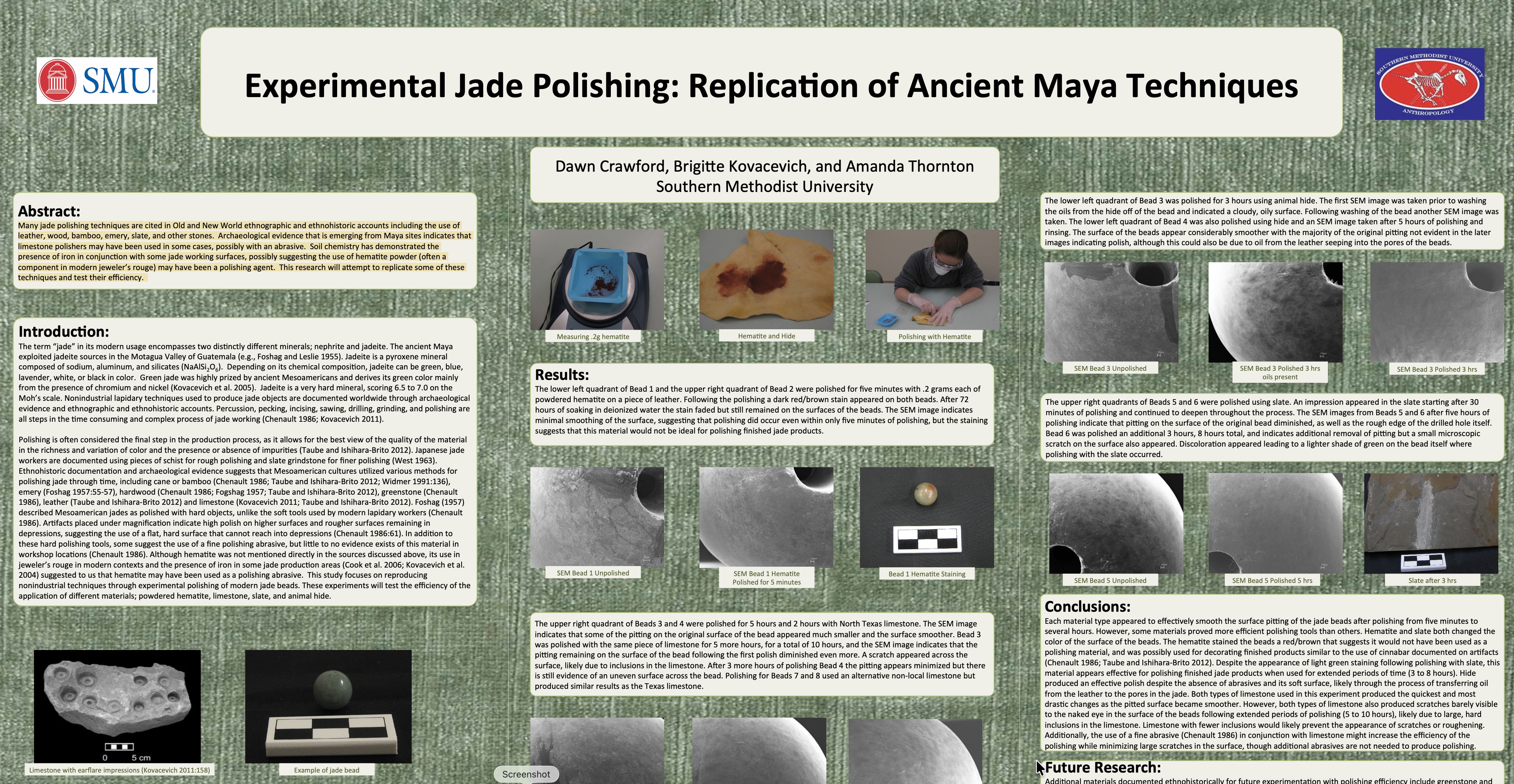
Experimental Jade Polishing: Replication of Ancient Maya Techniques
Report
Crawford, D., Kovacevich, B. and Thornton, A. (n.d.) Experimental Jade Polishing: Replication of Ancient Maya Techniques. Southern Methodist University, 1 page poster
Sinkankas/Born No.: NIS/NIB | RWHL
gems, jade, jadeite, fei cui, Mesoamerica, Mexico, Guatemala, Costa Rica, Mayans, Olmecs, Aztecs, archaeology, history, archaeogemology, lapidary
Many jade polishing techniques are cited in Old and New World ethnographic and ethnohistoric accounts, including the use of leather, wood, bamboo, emery, slate and other stones. Archaeological evidence emerging from Maya sites indicates that limestone polishers may in some cases have been used, possibly in conjunction with an abrasive. Soil chemistry has demonstrated the presence of iron associated with some jade-working surfaces, possibly suggesting the use of hematite powder — often a component of modern jeweller’s rouge — as a polishing agent. This research will attempt to replicate some of these techniques and test their efficiency.Many jade polishing techniques are cited in Old and New World ethnographic and ethnohistoric accounts, including the use of leather, wood, bamboo, emery, slate and other stones. Archaeological evidence emerging from Maya sites indicates that limestone polishers may in some cases have been used, possibly in conjunction with an abrasive. Soil chemistry has demonstrated the presence of iron associated with some jade-working surfaces, possibly suggesting the use of hematite powder — often a component of modern jeweller’s rouge — as a polishing agent. This research will attempt to replicate some of these techniques and test their efficiency.