
Four Treasures Reference Database
Record No. 28490
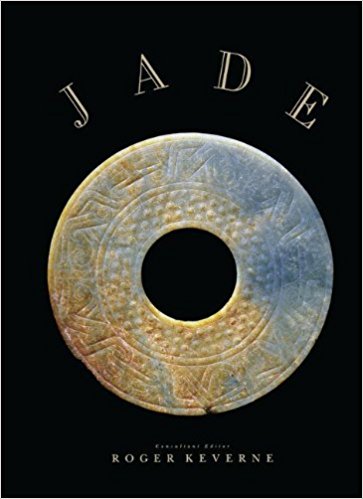
Jade in Mesoamerica: Pre-Columbian jade in the Central and Southern Americas
Book Section
Bishop, R.L., Lange, F.W. and Easby, E.K. (1991) Jade in Mesoamerica: Pre-Columbian jade in the Central and Southern Americas. In: Jade, New York: Van Nostrand Reinhold, pp. 316–341.
ISBN/ISSN: 9781460000000 | DOI: https://doi.org/10.1007/978-1-4615-3922-3 | Sinkankas/Born No.: NIS/NIB | RWHL**
jade, jadeite, fei cui, nephrite, China, Burma, gems, Fischer-Other
Robert Frey and Robert Deans: It has been said that a single issue of a modern newspaper—like The New York Times, Neue Zürcher Zeitung, or Le Monde—contains more information than a person in the 17th century would encounter in a lifetime. Jade scholarship, like all fields, cannot escape the information explosion of our time. Our understanding of jade has expanded dramatically both through archaeological discoveries and ongoing scientific research, making a comprehensive, up-to-date global survey long overdue. The best studies on ancient jade have come from meticulously controlled excavations in places such as China, Russia, and Mexico, offering data far beyond the reach of earlier scholars who relied largely on secondhand textual sources. Advances in archaeological and analytical techniques have greatly enhanced the accuracy and scope of our knowledge. The first Western attempt at a jade survey came in the early 1800s from French sinologist Abel-Rémusat, based on the King’s Library in Paris, followed by a more substantial work by German mineralogist Fischer later that century. A major leap came with American jade collector Heber Bishop at the century’s end, whose oversized, lavish volumes—printed in just 106 copies—were never sold and meant only for select institutions and dignitaries. With no public reprint, they remained rare and inaccessible. In contrast, this 20th-century volume aims to make top-tier jade research available to a broad audience. Research continues, and new jade sources and scientific analyses have shed light on both raw materials and artifacts. Publishing a worldwide survey is no small feat—it demands a firm deadline and the collaboration of leading experts to present a coherent, authoritative account. The result is a landmark work that will shape jade scholarship for decades to come. This survey of jade use around the world is actually an anthology of essays by prominent scholars. First, a gemologist explains the minerology of jade. Then a series of essays on jade use in China, from prehistory to the present, takes up about half of the book. Finally, shorter essays address jade use in Japan, the South Pacific, Europe, Burma, India, and the Americas. Excellent photographs throughout the volume capture the visual qualities that make jade so appealing. The ambitiousness of its scope makes this survey a valuable addition to the jade literature, but the contributions of the authors vary so widely in method and tone that the volume lacks unity.