
Four Treasures Reference Database
Record No. 28529
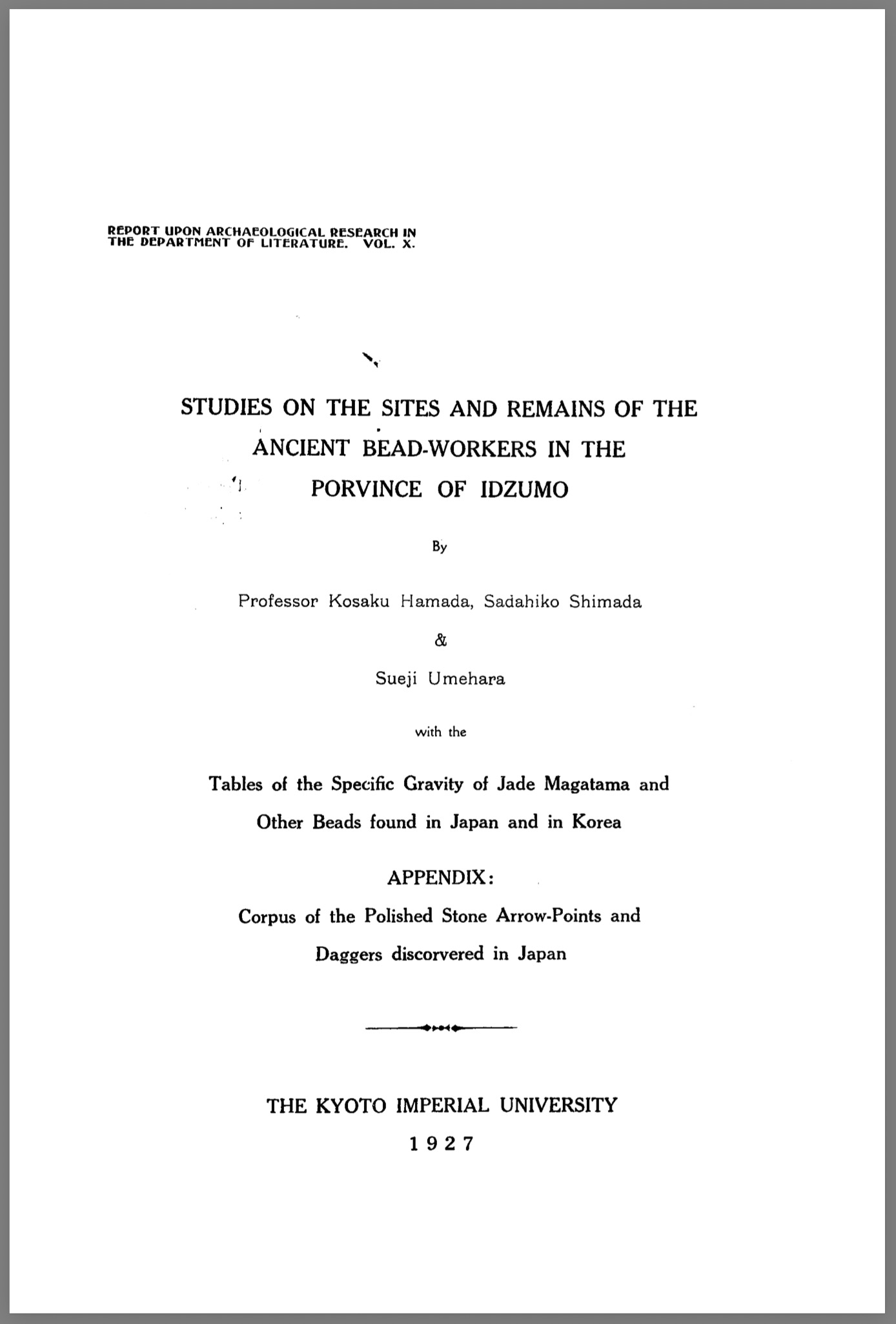
Studies on the Ancient Bead-Workers in the Province of Idzumo
Book
Hamada, K., Shimada, S. and Umehara, S. (1927) Studies on the Ancient Bead-Workers in the Province of Idzumo. Kyoto, Kyoto Imperial University, 20 pp.
Sinkankas/Born No.: 2689 | RWHL
gems, jade, pyroxene jade, fei cui, Japan, Itoigawa, magatama, beads
In this large, elaborately illustrated monograph, Hamada et al. describe sites and remains of ancient workers in stone and gemstones near the villages of Tamatsukuri, Inbe, and Ōba in Izumo Province, Shimane Prefecture, near the city of Matsue on the north coast of western Honshu. The beads are of several types, the most important being comma-shaped beads called magatama, which have been found in ancient tombs in Japan and Korea and whose use may have preceded the Christian era. They were made from locally mined and worked quartz varieties such as rock crystal, agate, and jasper, but large numbers have been found which are either nephrite or jadeite, the latter predominant and raising the question as to its provenance. Jadeite did not appear in Chinese carvings until about the 17th century, thus the mystery of the source for the Japanese specimens is even more profound unless some jadeite deposit can be found to which the jadeite in the beads can be traced. While jadeite has been found in Japan, it is not of the kind used in the beads. A valuable feature of this book is the description of lapidary methods employed in Japan at the time of writing and comparison to the methods which the relics at various sites suggest were used by ancient bead-workers. There are a number of excellent photographic plates showing modern bead-workers plying their skills in various phases of work. Other views show sites, sources of local gem materials, beads, points, and other objects made from stone, and magatama. Several plates depict implements, many beads, and the end plates are coloured. 2689.