
Four Treasures Reference Database
Record No. 28544
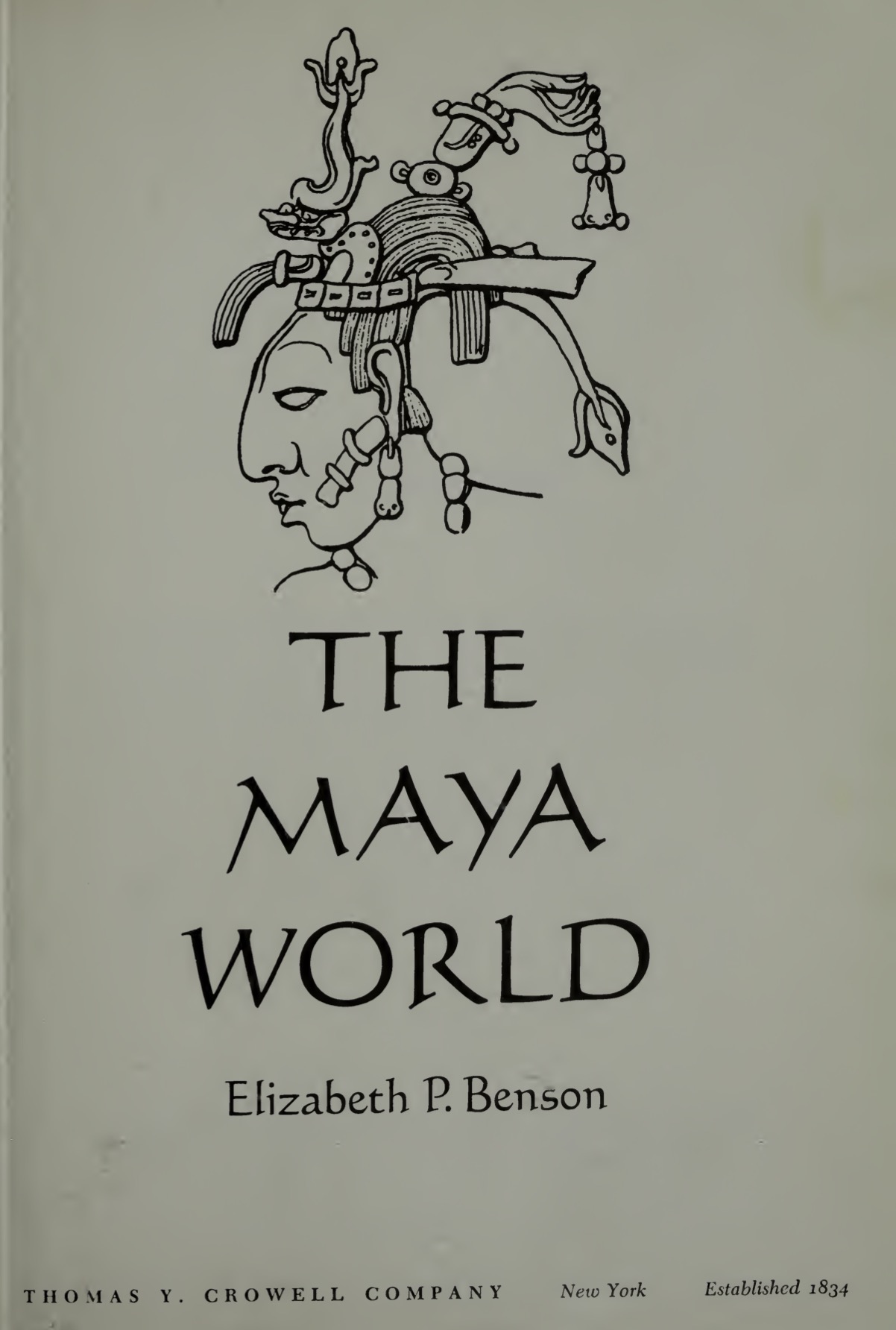
The Maya World
Book
Benson, E.P. (1967) The Maya World. New York, Thomas Y. Crowell, 172 pp.
Sinkankas/Born No.: NIS/NIB | RWHL
gems, jade, pyroxene jade, fei cui, Guatemala, Mesoamerica, Nicaragua, Mexico, Honduras, Costa Rica, archaeogemology, Cuba, Dominican Republic, Maya, Mayan, Olmec, Aztec, sculpture
In the steaming rain forest of Mexico and Guatemala the ruins of the ancient Mayan empire bear silent witness of a civilization that flourished hundreds of years before Columbus came to America. More appealing to the modern mind than their Aztec and Inca contemporaries, the Maya Indians are also more mysterious and their way of life more paradoxical. Each year adds to the mass of published material about them, but the central riddle of their rise and decline remains unsolved. Miss Benson guides the reader into the Maya world with an infectious enthusiasm. Technologically a stone-age people, the Maya knew nothing of metal tools or weapons, and lacked both wheel and plow, yet they reached a high level of intellectual and aesthetic sophistication. By A.D. 600 these sociable agriculturalists who—unlike the Aztecs—did not practice mass human sacrifice, had conquered arithmetic, astronomy and calendric development. They had developed a form of writing, and they had a broad practical knowledge of medicine. Many modern sciences have helped to fill out our picture of the Maya world. Miss Benson takes the reader on a fascinating archaeological voyage, as she describes the collaboration of geologists, botanists, and biologists, linguistic experts, architects, and anthropologists; road builders and chicle gatherers have also contributed. In the deserted jungle center of Bonampak, found by chicleros in 1946, superb wall paintings show scenes of Maya life. At its height the empire, held together by a stable caste system, religious beliefs, and a lively trade in cacao, jade, rubber, cotton, and mahogany, stretched throughout the Yucatán Peninsula and the adjacent areas of Mexico and Guatemala. “A Maya city in its heyday,” writes Miss Benson, “must have been almost unbelievably impressive, with its temple-topped pyramids, its vast palaces raised on platforms, its terraces and towers and its rich display of sculptures.” The ruins of Chichén Itzá, in Yucatán, which boast a sacred pool and a ball court, are perhaps most famous. But the Department of Petén in Guatemala contains the heart of the Classic Maya area. Miss Benson locates the main sites of Maya ruins, and tells those hoping to visit them how to get there. Her absorbing account focuses on the Classic period of Maya culture, between A.D. 300 and 900, but it includes much information on the earlier life of the Maya and on their vicissitudes before and during the Spanish conquest.