
Four Treasures Reference Database
Record No. 28558
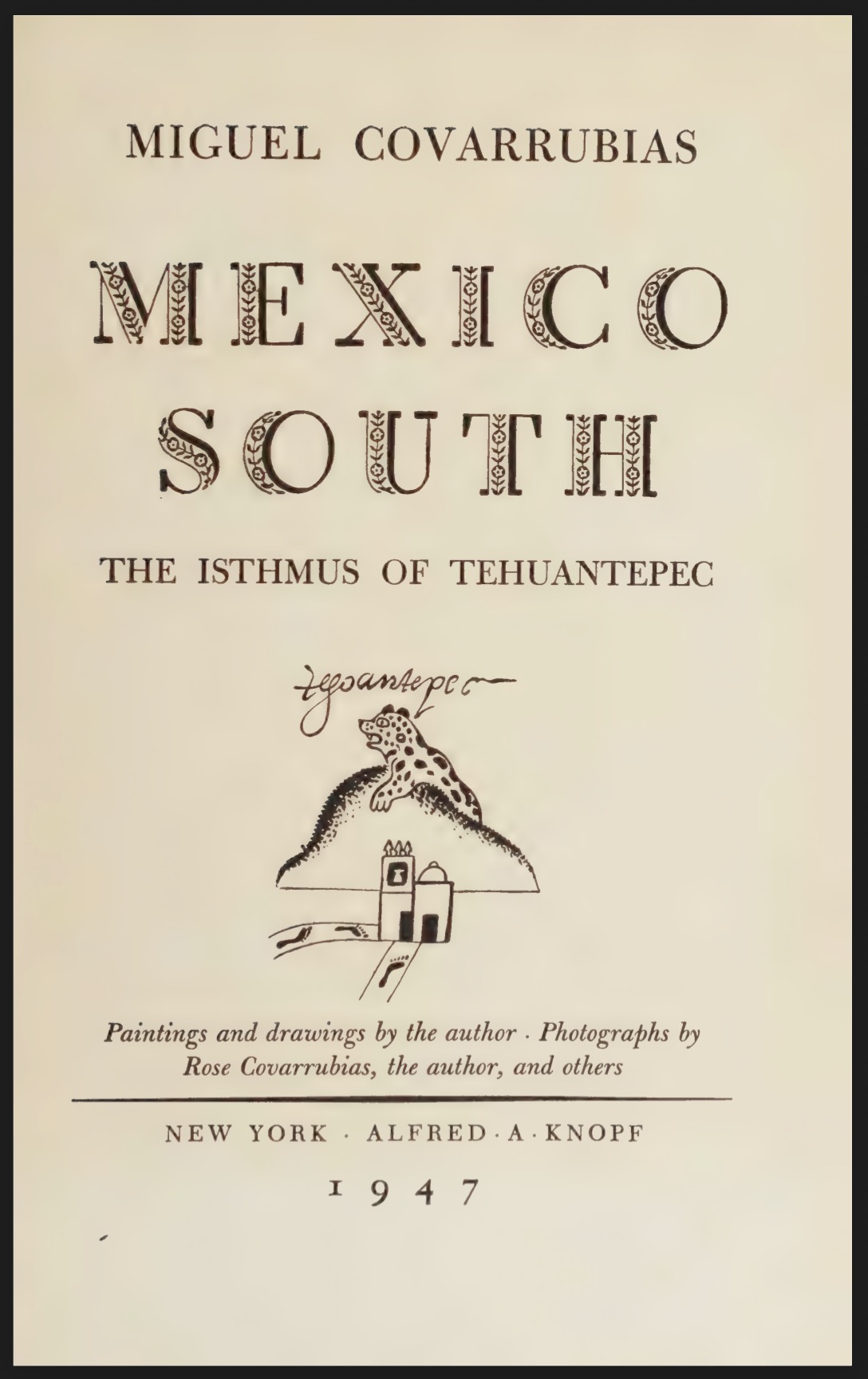
Mexico South: The Isthmus of Tehuantepec
Book
Covarrubias, M. (1947) Mexico South: The Isthmus of Tehuantepec. New York, Alfred A. Knopf
Sinkankas/Born No.: NIS/NIB | RWHL
gems, jade, pyroxene jade, fei cui, Guatemala, Mesoamerica, Nicaragua, Mexico, Honduras, Costa Rica, archaeogemology, Cuba, Dominican Republic, Olmec, Mayan, Aztec, Mixtec, Toltec, Zapotec
It used to be customary to think of Mexico as a barren land—great stretches of semi-desert bristling with cactus and maguey plants, a place of rattlesnakes and burros; of enigmatic black eyes peering out between straw sombreros and garish sarapes; of gentle-mannered, shy women flitting by like shadows in their blue rebozos; of D’Artagnanesque cattle rustlers strumming guitars and dressed in silver-studded, skin-tight trousers. It was a sort of musical-comedy nation, where browbeaten peons periodically rose in revolt against their Spanish grandee masters and were led by bandit generals with magnificent moustaches and oily complexions, whose ruthless and sanguinary exterior concealed a patriotic heart of gold. This romantic picture has gradually given way to a less gaudy and increasingly accurate understanding of the country, acquired through the personal experience of travellers and a deeper insight into Mexican art and history, economy, and sociology gained by a new generation of more liberal and open-minded scholars and students. Nearly everybody has heard of the Aztecs and their emperor Moctezuma, and of the Maya, builders of what is often considered the most highly developed Indigenous civilization of the American continent. Maya cities buried in the tropical jungle have become the special province of American archaeologists; libraries have been filled with novels set in Mexico, with accounts of Mexico’s bewildering revolutions, with controversial studies of Mexican politics, religious conflicts, agrarian struggles, and oil crises, and with countless new books on Mexican art and archaeology.