
Four Treasures Reference Database
Record No. 28570
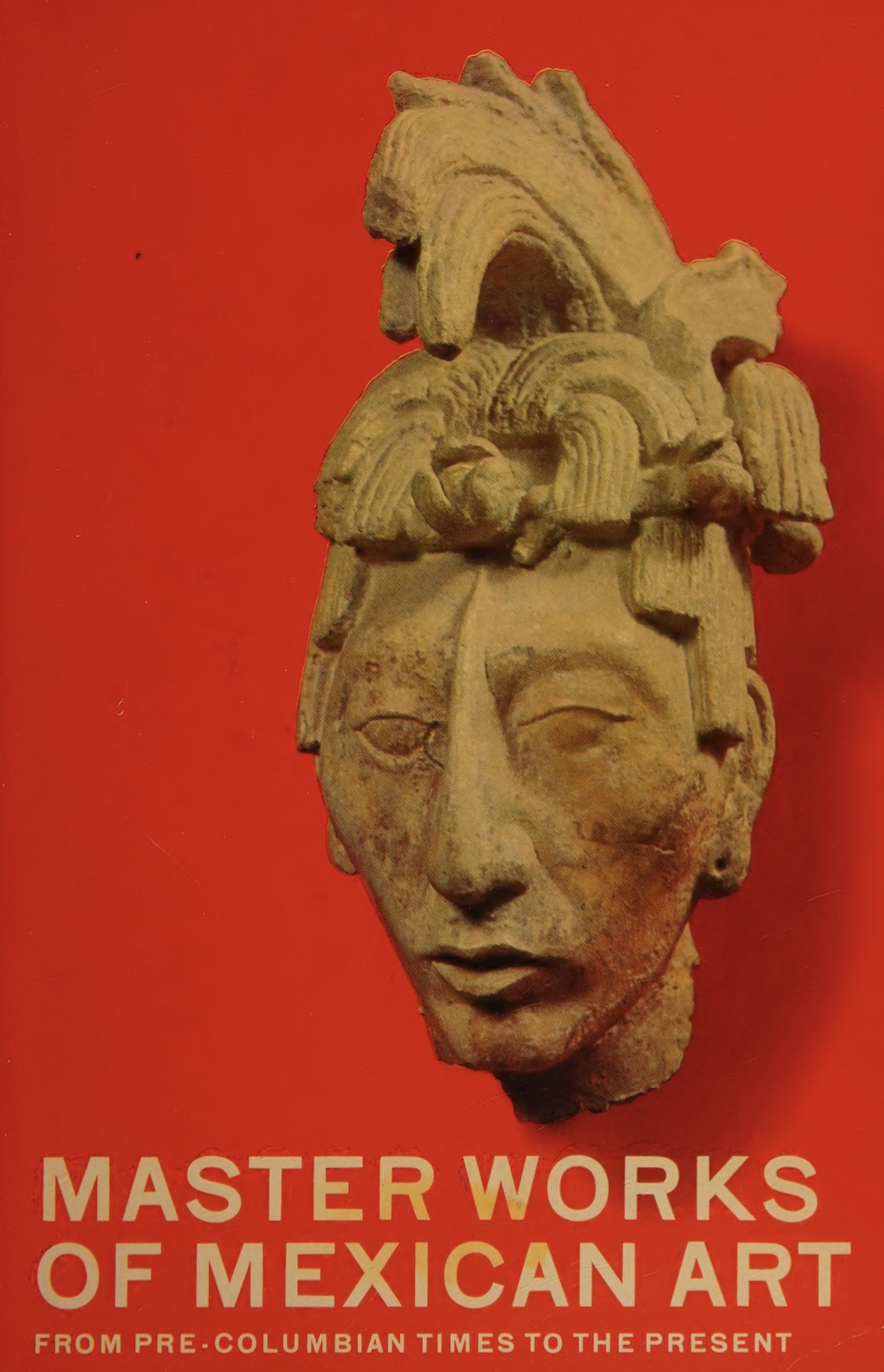
Master Works of Mexican Art — From Pre-Columbian Times to the Present
Book
Gamboa, F. (1963) Master Works of Mexican Art — From Pre-Columbian Times to the Present., Los Angeles County Museum of Art, 296 pp.
Sinkankas/Born No.: 2209 | RWHL
gems, jade, jadeite, fei cui, Mesoamerica, Mexico, Guatemala, Costa Rica, Mayans, Olmecs, Aztecs, archaeology, history, archaeogemology
Pre-Hispanic art, art of New Spain, modern art, folk art—these designations are more than aesthetic terminology; the periods they refer to are also stages in the formation of our national existence. The collection of sculpture, paintings, ritual objects and domestic tools, toys and ornaments which is now offered the American public represents a vertical section of Mexican life since its first beginnings until our time. We want to show, not only a number of remarkable works and objects, but also a truthful and varied picture of “Mexican man”, a picture in which the native and the European heritages merge. We wish to render the original character of Mexican art, which in its various historical periods, throughout three millennia, has always been closely connected with life. In this sense one can affirm that art has been necessary, even in its most fantastic manifestations, to the Indian creators, to the Baroque artists, and to the contemporary artists. The presence of man on American soil, where he probably came from Asia, can be traced back about 25,000 years. The oldest material vestiges suggest a stage corresponding to the ethnic groups of the earlier Stone Age. In central Mexico fossil remains about 11,000 years old have been found. The first inhabitants of the country were mammoth hunters. But the populations that we have been able to obtain information about lived much later: about 1,500 B.C. It is still a source of much speculation among specialists that already fully constituted societies, whose immediate antecedents we are even now unable to define, appeared at the same time. In this period the division into two zones, which remained the same in all essentials till the Spanish Conquest, took place: the northern zone, mainly populated by nomads, and the southern zone of agriculture, political organization, the great religions and the great epochs of artistic style. The latter zone covered a territory, bordering on the 23rd parallel to the north, and including Costa Rica to the south. These two zones are designated by the term Mesoamerica. In order to facilitate an understanding of the pre-Hispanic world we have preferred a disposition that emphasizes the interrelative connections of the various styles to a purely chronological or geographical one, without disrupting the continuity of the cultures.