
Four Treasures Reference Database
Record No. 28575
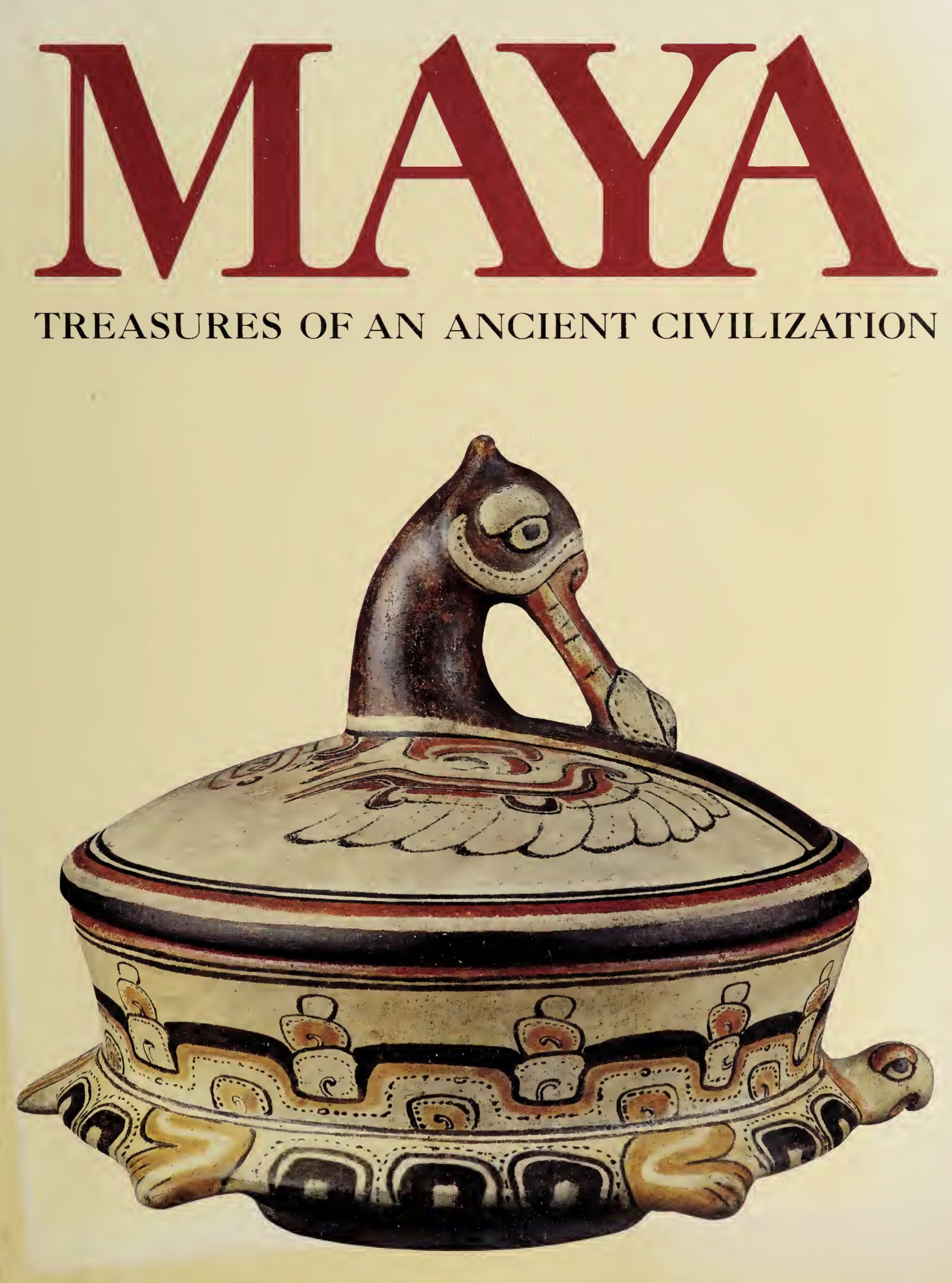
Maya: Treasures of an Ancient Civilization
Book
Claney, F.S., Coggins, C.C., Culbert, T.P., Gallencamp, C., Harrison, P.D. and Sabloff, J.A. (1985) Maya: Treasures of an Ancient Civilization. New York, Harry N. Abrams, 240 pp.
Sinkankas/Born No.: NIS/NIB | RWHL
gems, jade, pyroxene jade, fei cui, Guatemala, Mesoamerica, Nicaragua, Mexico, Honduras, Costa Rica, archaeogemology, Cuba, Dominican Republic, Olmec, Mayan, Aztec, Mixtec, Toltec, Zapotec
This exhibition was organized by The Albuquerque Museum in association with the Instituto Nacional de Antropología e Historia in Mexico, the Instituto de Antropología e Historia de Guatemala, and the Department of Archaeology in Belize. The history of Pre-Columbian America is largely unknown. For many years historians considered only those aspects of history which related to the Old World as worthy of study, ignoring or scorning all that was not already recognized as important by European scholars. The “scientific” interest in Pre-Columbian cultures was stimulated by two amateurs—John Lloyd Stephens and Frederick Catherwood—when they travelled to Central America in 1839 in search of answers to intriguing questions posed by the written accounts of their predecessors. Since then, archaeologists have brought to light important information concerning these cultures. With regard to Guatemala, archaeological evidence and findings document the great cultural and scientific advances made by the past inhabitants of that land. Even so, this information has not yet yielded a complete and orderly record of the events, personalities, and circumstances which make up its history. As is the case today, ancient Guatemala was inhabited by diverse peoples, each with distinct customs, beliefs, traditions, and commercial, social, and political relationships that eventually underwent drastic changes, probably caused by the struggle for power, which culminated in crisis and institutional breakdown. The MAYA exhibition organized by The Albuquerque Museum presents a fascinating panorama of Maya culture, which developed primarily in the Petén lowlands and the southern highlands, where evidence has been found that speaks eloquently of the artistic and scientific activities which flourished there—products of deeply rooted religious beliefs and of a complex politico-religious structure.