
Four Treasures Reference Database
Record No. 28576
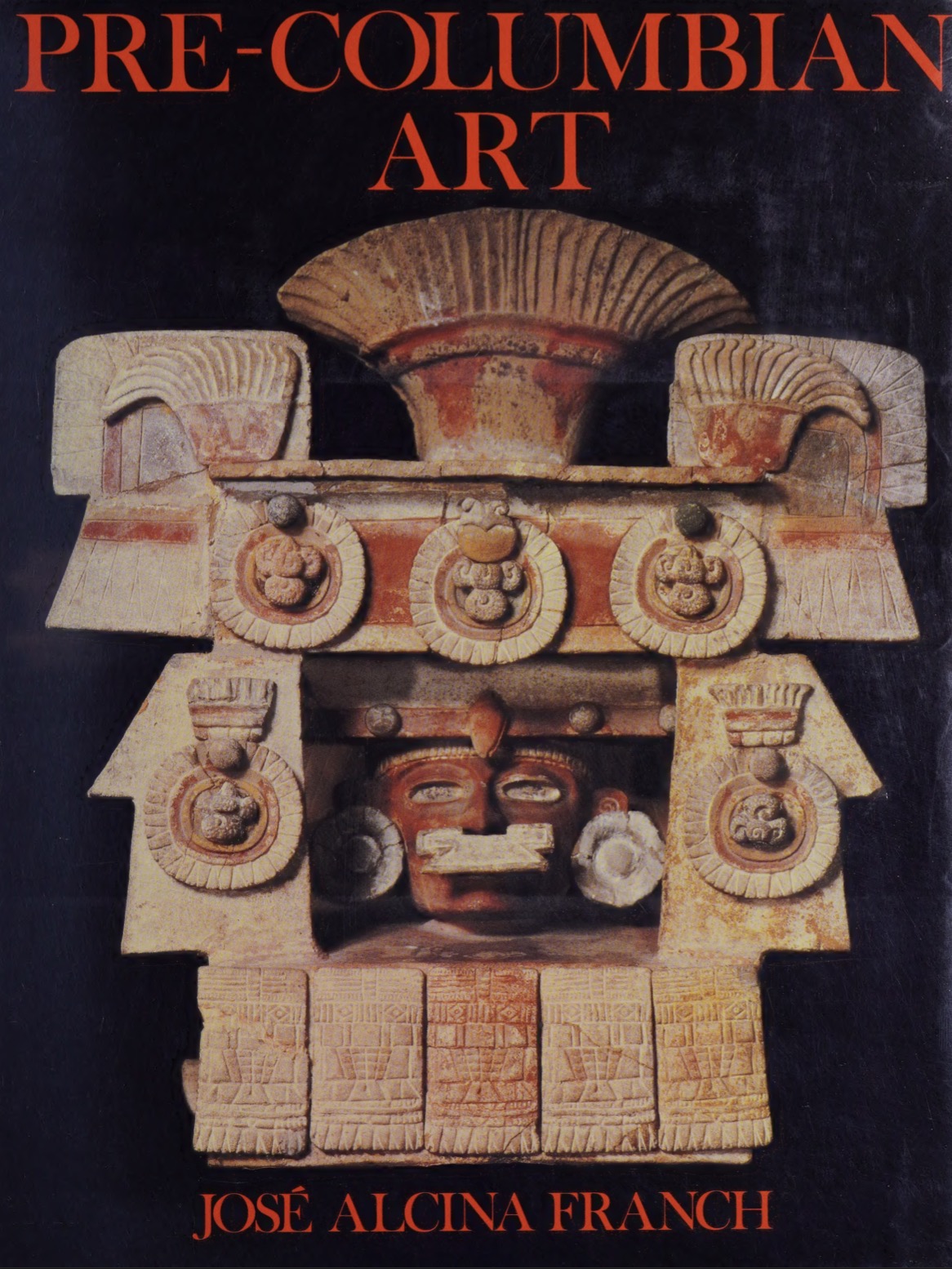
Pre-Columbian Art
Book
Franch, J.A. (1983) Pre-Columbian Art. New York, Harry N. Abrams, 614 pp.
Sinkankas/Born No.: NIS/NIB | RWHL
gems, jade, jadeite, fei cui, Mesoamerica, Mexico, Guatemala, Costa Rica, Mayans, Olmecs, Aztecs, archaeology, history, archaeogemology, art, art history
The art of the peoples of Mexico and Central and South America before the Spanish Conquest in the sixteenth century has only recently attracted the attention it deserves. Regarded during the nineteenth and early twentieth centuries as “barbaric,” “crude,” and “primitive,” the art of these ancient cultures has now gained recognition as a novel, original, and sophisticated achievement. Pre-Columbian Art is a brilliant synthesis of the many artistic traditions that flourished over a vast territory and over a long span of time. The profusion of styles, techniques, and materials, and the virtual absence of historical documentation make the exploration of the subject enormously complex. The book opens with a wide-ranging investigation of the geographic, environmental, and climatic conditions that shaped the early American Indian cultures. Physical anthropology and languages are then examined, as are the social, political, and historical forces that exerted such tremendous influence on artistic expression. Next is a vivid account of the nearly five centuries of European explorations on the American continent, the earliest of which were animated by greed for riches and lust for adventure, and the most recent of which serve as models of scientific methodology. The core of the book is a detailed presentation of the development of Pre-Columbian cultures, beginning with the Stone Age hunters who painted and carved intricate symbols on the walls of caves. New light is shed on the Preclassic Olmecs, whose mysterious stone sculptures still puzzle scholars, and our understanding of the supremely beautiful and sophisticated art of the Classic Maya is enriched and deepened. As the cultures evolved, relief carving, sculpture in stone, metalwork, urban architecture—the pyramid temples—clay figures, and masks of rare stones became more and more complex; geometric abstractions and fantastically exaggerated ornamental designs proliferated. Finally, the magnificent contributions of the Aztecs and the Incas are presented in all their glory—these last splendid empires that collapsed so quickly after the Spanish invasion. In the documentary section, the art objects of these ancient peoples are grouped by period and style. Sixty of the most important sites are described in detail in a section enhanced with hundreds of photographs, maps, drawings, and charts. Also included are representations and descriptions of Indian deities, lists of rulers, a chronological table, a selected bibliography, and an index. Over 1,000 superb illustrations, including 177 plates in rich colour, clearly demonstrate the outstanding originality and inventiveness found in Pre-Columbian art. José Alcina Franch was a professor in the Department of American Anthropology and Ethnology at the University of Madrid and also lectured at the universities of Valencia and Seville. He participated in important excavations in Peru, Guatemala, and Ecuador.