
Four Treasures Reference Database
Record No. 28615
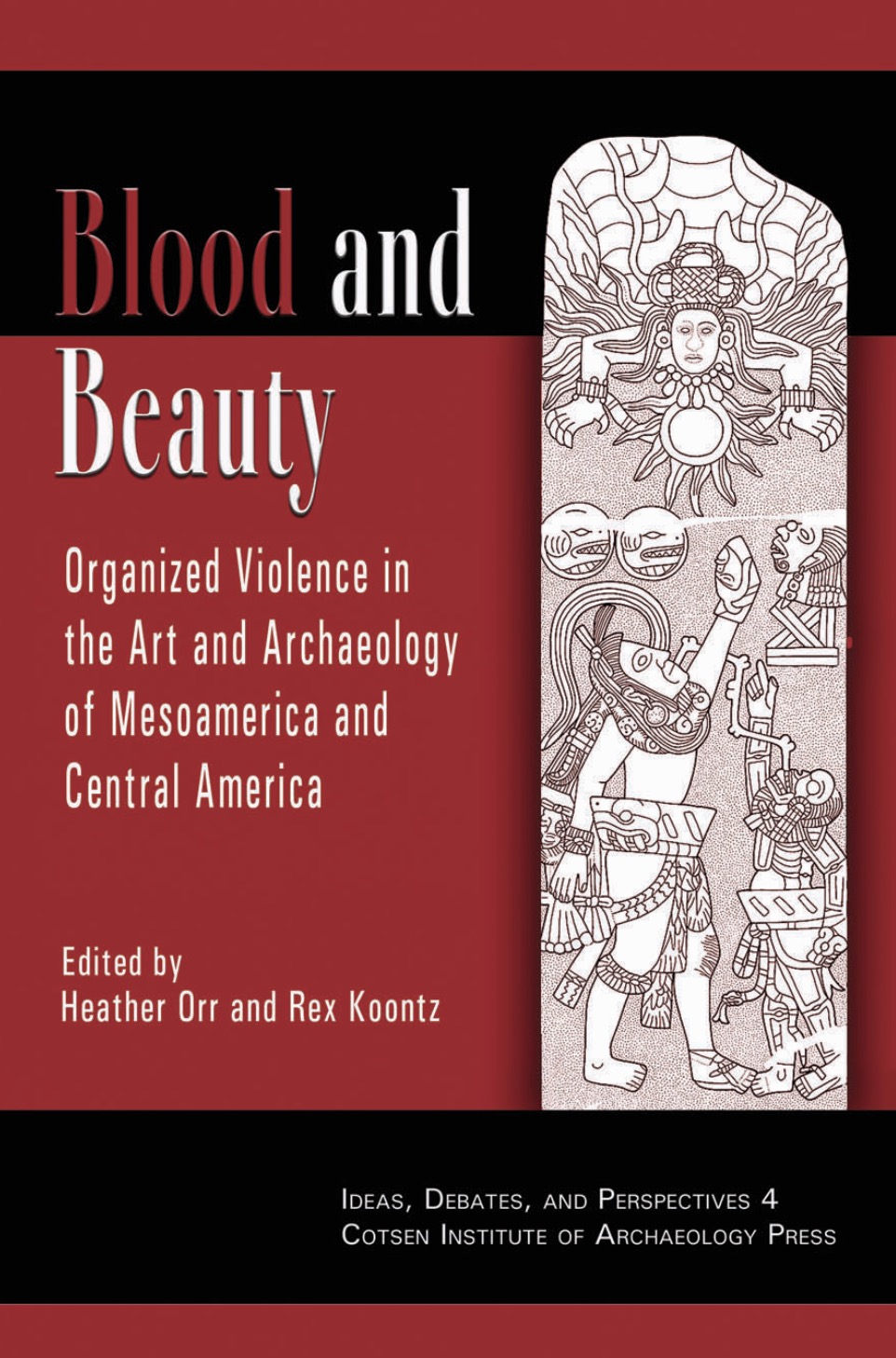
Blood and Beauty: Organized Violence in the Art and Archaeology of Mesoamerica and Central America
Edited Book
Orr, H. and Koontz, R., editor (2009) Blood and Beauty: Organized Violence in the Art and Archaeology of Mesoamerica and Central America.. Los Angeles, Cotsen Institute of Archaeology Press, 370 pp..
ISBN/ISSN: 9781930000000 | Sinkankas/Born No.: NIS/NIB | RWHL
gems, jade, jadeite, fei cui, Mesoamerica, Mexico, Guatemala, Costa Rica, Mayans, Olmecs, Aztecs, archaeology, history, archaeogemology, Pre-Columbian jade; Costa Rica; Maya; exchange; iconography, lapidary
Scholars generally concur that displays of organized violence were important to ancient American ritual life, and few dispute that many of those displays were directly related to political power. This book asks how organized violence and power are related in ancient America, and how we can talk about those relations. Recent research in many parts of the Americas has greatly increased our knowledge of ancient warfare, that most obvious form of organized violence. Studies of Mesoamerican warfare have produced a particularly complex picture, one showing the ties between warfare and ballgame variants and how these were ultimately linked to assertions of supernatural potency and social status. The papers in this volume question the traditional categories, such as warfare, “the ballgame,” and ritualized sacrifice, through which organized violence has been examined in pre-Columbian studies, and reconsider conventional notions of “power” attributed to these activities. Thus, volume topics encompass such concerns as gladiatorial-like combats, investiture rites, trophy-head taking and display, dark shamanism, and the subjective pain inherent in acts of violence, in addition to the traditional ballgame and warfare activities. The authors scrutinize the representation of, and relationships between, different types of organized violence, as well as the implications of these activities, which can include the unexpected, such as violence as a means of determining and curing illness, and the use of violence in negotiation strategies. This volume brings together scholars from diverse perspectives and schools of thought, in an effort to better represent discourse on the subject of organized violence in pre-Columbian studies. As editors, we made a conscious effort to avoid imposing a false sense of unified thought, and instead have endeavored to maintain a plurality of approaches. In this sense we encouraged detailed readings of local data over generalizations and prescriptive theorizing. Recent studies of the origins of warfare have stressed the large variations in small-scale, regional conflict situations (Thorpe 2002); we believe that similar variations in more complex societies should hold our attention as well. However, inasmuch as the volume is multivocal, we believe that coherence is attained through the common desire of each author to examine organized violence as a set of practices grounded in cultural understandings, even when the violence threatens the limits of those understandings.