
Four Treasures Reference Database
Record No. 28658
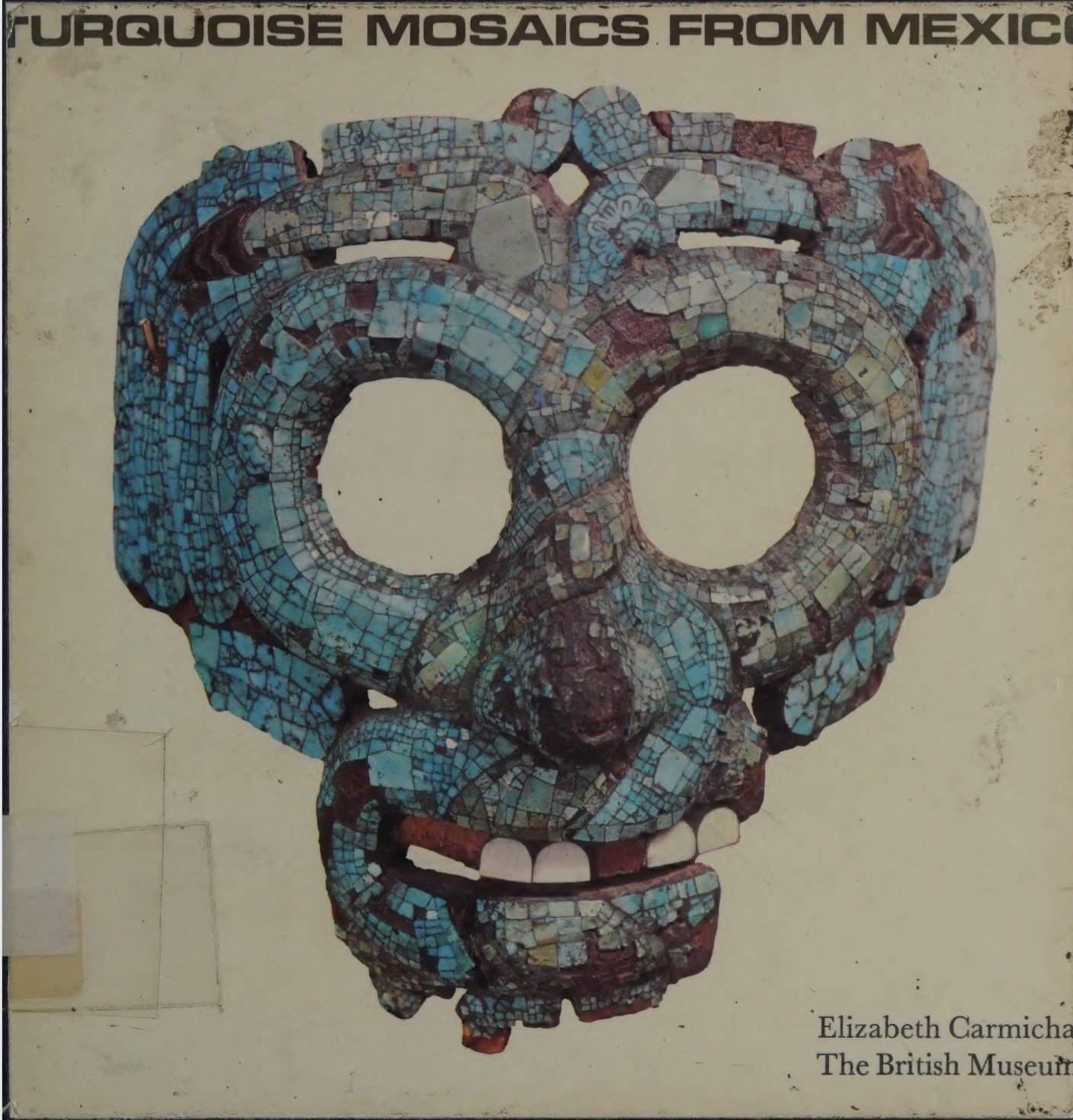
Turquoise Mosaics from Mexico
Book
Carmichael, E.M. (1970) Turquoise Mosaics from Mexico. London, British Museum, 40 pp.
ISBN/ISSN: 714115150 | Sinkankas/Born No.: 1150; NIB | RWHL
gems, Mesoamerican art, Mesoamerican metalwork, gold, turquoise, Aztec, British Museum, masks, pre-columbian art, Oaxaca, Mexico, Yucatan, Chichen Itza
The group of nine turquoise mosaics from Mexico in the collections of the British Museum are quite rightly considered one of the most important treasures of the Department of Ethnography. They are in themselves compelling enough visually to require no written encouragement to excite interest in them. Their probable history as some of the first examples of Mexican art to be seen by European eyes is surely enough to sustain such interest if one imagines them in the context of the early sixteenth century in the Old World. At the time of the Spanish Conquest of Mexico in 1519, Henry VIII was on the throne of England; Leonardo da Vinci died in that same year. Albrecht Dürer was visiting Brussels at the time when the first treasures sent home by Hernán Cortés to the Emperor Charles V were to be seen there. In an all too tantalizingly brief entry in his journal he expressed his astonishment at these things from the New World, and the way in which they moved him. The skull mask in the British Museum is said to have come from a Belgian collection; perhaps it was one of the pieces seen by Dürer. Even without the featherwork and gold ornaments which belonged with them, the masks in the collection, particularly, retain most of the impact they were obviously intended to have. They represent gods, and the vivid colour, the startling contrast of the bared white teeth against the blue of the turquoise, the sheen, and in moving light, even the glitter, of the stones all combine to convince one that, placed over the faces of human beings dressed in all the rich garments and regalia and with the tall, elaborate feather headdresses of Aztec priests, the effect must have been magnificent and somewhat terrifying. The complexity of Mexican civilization in the Aztec period, and the vast literature on most aspects of it, make it impossible to describe adequately here. The lengthy history of the building of the Aztec empire, the highly complex religions of the Valley of Mexico at that time, and the events of the Spanish Conquest have all filled many books. A short bibliography at the end of this text suggests a few general works to provide a background as well as listing books of special interest in connection with the turquoise mosaics. It is hoped that as a result of work currently in progress at the British Museum it will be possible to devote a subsequent publication to the materials and technology of the turquoise mosaics in the collections. A good deal is known of lapidary work in the Aztec period from post-Conquest accounts, and this may best be treated at that time. By far the greatest number of turquoise mosaic-decorated items found in Mexico (predominantly masks and shields) have come from Oaxaca. However, fine examples of mosaic work have also been found at the Postclassic Maya site of Chichén Itzá in northern Yucatán. Warriors wearing mosaic masks are depicted on relief carvings at that site, and although the masks they wear may not be made of turquoise, they do illustrate well how the combined mask and headdress looked when worn.