
Four Treasures Reference Database
Record No. 28683
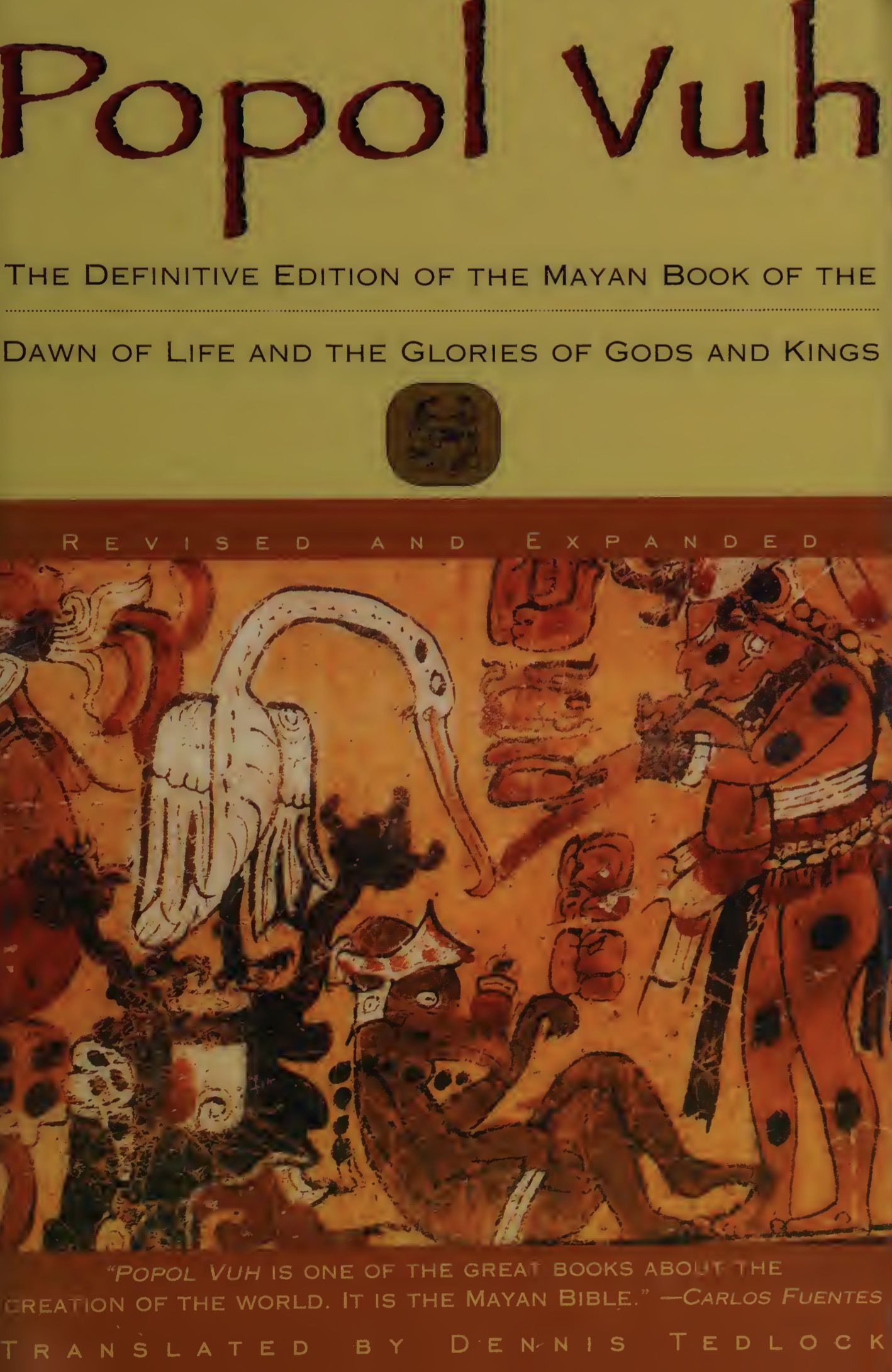
Popol Vuh: The Definitive Edition of the Mayan Book of the Dawn of Life and the Glories of Gods and Kings
Book
Tedlock, D. (1985) Popol Vuh: The Definitive Edition of the Mayan Book of the Dawn of Life and the Glories of Gods and Kings. New York, Simon & Schuster, 388 pp.
ISBN/ISSN: 9780680000000 | Sinkankas/Born No.: NIS / NIB | RWHL
gems, jade, jadeite, fei cui, Mesoamerica, Mexico, Guatemala, Costa Rica, Mayans, Olmecs, Aztecs, archaeology, history, archaeogemology, Pre-Columbian jade; Costa Rica; Maya; exchange; iconography, lapidary
The Popol Vuh tells the story of the emergence of light in the darkness, from primordial glimmers to brilliant dawns, and from rainstorms as black as night to days so clear that the very ends of the earth can be seen. A revised edition of this translation of the Popol Vuh has become necessary because the world of Maya studies is itself a constantly brightening one. Advances in the understanding of Maya languages, literature, art, history, politics, and astronomy have required changes in the introduction, notes, commentaries, glossary, and illustrations. There are also changes in the translation itself, some of them subtle refinements and others that readers of the previous edition may find surprising. Finally, an index has been added. Newly available sources on Maya languages have made it possible to give meaning to proper names that were left untranslated before. For example, Xbaquiyalo, the wife of Seven Macaw, now becomes Egret Woman. The temptresses Xtah and Xpuch are now Lust Woman and Wailing Woman, and they stand revealed as the predecessors of a dangerous phantom known all the way from Guatemala to northern New Mexico by her Spanish name, La Llorona. And Tecum, Keeper of the Mat in the ninth generation of Quiché lords, becomes Black Butterfly. In other cases, new sources have made it possible to correct errors of translation that were caused by imprecise spellings or slips of the pen in the Popol Vuh manuscript, which often leave words and phrases open to multiple interpretations. What was once “the emergence of all the sky-earth” now becomes “the lighting of all the sky-earth,” a reference to the astronomical aspect of the story. The name of the first human woman, given as Celebrated Seahouse in the previous edition, now changes to Red Sea Turtle. The term for the rubber used by the Hero Twins to heal a falcon’s eye is no longer “sorrel gum” but rather “blood of sacrifice.” And the image of the god Hacauitz is no longer located “above a great red river” but rather “at the top of a great pyramid.”