
Four Treasures Reference Database
Record No. 28686
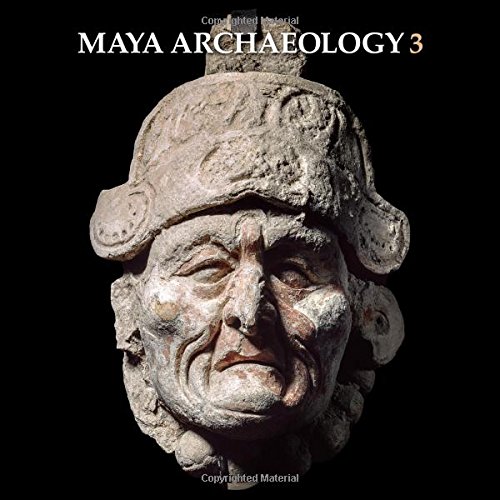
Middle Preclassic caches from Ceibal, Guatemala
Book Section
Inomata, T. and Triadan, D. (2015) Middle Preclassic caches from Ceibal, Guatemala. In: Maya Archaeology 3, San Francisco: Precolumbia Mesoweb Press, pp. 56–91.
ISBN/ISSN: 9780990000000 | Sinkankas/Born No.: NIS/NIB | RWHL
gems, jade, jadeite, fei cui, Mesoamerica, Mexico, Guatemala, Costa Rica, Mayans, Olmecs, Aztecs, archaeology, history, archaeogemology, Pre-Columbian jade; Costa Rica; Maya; exchange; iconography, lapidary, Ceibal
The lowland Maya site of Ceibal (also spelled Seibal), Guatemala, is well known for the landmark exploration conducted by Harvard University from 1964 through 1968 (Sabloff 1975; Willey et al. 1975). Harvard researchers recognized that there was substantial Preclassic occupation at the site. However, their investigations focused primarily on the Classic-period buildings, and Preclassic layers remained largely unexplored (Tourtellot and Hammond 2007; Willey 1990). We initiated the Ceibal-Petexbatún Archaeological Project in 2005 to reexamine this important site, focusing on the Preclassic period. Our working hypothesis was that Ceibal was established as a ceremonial centre at the beginning of its occupation with a spatial plan similar to those of contemporaneous Chiapas centres. Following Gareth Lowe (1977, 1989) and Andrew McDonald (1983), John Clark (Clark and Hansen 2001) has pointed out that a standardized spatial plan, which he called the Middle Formative Chiapas (MFC) pattern, was shared by various Chiapas centres, including Mirador, Chiapa de Corzo, Finca Acapulco, San Isidro, Ocozocoautla, and La Libertad in the Grijalva River basin, as well as Tzutzuculi on the southern Pacific coast (see map, page 7 of this volume). Lowe and Clark have also noted a similar spatial pattern at La Venta and suggested that the standardized plan originated from this Olmec centre. The centre of an MFC pattern was marked by an E-Group assemblage consisting of a square or round pyramid on the west and an elongated mound on the east, and large platforms that may have supported elite residences were arranged along the north-south axis of the E Group. Excavations at San Isidro and Chiapa de Corzo have shown that numerous caches with greenstone axes and other objects were placed along the east-west axis of the E-Group assemblage at some MFC centres (Bachand and Lowe 2012; Lowe 1981). At La Venta, numerous caches with greenstone axes, jade ornaments, and other artefacts have been uncovered in its Complex A; its probable E-Group assemblage is mostly unexplored (Drucker 1952; Drucker et al. 1959). At Ceibal, the discovery of Caches 6 and 7 with greenstone axes in the southern part of the E-Group plaza by the Harvard team suggested that there might be more caches in this ceremonial space (Smith 1982:242–243).