
Four Treasures Reference Database
Record No. 28705
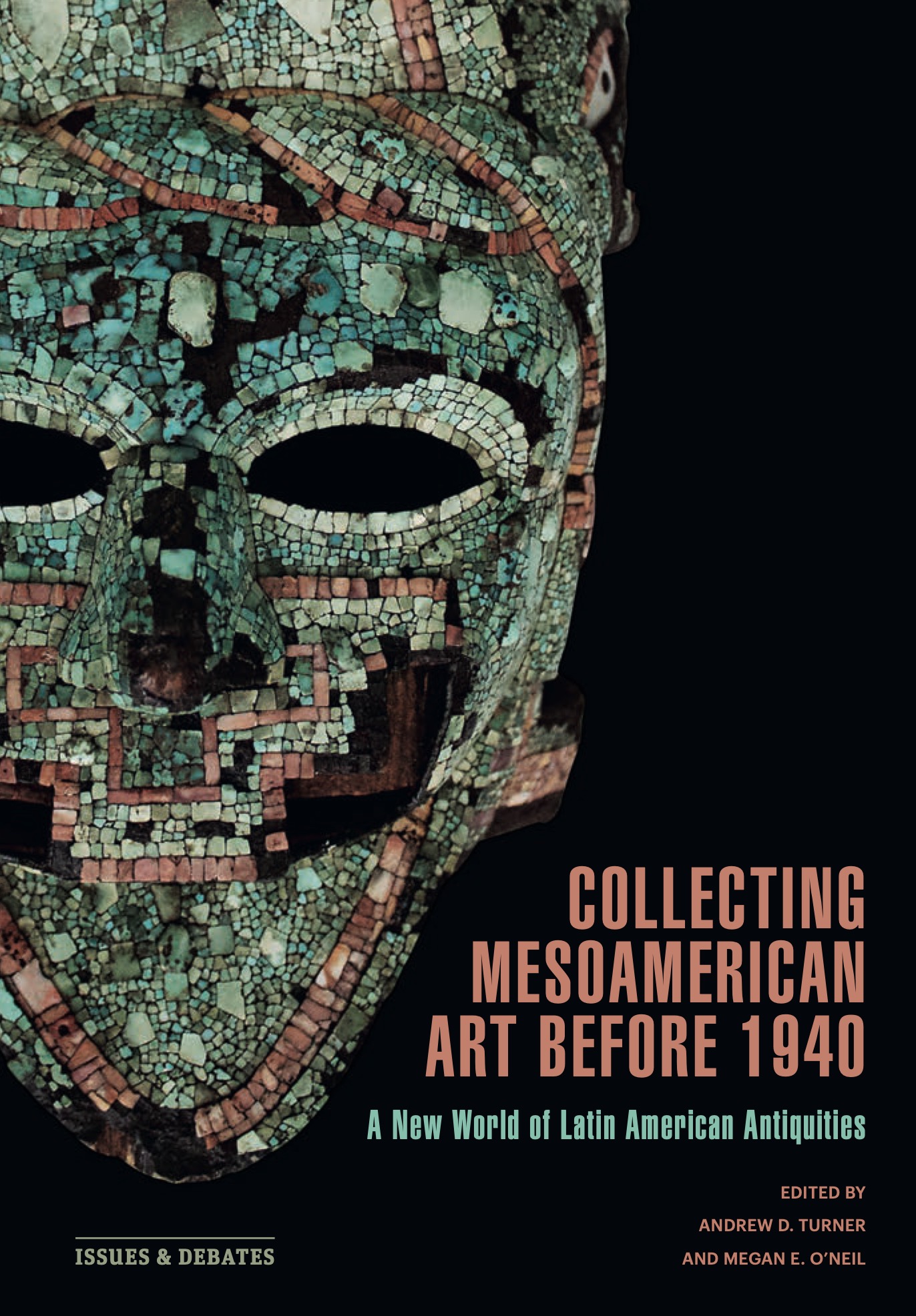
Collecting Mesoamerican Art Before 1940: A New World of Latin American Antiquities
Edited Book
Turner, A.D. and O'Neil, M.E., editor (2024) Collecting Mesoamerican Art Before 1940: A New World of Latin American Antiquities.. Los Angeles, Getty Research Institute, 343 pp..
ISBN/ISSN: 9781610000000 | Sinkankas/Born No.: NIS/NIB | RWHL
gems, jade, jadeite, fei cui, Mesoamerica, Mexico, Guatemala, Costa Rica, Mayans, Olmecs, Aztecs, archaeology, history, archaeogemology, Pre-Columbian jade; Costa Rica; Maya; exchange; iconography, lapidary
In two successive articles, the Gazeta de México announced that on 25 August 1790 the long-awaited Natural History Cabinet in Mexico City, the capital of New Spain, would open its doors. Finally, visitors would be able to view the collection of the Spanish surgeon José Longinos, which comprised curious specimens from the three kingdoms of nature—minerals, plants, and animals—together with “antiquities,” anatomical wax models made by Longinos himself, scientific instruments, and specialized books. The collection was arranged according to the Linnaean system in three pyramidal displays and twenty-four shelves. Those wishing to admire it were invited to 89 Calle de los Plateros in the city centre on Mondays and Fridays between 10:00 a.m. and 1:00 p.m., or between 2:00 p.m. and 5:00 p.m. As evidence of “the ferment in which this science, especially in this capital, now finds itself,” the second Gazeta de México article concluded with a revealing list of private collectors, some of whom had contributed donations to the new cabinet of natural history: Bernardo Bonavía y Zapata, chief intendant of Mexico City; Miguel Páez de la Cadena, superintendent and special judge of the Royal Customs; Joseph de Flórez, lieutenant colonel of the Royal Armies; Juan de Santelices Pablo, prosecutor of the Royal Mining Tribunal; Joseph Antonio Alzate, editor of scientific journals; Ramón de Posada y Soto, prosecutor of the Royal Treasury; Francisco Fernández de Córdova, superintendent of the Royal Mint; Juan Navarro y Madrid, director general of Excise and Pulque Tax Revenues; Fausto Elhuyar, director general of the Royal Mining Tribunal; Francisco Xavier Sarría, director of the Royal Lottery; and a certain Joaquín de los Ríos. In addition to listing their names and occupations, the Gazeta de México noted that the first five collectors possessed specimens from all three kingdoms of nature, while the remaining six owned only “collections from mines and other curiosities.” This was no insignificant group, for most were among the highest-ranking officials in the colonial administration—that is, men of considerable political influence and economic means—and nearly all were well versed in the ideas of the Enlightenment.