
Four Treasures Reference Database
Record No. 28744
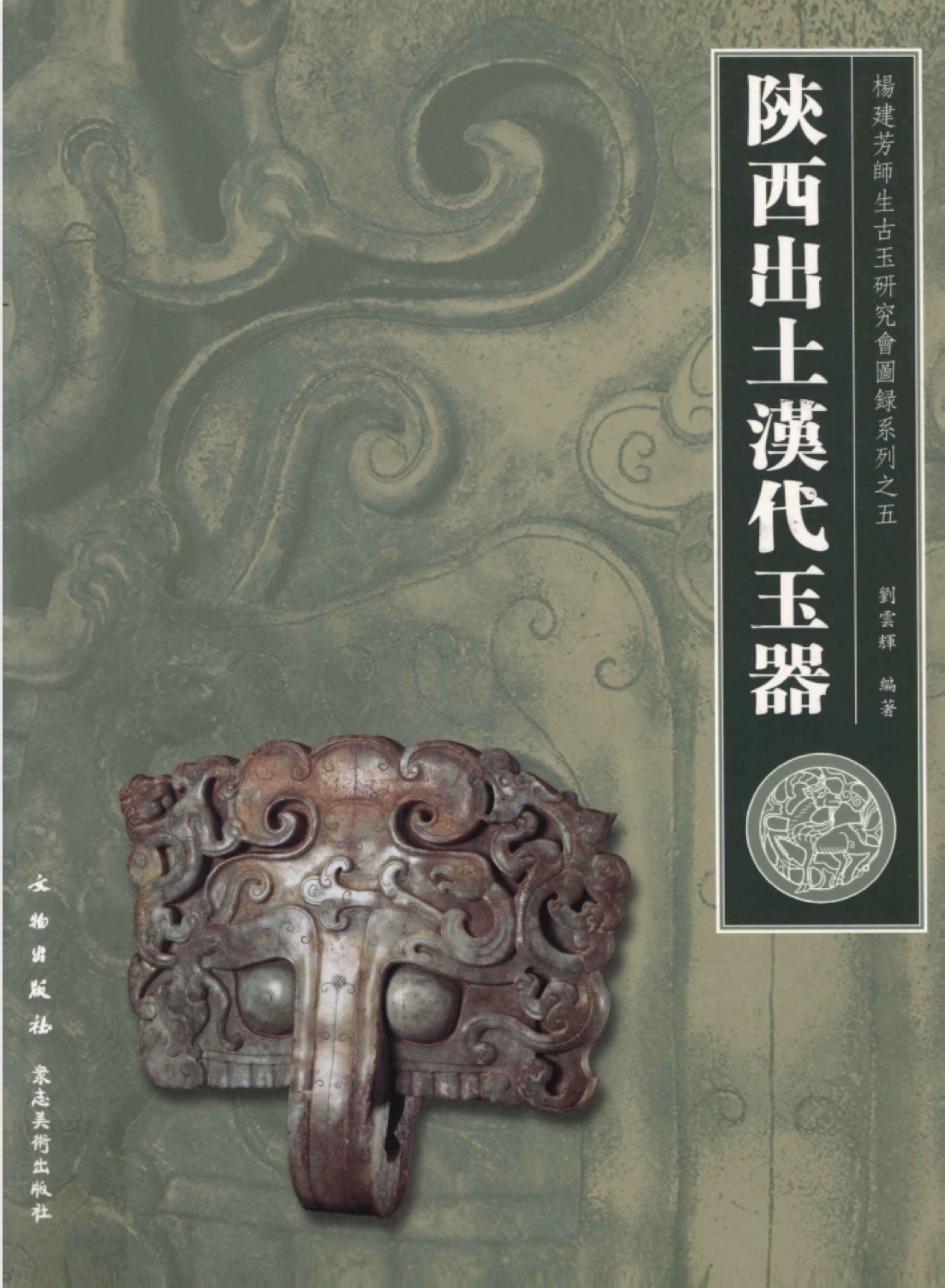
Ancient Jade Objects Unearthed in Shaanxi
Edited Book
Liu, Y., editor (2009) Ancient Jade Objects Unearthed in Shaanxi.. Beijing, Cultural Relics Publishing House, 327 pp..
ISBN/ISSN: 9787500000000 | Sinkankas/Born No.: NIS/NIB | RWHL
gems, jade, amphibole jade, actinolite, tremolite, amphibole group, nephrite, archaic jade, archaeogemology,
The history of jade catalogues can be traced back nearly nine hundred years to the Kaogu Tu (Illustrated Catalogue of Antiquities) compiled by Lü Dalin during the Northern Song dynasty. At first these works consisted only of line drawings; later rubbings were added, followed by black-and-white photography, and over the last two or three decades colour illustrations have become increasingly common. The great variety of illustrations has undoubtedly contributed to the appreciation and study of jade. Yet it must also be said that many jade catalogues suffer from certain shortcomings. For example, a three-dimensional zoomorphic jade carving is often illustrated only from the front or side, with no image of the underside. Since the characteristics of the underside (belly, feet, claws) of such carvings vary according to period, omitting views of the base deprives readers of important information and removes a valuable means of dating the object. Another example is the jade pushou mask ornament decorated with the Four Divine Creatures, excavated from the Maoling Mausoleum precinct of Emperor Wu of Han at Xingping, Shaanxi. Published illustrations generally show only the front view depicting the four creatures, giving the impression that the reverse is plain. In fact, the back bears a heart-shaped motif and is covered with flowing cloud patterns, all executed in the refined and fluid incised style characteristic of the Han dynasty (see Plate 101 in this volume). It is worth noting that these cloud motifs on the reverse may have been intended to set off and enhance the imagery of the Four Divine Creatures on the front. Omitting images of the reverse therefore not only removes a means of dating the piece but also diminishes appreciation of the artistic techniques used to represent the four creatures. Similarly, some zoomorphic jade carvings possess extremely fine and intricate decorative patterns. When illustrations are too small, or when line drawings, rubbings, enlarged details, and other aids are lacking, these features are difficult, if not impossible, to discern with the naked eye. Examples include the jade bear pendant and openwork jade bear-phoenix pendant from a tomb at Caiyuan, Henan; the human-face and bird-body jade pendant from Tomb M1 at Jiudun, Suizhou, Hubei; the jade bear pendant from an Eastern Zhou tomb at Jincun, Luoyang, Henan; and the jade dancing figure and jade bear pendant reportedly excavated from a Warring States tomb at Jincun, Luoyang. Because of these shortcomings, the knowledge readers gain from the illustrations in jade catalogues is often incomplete or unclear. From another perspective, some valuable data embodied in the illustrations have not been fully exploited by editors and authors, preventing them from achieving the best possible results and, to some extent, wasting precious material. If jade catalogues are truly to embody the principle of “making the fullest use of the object,” enabling rich material to serve a greater purpose and allowing readers to gain more from it, they must break away from conventional methods of presentation and pursue innovation. In this regard, Mr. Liu Yunhui’s Han Dynasty Jade Objects Unearthed in Shaanxi represents a highly meaningful experiment. This volume essentially encompasses the Han dynasty jade carvings excavated within Shaanxi Province. As is well known, the Western Han dynasty established its capital at Chang’an, and although the political centre of the Eastern Han shifted to Luoyang, Chang’an remained an important strategic centre. Throughout the Han period the region was therefore of great significance, and the importance of Han jade excavated in Shaanxi scarcely needs emphasis. Among the notable objects illustrated in this book are the jade seal inscribed “Empress’s Seal,” the fragmentary jade tablet used by Wang Mang in the Feng and Shan sacrifices, the large jade bi disk with dragon-and-phoenix design measuring 43.2 cm in diameter, the Four Divine Creatures jade pushou ornament, a fully sculpted jade immortal riding a heavenly beast, a fully sculpted crowned jade figurine, a fully sculpted jade bear, fully sculpted jade bixie in walking and crouching poses, and a large jade bixie support. These works are either of the highest political status, being associated with the imperial house, or of exceptional artistic quality. They may be regarded as representative masterpieces of Han jade and are of great importance for the appreciation and study of Han dynasty jade artefacts. Particularly noteworthy is the fact that many of the colour illustrations in this volume are supplemented by rubbings or line drawings for comparison. Important three-dimensional zoomorphic carvings are further accompanied by enlarged colour photographs of details, presenting their distinctive features from a variety of angles. These measures provide readers with a more comprehensive and clearer understanding of the objects and help to remedy, at least in part, the deficiencies found in illustrations of the same pieces published elsewhere. Mr. Liu Yunhui’s innovative experiment is of considerable benefit to readers and may well serve as a model for future jade catalogues.