
Four Treasures Reference Database
Record No. 28815
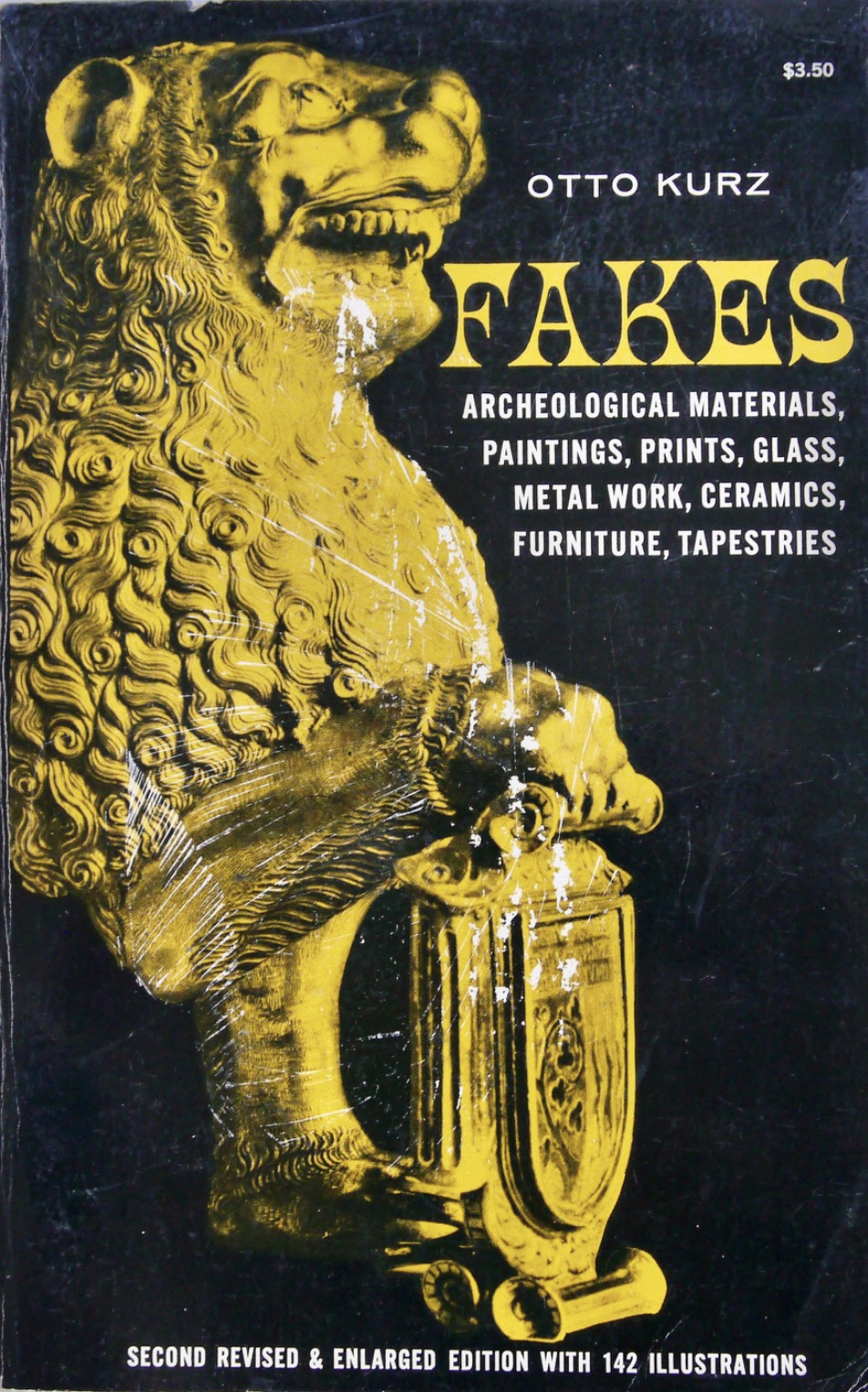
Fakes
Book
Kurz, O. (1967) Fakes. New York, Dover, 348 pp.
Sinkankas/Born No.: NIS/NIB | RWHL
gems, jewelry, fake, counterfeit, treatments, enhancements, forgery
Johannes Vermeer, so unsaleable that one of his finest works, The Artist in His Studio, bears the forged signature of Pieter de Hooch … the “trove” of some 33 Vincent van Gogh oils that appeared on the market between 1928 and 1933 … the 14th-century turkey murals of Schleswig that turned out to date from the 1890s … the inventory of El Greco’s studio after his death, showing that pupils painted four and five replicas of the major works … the career of Alceo Dossena, forger extraordinary, whose work deceived the major museums of Europe and America … Han van Meegeren, on trial for selling a Vermeer to Hermann Göring, reveals that he painted it himself … Camille Pissarro, in 1895, writing: “I am conducting a campaign against forgers who are peddling fake paintings and gouaches, with my name misspelled!” … 18th-century French furniture, with more pieces shipped to New York each year than could have been made in the whole 18th century … Scythian crowns, Etruscan statues, Sardinian giants, Cretan snake goddesses, and all the beautiful or ugly, exciting or dull exhibits that are honored one year and, the next year, relegated to the museum attic or basement when careful examination reveals their true origin. This present volume, the definitive work on art fakes in English, encompasses the entire field of art forgery, describing scores of carefully researched, authenticated, indisputable cases of fakery. Ranging in time from the ancient classical world to the newspaper scandals of the 1960s, Dr. Kurz provides a most useful and entertaining study of this profitable and all-pervasive pseudo-industry. Painting, prints, sculpture, mosaic work, furniture, jewelry, medals, archaeological finds, ceramics, glass, and other art forms are discussed, as are modern investigative techniques. This book may disillusion you about one of your favorite works of art, but it is certain to broaden your sense of skepticism immensely. “Useful to collectors and students as a warning against accepting, whole cloth, the labels attached to works of art, and in bringing to their attention the colossal extent and success of the business of faking,” Magazine of Art. “A pleasant combination of scholarship and lightheartedness, a very readable and compendious book,” Burlington Magazine. “An excellent book, essentially scholarly, always interesting and frequently somewhat caustically witty,” The Connoisseur.