
Four Treasures Reference Database
Record No. 28837
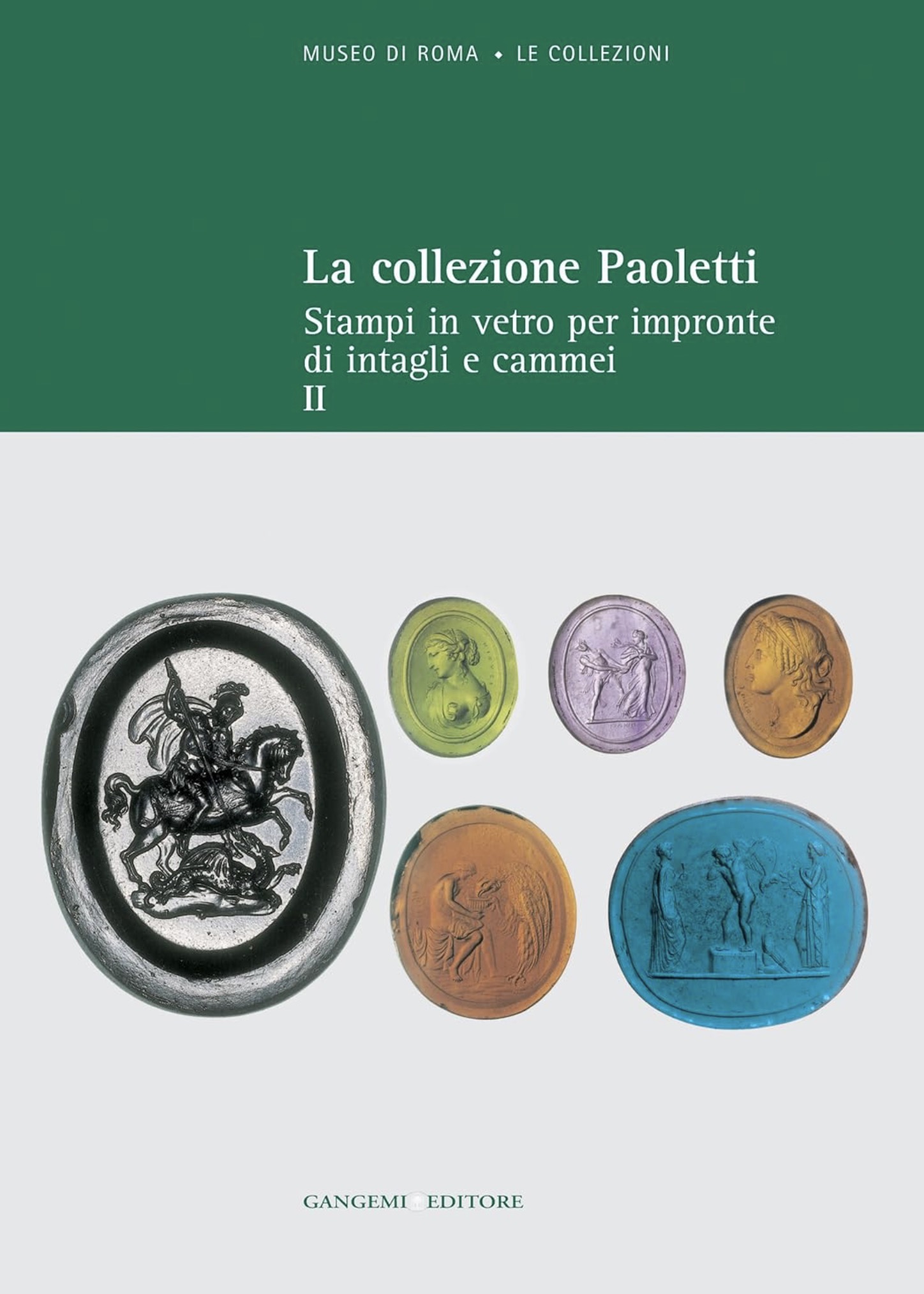
La Collezione Paoletti – Stampi in vetro per impronte di intagli e cammei
The Paoletti Collection – Glass Molds for Impressions of Intaglios and Cameos
Book
Pirzio Biroli Stefanelli, L. (2007, 2013) La Collezione Paoletti – Stampi in vetro per impronte di intagli e cammei. [The Paoletti Collection – Glass Molds for Impressions of Intaglios and Cameos] Rome, Gangemi Editore, 3 Vols. (2 published so far), 448, 512 pp.
ISBN/ISSN: 9788849211368, 9788849225563 | Sinkankas/Born No.: NIS/NIB | Language: in Italian | not seen
gems, ancient gemology, ancient jewelry, advanced testing, archaeology, archaeogemology, glyptic, engraved gems, cameos, intaglios, seals, glass, fraud, counterfeit, forgery, imitation gems
“The so-called pastes manufactured only in Rome are imitations, or rather impressions, of ancient and modern cameos and intaglios in enamel. Besides these pastes, impressions are also made in sulfur and in scagliola. These cost very little and are extremely interesting, since through them one may acquire, at very little expense, a compendium of the art, history, and mythology of the Ancients. […] In this way there are collections whose purpose is to show the development of Art, beginning with the Egyptians and Etruscans, continuing through the Greeks and the Romans, from the birth of Art to its decline. Other collections are historical, containing the principal events of history; others contain only portraits arranged in series of the first Kings of Rome, the Emperors, famous Captains, Philosophers, and Poets.” Thus Giuseppe Brancadoro wrote in the “Notizie riguardanti le Accademie di scienze, ed arti esistenti in Roma coll’elenco dei Pittori, Scultori, Architetti etc. compilata ad uso degli Stranieri.” The first of three volumes, this catalog constitutes the complete publication of the collection of glass molds used during the first half of the nineteenth century by the workshop of Bartolomeo and Pietro Paoletti for the serial production of scagliola impressions of cameos and hardstone intaglios from every period. The catalog is supplemented by a reconstruction of the Paoletti workshop’s activity in Rome and by a historical-critical analysis of the collection.