
Four Treasures Reference Database
Record No. 28926
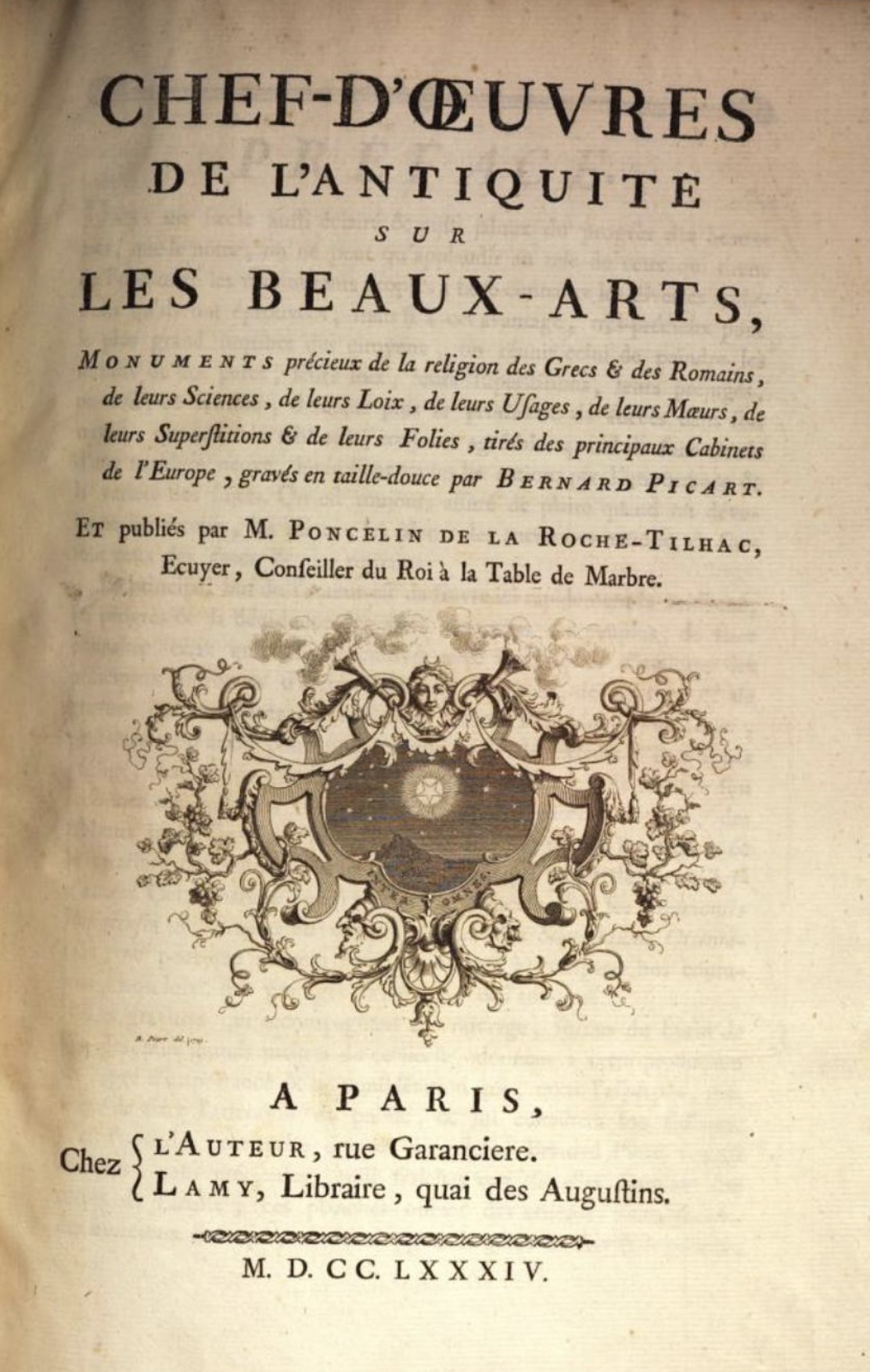
Chef d'oeuvres de l'antiquité sur les Beaux-Arts
Masterpieces of Antiquity in the Fine Arts
Book
Picart (1784) Chef d'oeuvres de l'antiquité sur les Beaux-Arts. [Masterpieces of Antiquity in the Fine Arts] Paris, Lamy, 2 Vols., 187 pp.
Sinkankas/Born No.: NIS/NIB | Language: in French | RWHL
gems, glyptic, engraved gems, agate, cameo, intaglio, shell, ancient gems, Rome, Greece, ancient jewelry, rings
In an age as enlightened and as jealous of the progress of the fine arts as our own, one can only applaud the zeal of those who bring out of obscurity the monuments capable of revealing the various transformations these arts have undergone; but if to this advantage, so precious to the greater number of citizens, one adds that of depicting the customs of our forefathers, their laws, their superstitions, and their prejudices, then one may all the more expect success in such a work, since such portrayals, always pleasing when presented in a fresh manner, interest all nations through the importance and variety of their subjects. One is always assured of pleasing when one reveals the errors, virtues, and talents of ancient peoples, and especially those of the Greeks and Romans. The principal aim of the author here is rapidly to trace the birth, progress, and decline of the arts among all these peoples; to make known those who cultivated them successfully; and to indicate the principal works of architecture, sculpture, painting, and engraving that enriched Rome and Greece. To enliven a subject perhaps too arid for a certain class of readers, he has not neglected, whenever the opportunity presented itself, to strengthen his argument with striking anecdotes, curious details, and engaging tableaux suited to revealing the genius, customs, and character of the nations that form the principal subject of these Chef-d’œuvres. This method, which he has followed successfully in his Religious Ceremonies of the Peoples of the World and in his Oriental Superstitions, cannot fail to please those who enjoy comparing our customs, laws, and prejudices with those of antiquity.