
Four Treasures Reference Database
Record No. 28936
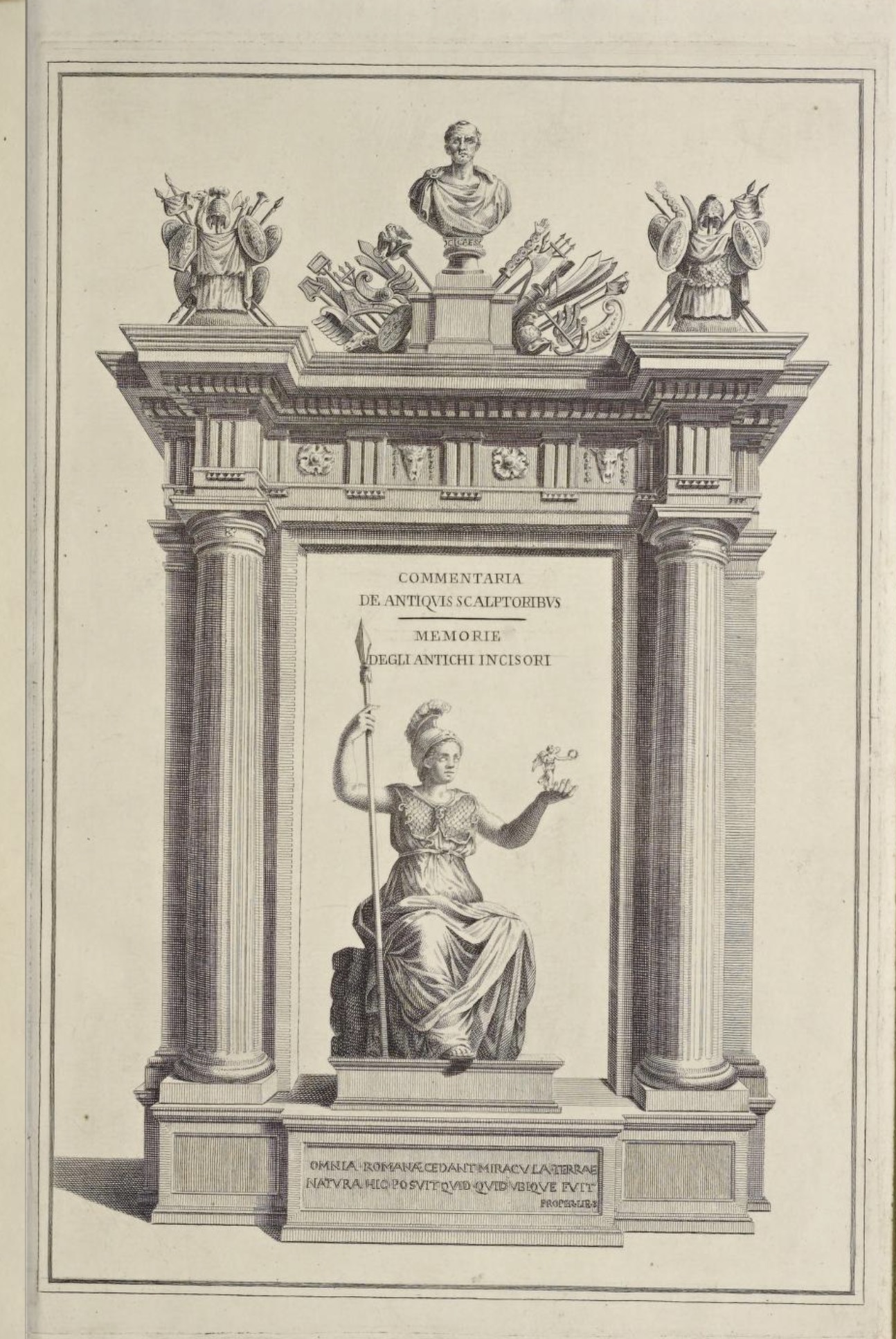
Memorie degli antichi Incisori che scolporono i loro nomi in Gemme e Cammei
Accounts of the Ancient Gem Engravers Who Signed Their Gems and Cameos
Book
Bracci, D.A. (1784–1786) Memorie degli antichi Incisori che scolporono i loro nomi in Gemme e Cammei. [Accounts of the Ancient Gem Engravers Who Signed Their Gems and Cameos] Firenze, 2 Vols.
Sinkankas/Born No.: 882; NIB | Language: in Latin | NIS/NIB
gems, glyptic, engraved gems, agate, cameo, intaglio, shell, ancient gems, Rome, Greece, ancient jewelry, rings
Sinkankas: A physically large and elaborate work containing numerous finely engraved plates, although their scholarly value was questioned by Adolf Furtwängler (Die antiken Gemmen, 1900, vol. 3, pp. 419–420). In general, each engraved gem is depicted greatly enlarged, one gem per plate, occupying a printed area of approximately 23.5 × 16.5 cm (9¼ × 6⅛ in), while the actual size of the gem is also indicated. Several supplementary plates illustrate statues and other works of art and may differ in size from the standard format. Furtwängler observed that Bartolomeo Borghesi Bracci was a “bitter enemy” of Johann Joachim Winckelmann and that in this work, begun in 1756, he found an opportunity to vent his hostility toward the already deceased scholar. Despite its sumptuous appearance, Furtwängler considered the publication “splendid, but really of little value,” noting that it included only a few genuine gems from the Stosch collection, along with others that were either modern forgeries or could not be attributed to any known engraver. He further criticized the accompanying text, printed in both Latin and Italian, as diffuse, uninspired, and uncritical, while describing the engravings themselves as executed in a weak, characterless manner and poorly printed. Each plate bears a dedication to the individual who financed its production. See Vinet 1638. Goodland records a copy in which the text is bound in two volumes and the plates in a third.