
Four Treasures Reference Database
Record No. 28945
Étude sur quelques camées du cabinet des medailles
A study of selected cameos in the cabinet of medals
Journal Article
Chabouillet, A. (1886) Étude sur quelques camées du cabinet des medailles. [A study of selected cameos in the cabinet of medals] Gazette Archéologique, pp. 395–401.
Sinkankas/Born No.: 1243 (not seen); NIB | Language: in French | RWHL
gems, glyptic, engraved gems, agate, cameo, intaglio, shell, ancient gems, Rome, Greece, ancient jewelry, rings
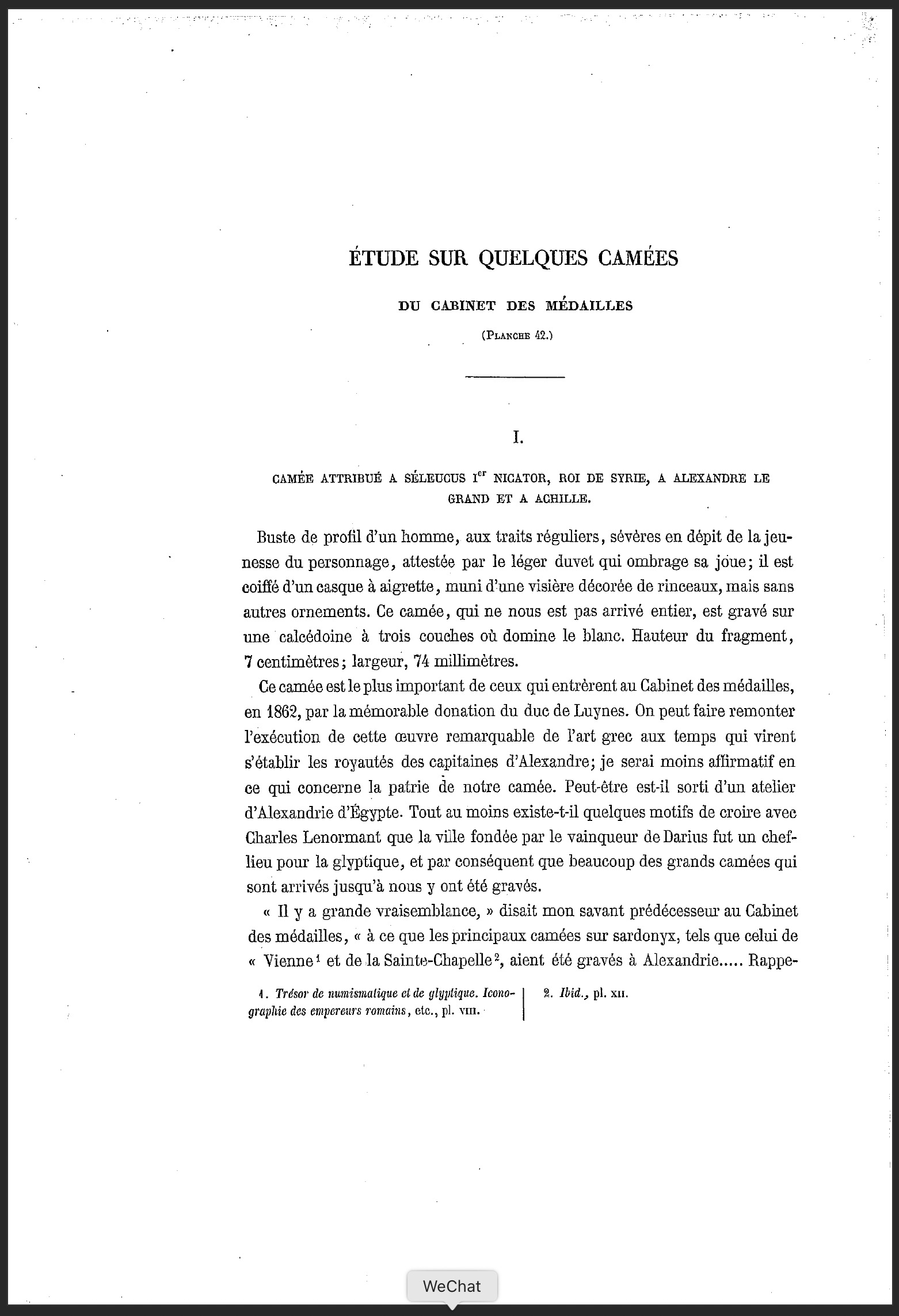
Bust in profile of a man whose features are regular and stern despite his youth, which is indicated by the light down shading his cheek. He wears a plumed helmet furnished with a visor decorated with scrolling foliage, but without other ornamentation. This cameo, which has not come down to us intact, is engraved on a three-layered chalcedony in which white predominates. Height of the fragment: 7 centimeters; width: 74 millimeters. This cameo is the most important among those that entered the Cabinet of Medals in 1862 through the memorable donation of the Duke of Luynes. The execution of this remarkable work of Greek art may be dated to the period that saw the establishment of the kingdoms founded by Alexander’s generals. I am less certain, however, regarding the homeland of our cameo. It may have emerged from a workshop in Alexandria, Egypt. At the very least, there are some grounds for believing, with Charles Lenormant, that the city founded by the conqueror of Darius was a major center of glyptic art, and consequently that many of the great cameos that have survived to our time were engraved there.