
Four Treasures Reference Database
Record No. 28960
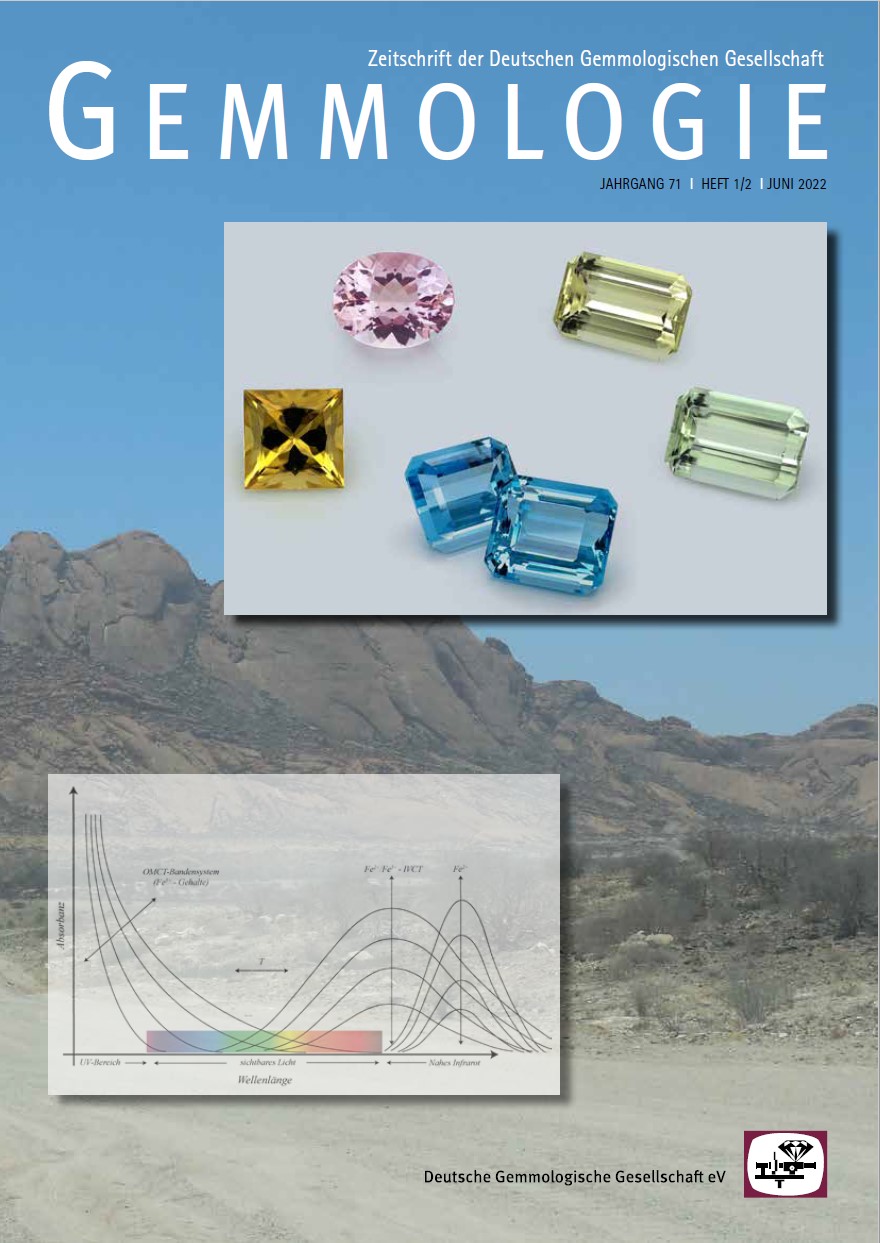
Synthetische Berylle
Synthetic beryl
Journal Article
Stephan, T., Müller, S. and Wang, Q. (2022) Synthetische Berylle. [Synthetic beryl] Gemmologie: Zeitschrift der Deutschen Gemmologischen Gesellschaft, Vol. 71, No. 1/2, pp. 51–60.
Sinkankas/Born No.: NIS/NIB | Language: in German | RWHL*
Close Abstract
Hide Keywords
Copy Reference
gems, beryl, aquamarine, emerald, morganite, heliodore, goshenite
From experiments since the middle of the 19th century, the flux method to produce synthetic beryls was developed in the first half of the 20th century, in particular to create synthetic emerald. The hydrothermal method developed in the 1960s also focused on synthetic emerald, but synthetic beryls in other colours were now also created. Today, a wide range of colours of synthetic beryl is produced by the hydrothermal method. These synthetic beryls are mainly identified with the gemstone microscope based on specific characteristics such as swirl-like growth inhomogeneities, metallic residues and liquid feathers – mostly veil-like and cut. Partly, UV/VIS/NIR spectra can be used for differentiation as well, since synthetic beryls are sometimes coloured by doping with certain elements that do not appear as chromophores in natural beryls, especially Co²⁺ (red to violet to orange-brown colours) and Cu²⁺ (pale to intense blue colours). These elements can also be detected by chemical analysis. In infrared spectra, differences can also be worked out by determining the dominant water types.