
Four Treasures Reference Database
Record No. 28983
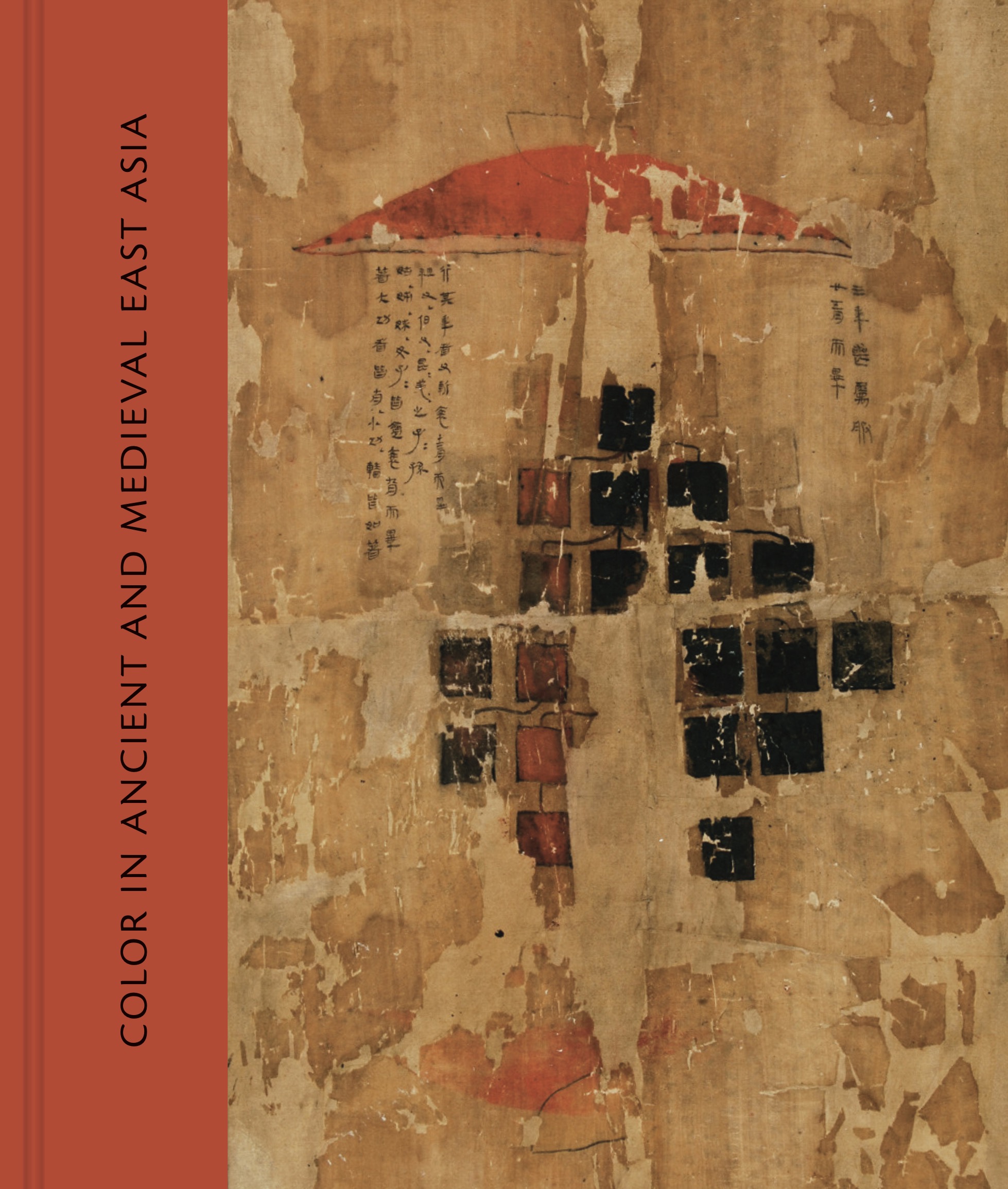
Color in Ancient and Medieval East Asia
Edited Book
Dusenbury, M.M., editor (2015) Color in Ancient and Medieval East Asia.. Lawrence, KS, Spencer Museum of Art, University of Kansas, 288 pp..
ISBN/ISSN: 9780300000000 | Sinkankas/Born No.: NIS/NIB | RWHL*
gems, color, color science, color harmony, color design, color composition, color in China, etymology, CIELAB, cultural differences, East Asia, Japan, Korea, Tibel, Vietnam
Many years ago I went to talk to Wai-kam Ho, then curator of Chinese art at the Nelson-Atkins Museum of Art in Kansas City. Wai-kam told me that if I wanted to understand color in ancient China, the first thing I should comprehend was that color is a source of power. We talked further, but he brushed aside lesser questions to emphasize the importance of understanding that color has power. It was a potent force in ancient Chinese society. This book is the outcome of years of research and the collaboration of chemists, conservators, archaeologists, dyers, historians of art and literature, and scholars of Buddhism and Daoism. Separately and together we have worked to explore the roles that color-and specific dyes and mineral pigments-played in the social and political life, thought, art, and ritual practices of ancient and medieval East Asia. The source material is rich and includes dynastic histories, court documents, travelers' journals, merchants' ledgers, literature, Daoist liturgical and meditative manuals, paintings in tombs and Buddhist grottoes, religious icons, paintings on silk and on paper, pottery, lacquer, and textiles. The seeds for this book were sown at a College Art Association conference. In 2003 I organized a panel, Languages of Color in East Asian Visual Culture, for that conference and invited several scholars represented in this volume to discuss the role of color in East Asian cultures. Guolong Lai, Amy McNair, and I were joined later by chemist Richard Laursen at a small, exploratory colloquium, The Power of Color in Ancient and Medieval East Asia, at the University of Kansas in September 2010. The meeting was sponsored by the Spencer Museum of Art and supported by a seed grant from The Commons Research Initiative in Nature and Culture, a grant designed to nurture and develop interdisciplinary, collaborative research at the University of Kansas. After two days of sharing research and learning each other's vocabulary, 4. Color was used to indicate political authority, rank, and prestige in systems understood throughout East Asia. 5. The courts, aristocracies, and bureaucrats of kingdoms throughout East Asia were color-literate. They knew the dye plants that produced the correct colors and those that produced non-official popular colors. They understood the particularities of each plant, the properties of the colors it yielded, and the principles of dye technology. Poets could, and did, use 8. Edward H. Schafer, The Golden Peaches of Samarkand: A Study of T' ang Exotics (Berkeley: University of California Press, 1963), 208. Schafer referenced the Tang liudian [Compendium of administrative law of the six divisions of the Tang bureaucracy] (Kyoto, 1935), 22, 21a. For an English translation of the Tang liudian, see: Wallace Johnson, The T'ang Code, 2 vols. (Princeton: Princeton University Press, 1979 and 1997). Core components of the Five Agents Direction Season Element Color Planet Directional Animal Musical tones South Summer Fire Red Mars Vermilion Bird jue (mi) East Spring Wood Blue/green Jupiter Azure Dragon zhi (sol) North Winter Water Black Mercury Black Tortoise/ Snake gong (do) West Autumn Metal White Venus White Tiger shang (re) Center * Earth Yellow Saturn Yellow Dragon yu (la) * an intercalary period sometimes described as midsummer and sometimes as a period between summer and autumn. essays.