
Four Treasures Reference Database
Record No. 29007
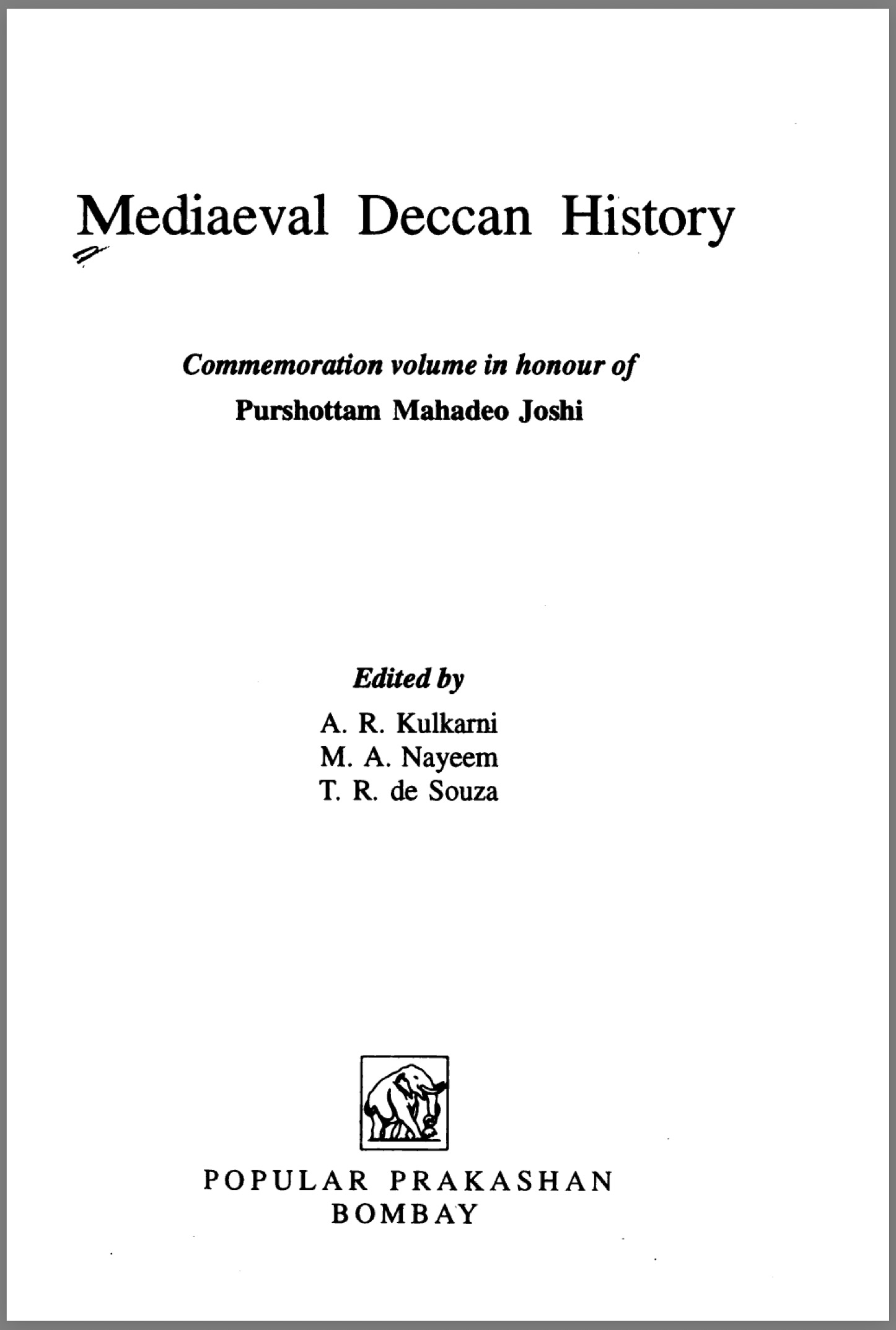
A new account of the diamond mines of the Deccan
Book Section
Souza, T.R., de (1996) A new account of the diamond mines of the Deccan. In: Medieval Deccan History: Commemoration Volume in Honour of P.M. Joshi, Bombay: Popular Prakashan, pp. 124–134.
ISBN/ISSN: 8171545793 | Sinkankas/Born No.: NIS/NIB | RWHL
gems, diamond, diamond mines, India, Goa, gem trade, gemology, Garcia da Orta
If India was the jewel of the crown of England, we know that the actual world-famous jewel of that crown came from a diamond mine of the Deccan. The Kohinoor has been the subject-matter of several historical controversies, many of them with political imperial flavour. This article does not seek to add to such controversies but it is aimed at bringing to light a new, unpublished source of information about the diamond mines of the Deccan in the early seventeenth century. It needs to be acknowledged that diamonds have played an important role in the history of the Deccan and of India, as well as in the fortunes of many who ruled over this country or traded with it from near and far. A testimony to this importance and interest in diamonds are many accounts that have been left behind in the course of centuries. The very early accounts, like the one of the Venetian Polo, are more fascinating than reliable. Perhaps the earliest and most reliable account of the diamond mines of the Deccan is found in the Colloquios dos Simples e Drogas published in Goa by the Portuguese Garcia da Orta in 1563. It is to be noted that while he is better known for his contribution to the knowledge of Indian flora, his observations and information about diamonds and other matters have come through Linschoten’s Itinerario. Linschoten borrowed his information on this subject, and on several other matters, extensively and almost textually from Orta’s Colloquios.