
Four Treasures Reference Database
Record No. 29022
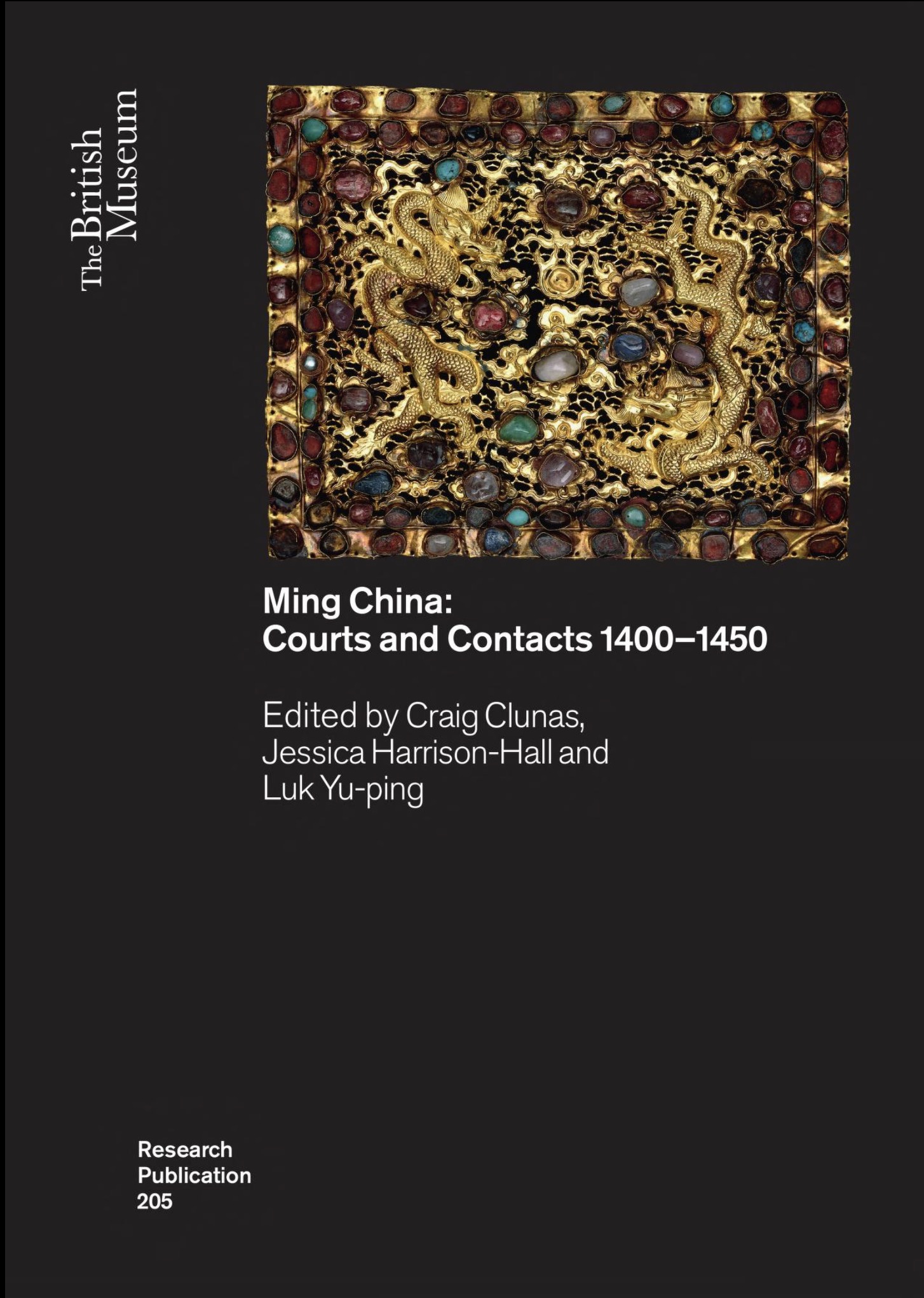
Precious stones and Ming culture, 1400–1450
Book Section
Clunas, C. (2016) Precious stones and Ming culture, 1400–1450. In: Ming China: Courts And Contacts 1400–1450, London: British Museum, pp. 236–244.
ISBN/ISSN: 9780860000000 | Sinkankas/Born No.: NIS/NIB | RWHL*
gems, China, books, book collecting, bibliography
Even by the standards of early 15th-century court panegyric, hardly famed as one of the high points of Chinese verse, this is not great poetry. But, as this chapter will argue, it is not by accident that ‘southern gold’ (nan jin 南金) and ‘rare gems’ (yi bao 異寶), or ‘unwonted gems and jewels’ (yi bao qi zhen 異寶奇珍) glitter in this poem with which Ma Huan opened his Overall Survey of the Ocean Shores (Ying ya shenglan 瀛涯勝覽), a text which was probably written after the first voyage in 1416. In fact, they are the only specific objects of foreign ‘tribute’ he mentions in this prefatory verse. Gemstones, and objects inlaid with gemstones, have lain outside the mainstream of research into Chinese art and material culture, largely because until recently scholars have had so few examples to examine. Although the literary evidence for the use of table vessels in precious metals is ample, the number of surviving artefacts in museums, prior to recent archaeological discoveries, has been small. The same is true a fortiori with regard to precious metal vessels and objects enhanced with gemstones. The few surviving examples outside China, such as a gem-encrusted gold toothpick case in the Rietberg Museum, Zurich (Pl. 27.1) or a pair of pillow ends in the British Museum (Pl. 27.2), have lacked a context in which to understand them, excavated as they were in the early 20th century under uncontrolled conditions. Indeed, the latter objects were for many years catalogued and displayed as ornamental plaques for sewing on clothing, a sort of luxury rank badge, and their true function as ornamental pillow ends has only recently been recognised. But in more recent years significant excavations in China have greatly enhanced our understanding of the types, functions and range of precious metal objects in the early Ming, and many aristocratic tombs have yielded material of this type. Now, through a closer examination of the significant quantity of such material excavated from the tomb of Prince Zhuang of Liang 梁莊王 (1411–41) at Zhongxiang in Hubei province, and by reading that material in the light of a survey (necessarily sketchy) of its historical and cultural context, it is possible to make the preliminary claim, which it is hoped will be tested through further research, for the importance of such objects in Ming courtly life. This was an importance out of all proportion to their quantity, indeed one which conversely is derived from their very rarity.