
Four Treasures Reference Database
Record No. 29097
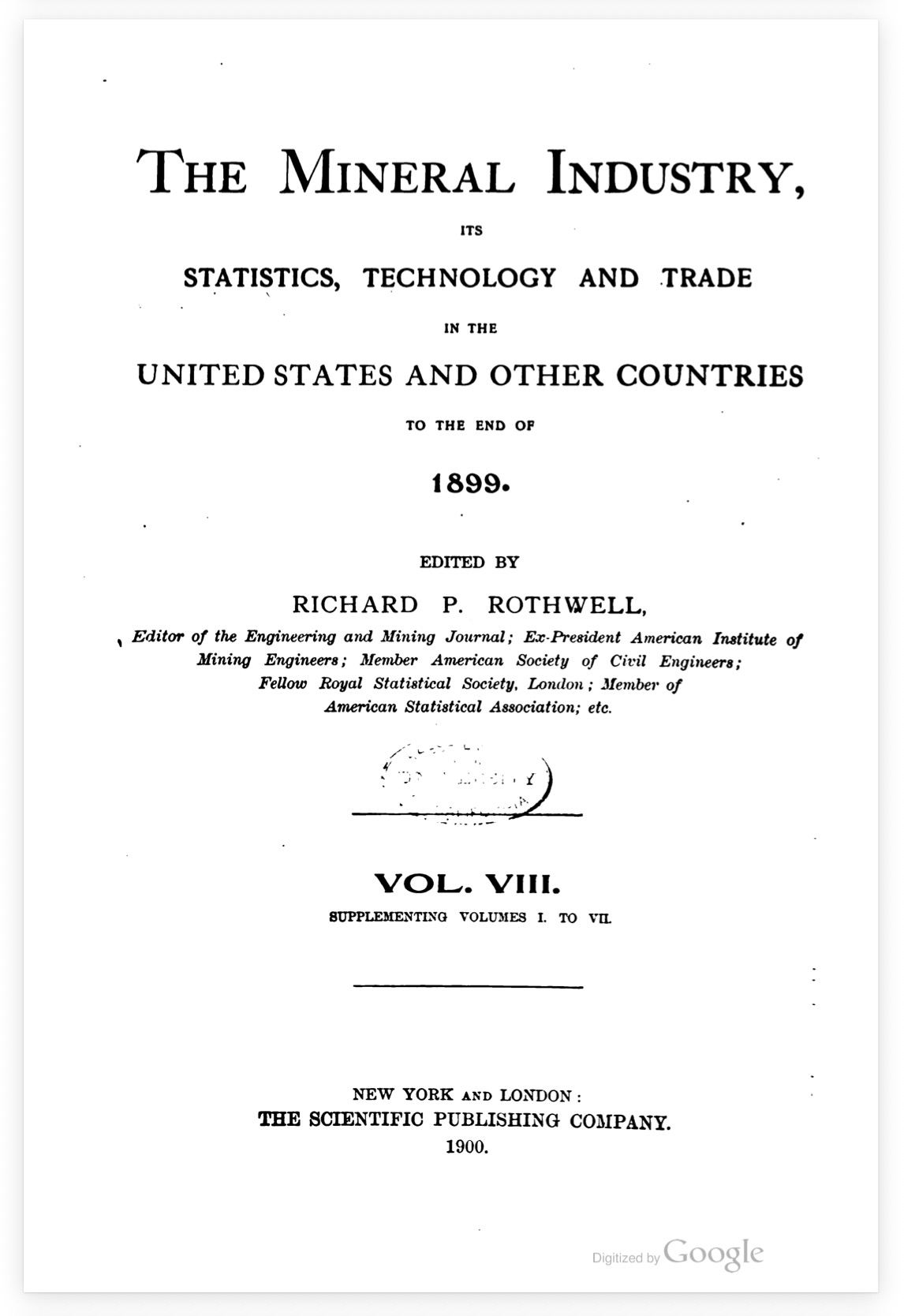
The cutting and polishing of precious stones
Journal Article
Claremont, L. (1900) The cutting and polishing of precious stones. The Mineral Industry, Vol. 8, pp. 229–233.
Sinkankas/Born No.: NIS/NIB | RWHL*
gems, lapidary arts, gem cutting, history, corundum, fashioning.8
Precious stones were originally used as ornaments in their natural or uncut state by the ancient races and were valued more for amulets and their supposed magic and medicinal qualities than for their beauty. Subsequently the natural crystallographic faces of the gems were roughly polished to enhance the lustre and for centuries later they were treated in this way and used for the embellishment of goblets, tankards, idols, thrones, etc., as well as for personal adornment. As time went on the ancients acquired the means of increasing the number of faces found on many gems, and in this crude way gems were not only polished but received additional faces which are now called facets. From specimens of precious stones thus crudely cut it is apparent that the one object of the ancient lapidaries was to retain the size of the gems upon which they operated. Therefore no matter in what shape they were found or in what degree they were flawed or otherwise faulty, they were merely covered with polished surfaces without regard to symmetry, brilliancy or quality of color. The gems also were generally drilled through the center in order that they might be strung, sewn on to a robe, or dangled from a pendant or turban. Not infrequently they were beautifully and elaborately carved as is still done by the natives of many parts of Asia and in this way many magnificent gems were almost ruined. When they are placed upon the gem market of to-day, which is by no means an uncommon occurrence, it is found that in order to remove the carving and drilling work done at a gigantic expenditure of labor and energy, so great a loss of weight is incurred before the stones can be made suitable to the requirements of modern jewelry, that they are of considerably less value than rough stones of the same quality and weight.