
Four Treasures Reference Database
Record No. 29116
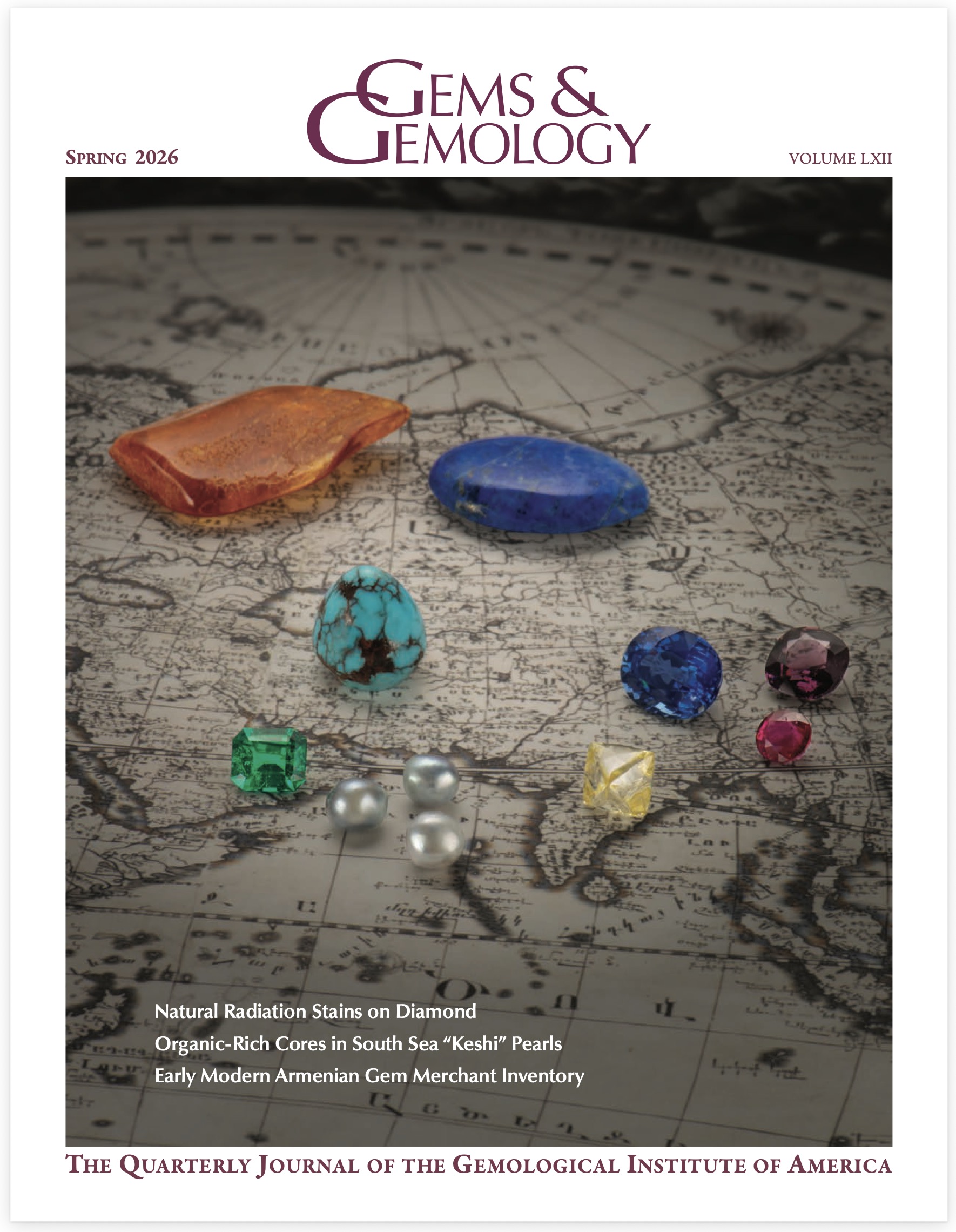
Records from a luxurious past: Gem inventory of a seventeenth-century Armenian merchant
Journal Article
Tajiryan, S. (2026) Records from a luxurious past: Gem inventory of a seventeenth-century Armenian merchant. Gems & Gemology, Vol. 62, No. 1, Spring, pp. 38–66.
gems, gem trade in Asia, gem business, trade between Europe and Asia, corundum, history.1, Early Modern trade, Armenia, Armenians, Iran, Myanmar, Sri Lanka, India, Turkey
A rare 1688 probate inventory documents the extensive gem collection of Gregorio di Girach-Mirman (1612–1688), a prominent Armenian merchant active in Venice and Livorno, Italy. Originally written in Armenian and later translated into Italian, this archival record lists more than 100,000 gemstones, including diamonds, sapphires, emeralds, and pearls, as well as more than 1,700 kilograms of rough amber, garnet, lapis lazuli, and turquoise. Housed in the State Archives of Venice, the inventory offers a uniquely detailed window into the early modern luxury trade and highlights the global commercial reach of Armenian merchant families like the Girach-Mirmans. Drawing on this previously unstudied source, along with a broader set of archival documents from across Europe and Armenia, the present article reconstructs the world of seventeenth-century gem dealing and collecting. It argues that Armenian merchants were central figures in the global trade of luxury goods, operating alongside and sometimes in competition with better-known European contemporaries. The provenance and diversity of Gregorio’s gem holdings, likely sourced from as far as modern-day Colombia, Sri Lanka, Iran, and Myanmar, attest to the geographic reach of Armenian trading networks and the sophistication of their market knowledge. By placing this inventory in its global and material context, the article contributes to ongoing discussions around early modern economic history, material culture, and global commodity flows across Eurasia and the New World. It demonstrates that gem inventories, often overlooked as solely bureaucratic and estate documents, can illuminate the complexity of merchant strategies, the transcontinental mobility of luxury goods, and the dynamics of status and prestige in the early modern period. Finally, one of the central aims of this article is to illuminate the inner workings of gem dealing in this period, including practices of sourcing and collecting, through a rare body of obscure commercial correspondence. These materials offer an exceptional view into a dimension of the trade that remains largely inaccessible and nearly absent from existing historiography.