
Four Treasures Reference Database
Record No. 29161
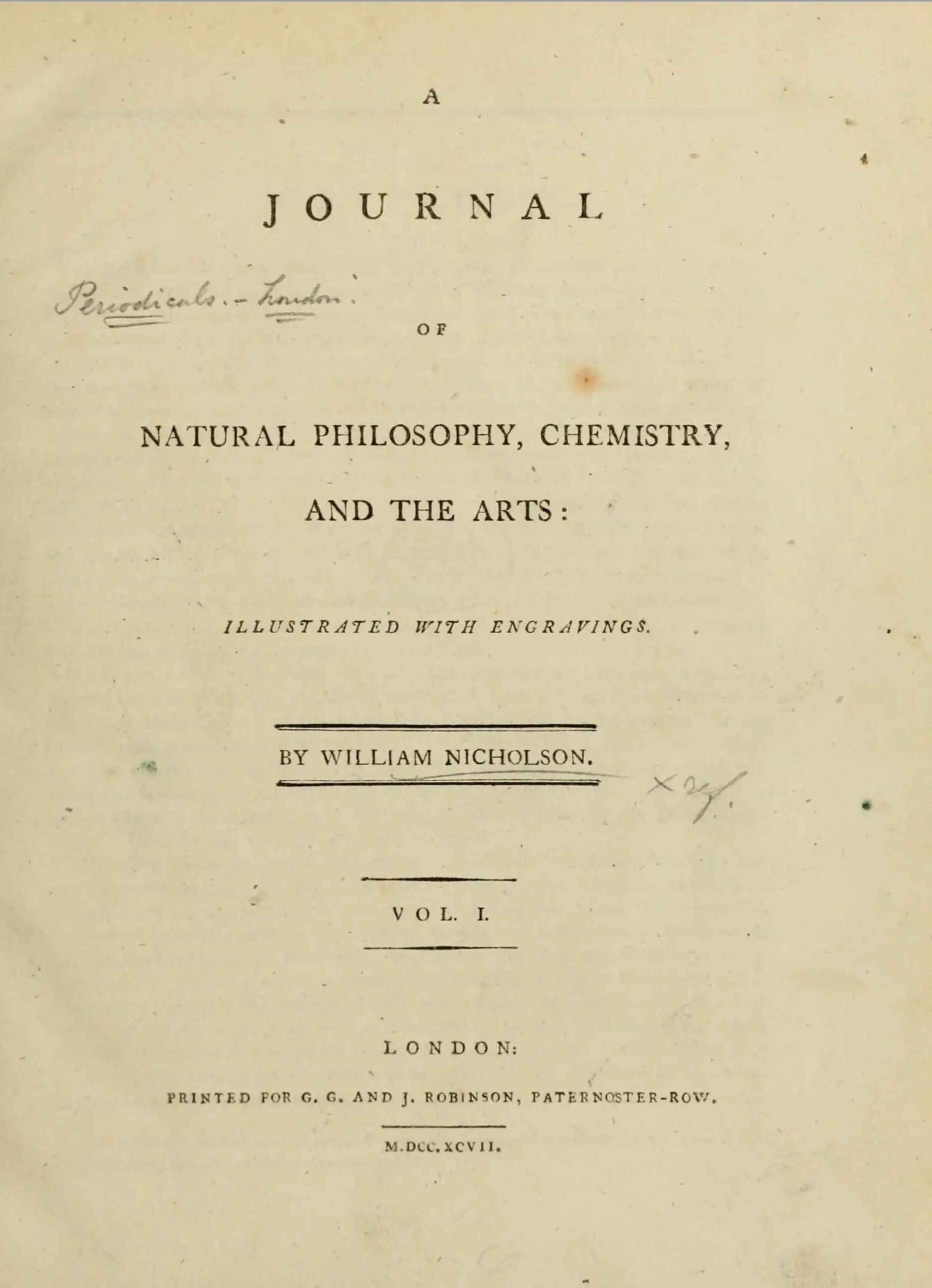
Analysis of the Oriental lapis lazuli
Journal Article
Klaproth, M.H. (1797) Analysis of the Oriental lapis lazuli. Journal of Natural Philosophy, Chemistry, and the Arts, Vol. 1, April, pp. 77–80.
Sinkankas/Born No.: NIS/NIB | RWHL
gems, lapis lazuli, Afghanistan, history of gemology, gem trade, Central Asia, chemical analysis
The analysis of lapis lazuli made by Margraff has shewn that the blue colour of this stone is not owing to copper, as has commonly been thought, but that it arises from iron. But as we have not hitherto possessed any accurate analysis of this stone, I have thought it might be useful to examine it anew. In fact, Margraff informs us, that lime, gypsum, and silex, together with iron, are its component parts; but he does not determine their proportions; and his analysis is incomplete, as he does not mention the alumine which this stone also contains. According to Rinmann, the lapis lazuli contains lime, quartz, iron, and the acid of fluor. I have not found the latter; and it is probable that Rinmann’s opinion was grounded upon the phosphorescence of this stone when it is heated. Cronstedt and some others have affirmed that the lapis contains a quantity of silver, after the rate of two ounces per quintal. But my essays have afforded no certain indication of the presence of this metal. I selected for experiment a species of the lapis of a beautiful deep blue colour, and carefully separated the white and pyritous specks. This early chemical analysis of lapis lazuli by Martin Heinrich Klaproth, published in English translation in the *Journal of Natural Philosophy, Chemistry, and the Arts*. Klaproth examines the composition of “Oriental” lapis lazuli using the analytical methods of late eighteenth-century chemistry, seeking to identify the substances responsible for the stone’s characteristic blue color and associated mineral components. The paper is important in the history of gemology and mineral chemistry because it represents one of the early systematic attempts to characterize lapis lazuli chemically rather than solely by appearance and traditional lapidary descriptions.