
Four Treasures Reference Database
Record No. 29302
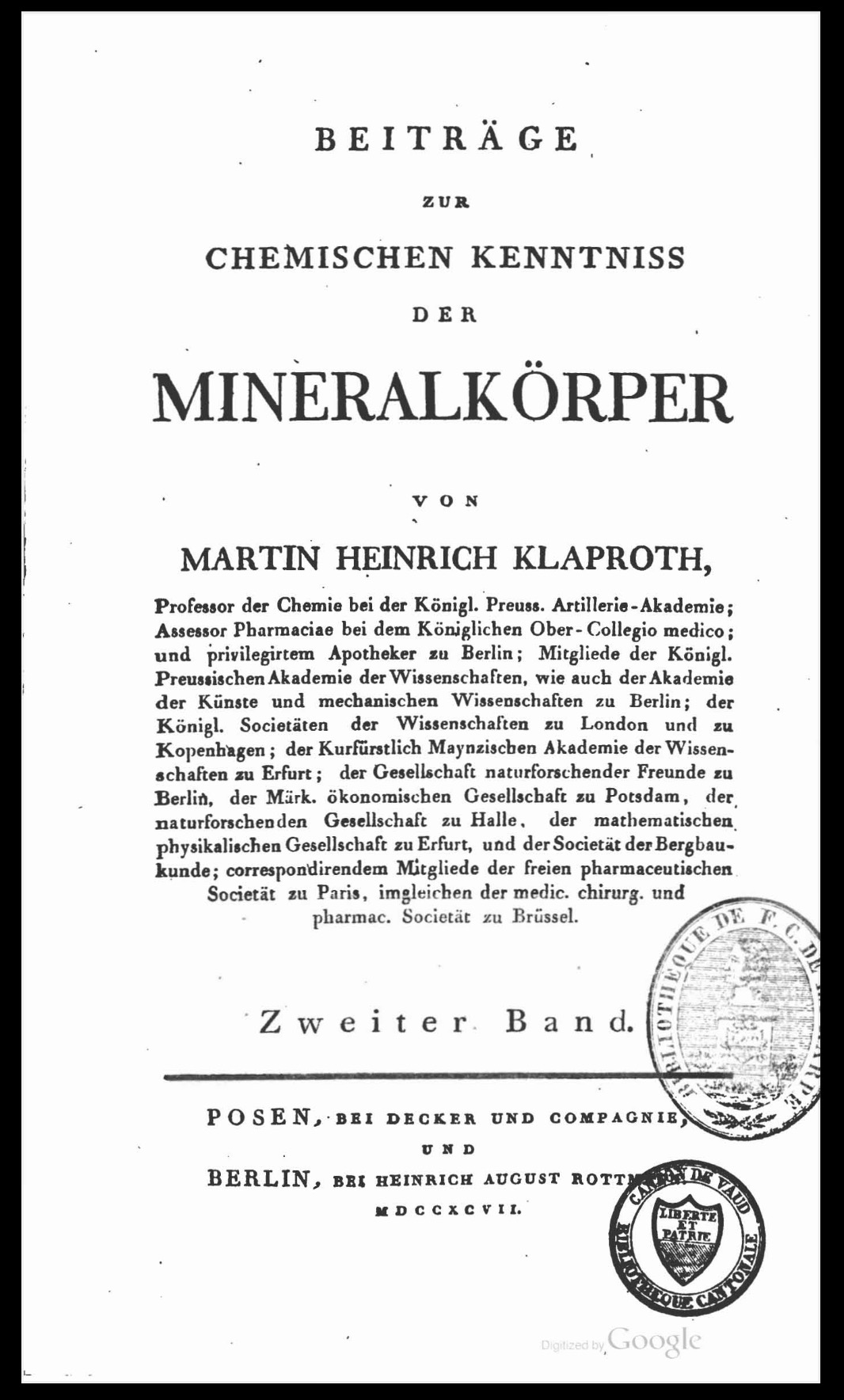
Untersuchung des Spinells, Beiträge zur chemischen Kenntniss der Mineralkörper
Investigation of the spinel, contributions to the chemical knowledge of mineral bodies
Book Section
Klaproth, M.H. (1797) Untersuchung des Spinells, Beiträge zur chemischen Kenntniss der Mineralkörper. [Investigation of the spinel, contributions to the chemical knowledge of mineral bodies] In: Beiträge zur chemischen Kenntniss der Mineralkörper, Vol. 2 , pp. 1–11.
Language: in German | RWHL
gems, spinel, history, balas ruby
Spinel appears to belong among those varieties of precious stones which the ancients included under the name hyacinth, since they described its colour not as yellowish-red, like that of our modern hyacinth, but as light violet-red, and also rose-red. Pliny, for example, says:* “The hyacinth differs greatly from the amethyst, although closely related to it. The difference is this: the violet splendour which gleams in the amethyst is diluted in the hyacinth.” Epiphanius enumerates four varieties of hyacinth, of which he calls the third Νήτιος,** which, according to Athanasius, was of a colour “between rose-red and a paler shade.” The reason why our modern hyacinth came to be regarded as the hyacinth of the ancients probably lies in the following passage of Pliny:* “Ethiopia sends hyacinths and chrysolites of a golden colour.” According to a better-founded critical reading, however, the passage should read: “The hyacinth fades more quickly than the flower whose name it bears. Ethiopia also sends chrysolites, etc.” Thus the “golden colour” of the latter—which, as is well known, was our modern topaz—has no further reference to the “hyacinth”; and at the same time we are left with one fewer apparent contradiction in Pliny.