
Four Treasures Reference Database
Record No. 29559
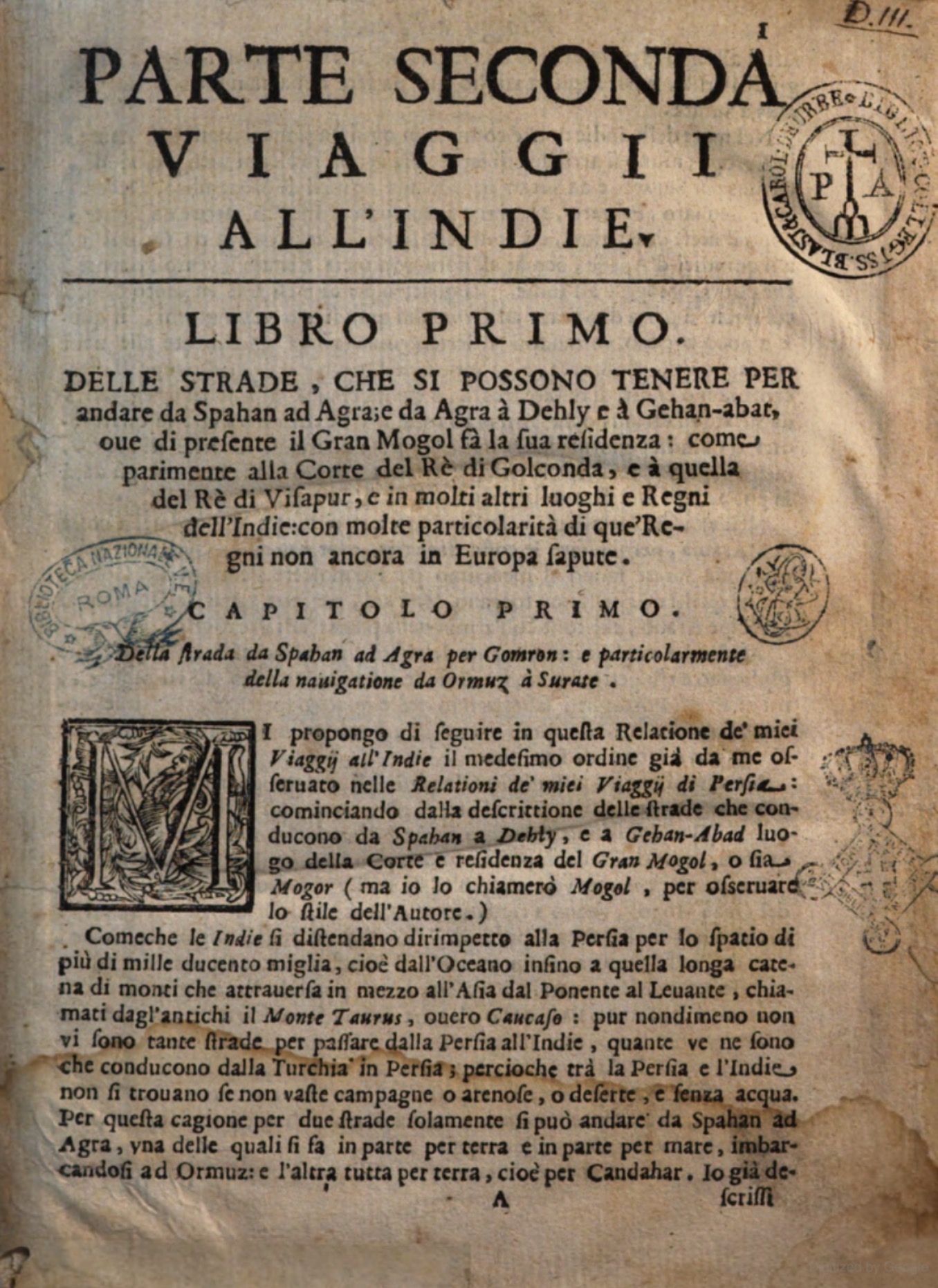
Viaggi nella Turchia, nella Persia, e nelle Indie
Travels in Turkey, Persia, and the Indies
Book
Tavernier, J.B. (1682) Viaggi nella Turchia, nella Persia, e nelle Indie. [Travels in Turkey, Persia, and the Indies] Rome, Giovanni Luetti, 2 Parts in 1 Vol., 488, 359 pp.
Sinkankas/Born No.: 6511 | Language: in Italian | RWHL.
gems, corundum, history.1, Indian gemology, Indian mineralogy, history of gemology, history of mineralogy, diamond, , Indian lapidary
Sinkankas: This work is highly valued by historians and geographers for its rich and detailed descriptions of the regions visited by Jean-Baptiste Tavernier between 1631 and 1668, including the landscapes, cultures, and political figures he encountered during a time when dependable reports from the Near East and Asia were rare. While some have questioned the accuracy of his accounts, scholars such as William Crooke and Valentine Ball have largely defended Tavernier’s reliability, particularly when tested against modern research. In the realm of gemology, his observations have stood the test of time, especially regarding his dealings in large, high-quality gemstones—an area of expertise that reflects his success as a jeweler in Paris and his deliberate travels to acquire and sell precious stones to European royalty. His accounts are organized into five books on Turkey and Persia and three on India, the latter being of particular interest. Key chapters describe the jewels of the Great Mughal Aurangzeb, the diamond mines of India including Raolconda, the trade’s measurement systems, and details on colored gemstones, pearls, coral, amber, and medicinal materials. Tavernier is credited with the earliest descriptions of several legendary gems, including the Great Mogul, the Koh-i-Noor, and the Florentine diamonds. His “Tavernier Blue,” sold to the French royal house, is believed to be the origin of the Hope Diamond. Notably, his works include some of the earliest visual representations of famous diamonds and gemstones, with detailed engraved plates depicting these remarkable treasures, adding further historical and gemological value to his narrative.This work is highly valued by historians and geographers for its rich and detailed descriptions of the regions visited by Jean-Baptiste Tavernier between 1631 and 1668, including the landscapes, cultures, and political figures he encountered during a time when dependable reports from the Near East and Asia were rare. While some have questioned the accuracy of his accounts, scholars such as William Crooke and Valentine Ball have largely defended Tavernier’s reliability, particularly when tested against modern research. In the realm of gemology, his observations have stood the test of time, especially regarding his dealings in large, high-quality gemstones—an area of expertise that reflects his success as a jeweler in Paris and his deliberate travels to acquire and sell precious stones to European royalty. His accounts are organized into five books on Turkey and Persia and three on India, the latter being of particular interest. Key chapters describe the jewels of the Great Mughal Aurangzeb, the diamond mines of India including Raolconda, the trade’s measurement systems, and details on colored gemstones, pearls, coral, amber, and medicinal materials. Tavernier is credited with the earliest descriptions of several legendary gems, including the Great Mogul, the Koh-i-Noor, and the Florentine diamonds. His “Tavernier Blue,” sold to the French royal house, is believed to be the origin of the Hope Diamond. Notably, his works include some of the earliest visual representations of famous diamonds and gemstones, with detailed engraved plates depicting these remarkable treasures, adding further historical and gemological value to his narrative.