
Four Treasures Reference Database
Record No. 29571
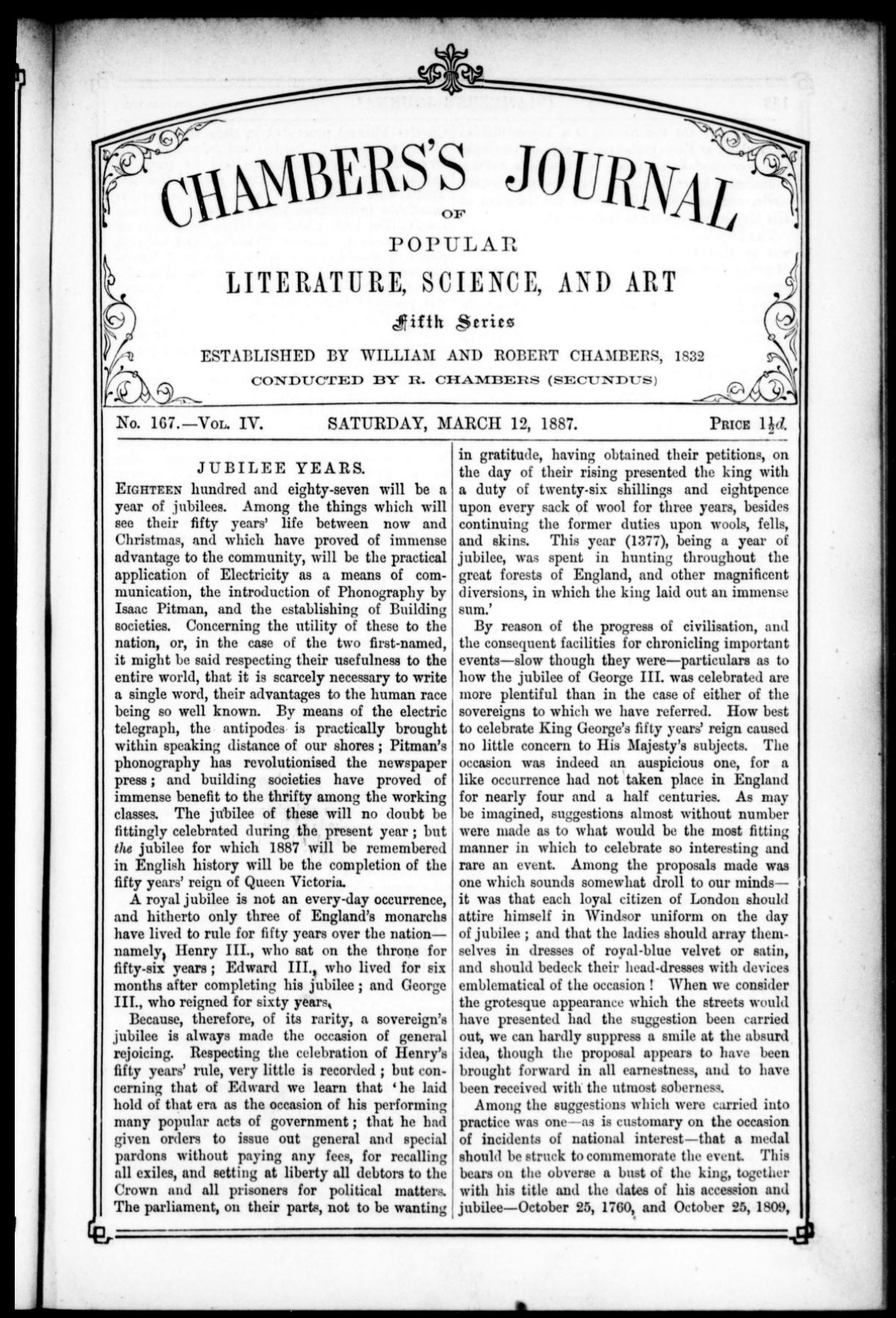
The ruby mines of Burmah
Journal Article
Anonymous (1887) The ruby mines of Burmah. Chambers's Journal, Vol. 4, No. 167, 12 March, pp. 166–168.
Sinkankas/Born No.: NIS / NIB | RWHL
gems, corundum, Burma.12, Mogok
Contemporary account of the ruby mines of Upper Burma, prompted by the British advance to the mining district following the annexation of Burma. The article describes the so-called “Ruby Mines” as a broad gem-bearing region rather than a single mine, with rubies occurring in gravelly soil over a considerable area and associated with sapphires, tourmalines, and other stones. It states that ruby was the most commonly encountered gem, with amethyst and sapphire less frequent, and discusses the lease of the mining privilege by the Burmese government to a European syndicate for an annual payment of fifteen lacs of rupees. Mining is described as primitive, involving shallow pits, washing and hand sorting of the gem-bearing earth, with larger rubies traditionally claimed by the sovereign. The article discusses secrecy surrounding the workings, the breaking or concealment of valuable stones to evade royal claims, and the role of Burmese, Shan, and Chinese merchants in the gem trade. It also comments on difficult working conditions, including flooding and malaria, and reports plans by the British syndicate to introduce systematic mining, drainage machinery, and European supervision. The principal stones listed from the district are oriental amethyst, oriental sapphire, green, white and yellow sapphire, star ruby, oriental ruby, and opalescent ruby; rubies range from four to ten pounds per carat when under half a carat, rising sharply for larger stones. The article concludes with reports of exceptionally large Burmese rubies, including one said to form part of the Russian crown jewels and another reputedly belonging to King Theebaw.