
Four Treasures Reference Database
Record No. 29577
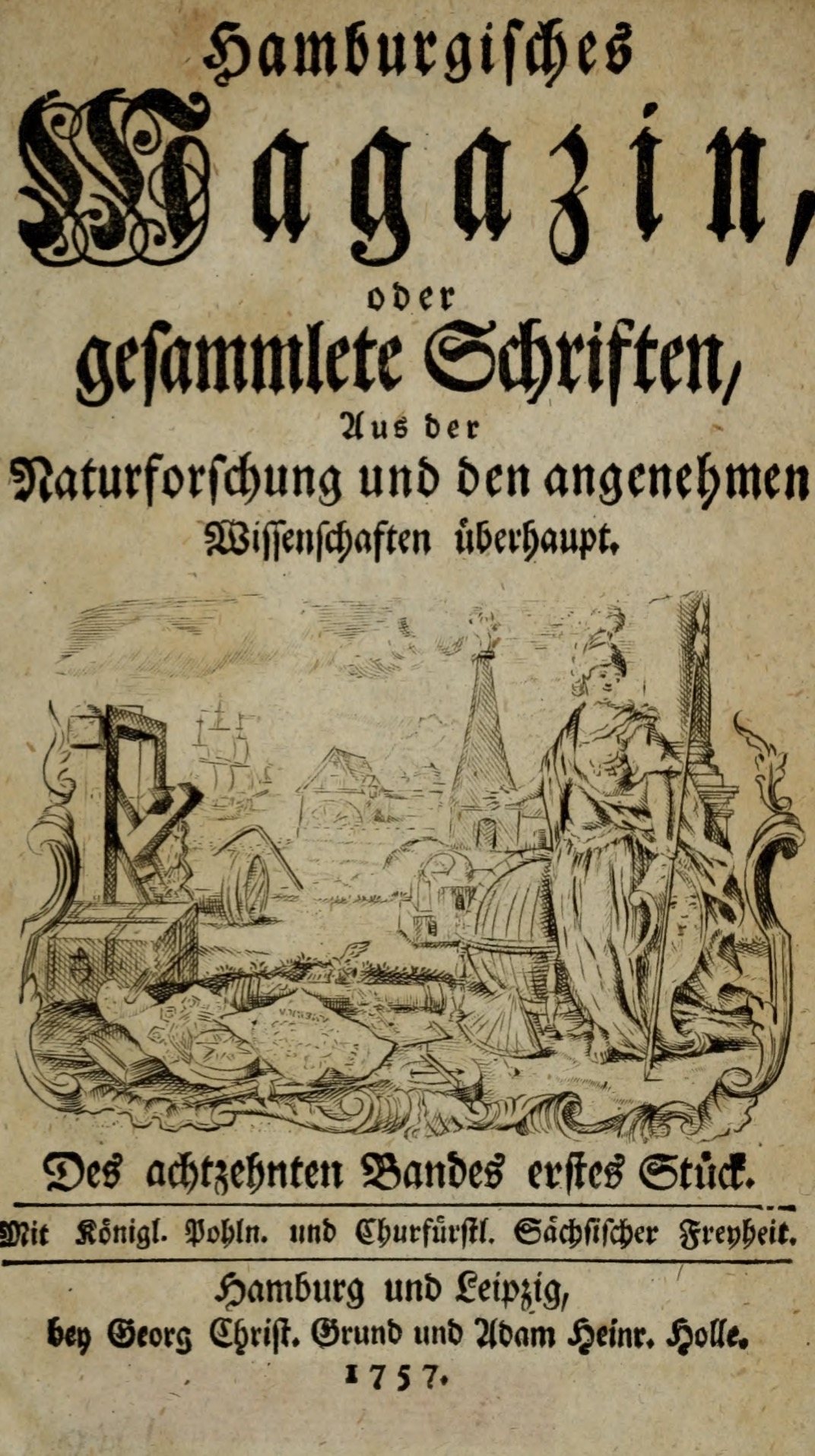
Geschichte von Edelgesteinen und den Vornehmsten Reichthümern in Ost- und Westindien
History of Precious Stones and the Principal Riches of the East and West Indies
Journal Article
Anonymous (1757) Geschichte von Edelgesteinen und den Vornehmsten Reichthümern in Ost- und Westindien. [History of Precious Stones and the Principal Riches of the East and West Indies] Hamburgisches Magazin, Vol. 18, pp. 500–543.
Sinkankas/Born No.: NIS / NIB | Language: in German | RWHL
Close Abstract
Hide Keywords
Copy Reference
gems, corundum, Sri Lanka.12, garnet, zircon, spinel, tourmaline, sapphire, Ceylon
German account of the principal precious stones, pearls, and other valuable products of the East and West Indies, compiled from earlier travel accounts and observations by travelers who had visited the mining regions. A substantial section is devoted to diamonds, describing their occurrence and mining in India and Borneo, including the celebrated mines of Golconda and surrounding districts, methods of working the deposits, labor, trading practices, currencies, and the valuation of stones. Colored gemstones are treated separately, with particular attention to the ruby and sapphire deposits of Pegu (Burma) and Ceylon. The Burmese stones are said to come from a mine called “Capelan,” twelve days’ journey northeast of Ava, producing rubies, yellow topazes, blue and white sapphires, and other colored stones. Fine rubies are described as scarce, with the best stones reserved for the king, and a schedule of ruby prices according to weight is given. Ceylon is described as another important source, where colored stones were recovered from river sands after the rainy season, including sapphires, topazes, garnets, and rock crystal. The work also discusses emeralds and their trade between the Americas, Europe, and Asia. An extensive section on pearls describes fisheries in the Persian Gulf, Ceylon, Japan, and the West Indies, together with diving, the opening of pearl oysters, pearl formation, grading, color, shape, size, and value, while rejecting older beliefs that pearls originated from heavenly dew. Coral and amber are also discussed, including the East Asian trade and consumption of amber. The article provides a valuable mid-eighteenth-century European synthesis of contemporary knowledge concerning gemstone sources, mining, commerce, valuation, and consumption in Asia and the Americas.