
Four Treasures Reference Database
Record No. 29707
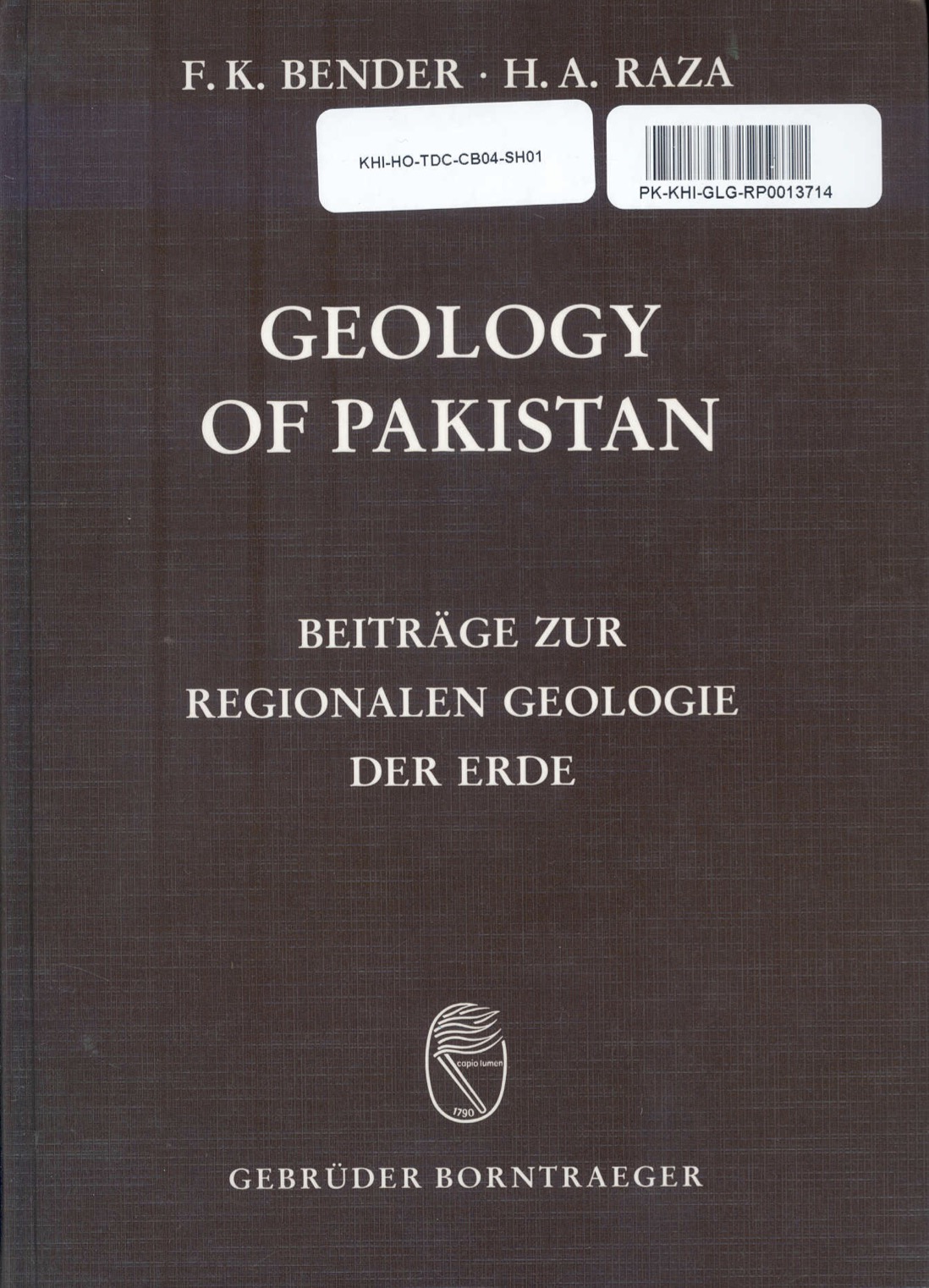
Geology of Pakistan
Book
Bender, F., Raza, H.A. and Bannert, D.N. (1995) Geology of Pakistan. Berlin, Gebrüder Borntraeger, 331 pp.
Sinkankas/Born No.: NIS / NIB | RWHL
gems, corundum, Pakistan.12, geology.11, Nangimali, beryl, emerald, spinel, ruby, sapphire, aquamarine
A multi-author synthesis of Pakistan’s geology and natural resources, this volume integrates regional geological descriptions with accounts of energy, mineral, water and soil resources. Its framework relates the country’s geological diversity to the interaction of the Arabian, Eurasian and Indo-Pakistan plates, including collision, mountain building, magmatism and the development of sedimentary basins. Introductory chapters outline physiography, climate, vegetation and the history of geological research. Regional descriptions distinguish the Chagai–Ras Koh area, the Makran–Khojak–Pishin flysch zone, the West Pakistan Foldbelt, the Indus Basin and the Tethyan mountain belt, including the Himalayas, Kohistan island arc, Karakoram and Hindu Kush. Separate chapters review the Precambrian to Quaternary sedimentary succession, igneous and metamorphic rocks, tectonic structures, and palaeogeographical and geodynamic evolution. The resource surveys consider hydrocarbons by basin, bituminous rocks, coal, nuclear fuels and geothermal systems, followed by metallic mineralisation, industrial minerals, building materials, salts and gemstones. Of particular gemmological interest is the gemstone section, which groups occurrences into suture-associated deposits, pegmatites, hydrothermal veins and miscellaneous settings. It describes emerald occurrences associated with the Indus suture zone, including the Swat deposits, and ruby, spinel and pargasite in the crystalline marbles of Hunza and neighbouring areas. Northern pegmatites yield aquamarine, tourmaline, topaz, feldspar and quartz, with locality descriptions covering the Gilgit–Skardu region and Chitral. Pink topaz at Katlang is related to calcite and quartz veins in fractured limestone. Other accounts include agate, garnet, turquoise, serpentinite, rodingite and ornamental carbonate rocks. The discussion combines geological setting and mineral associations with information on appearance, mining and economic significance, and recognises the importance of collectible mineral specimens alongside material suitable for cutting. Subsequent chapters describe surface water, snow and ice, hydrogeological basins, groundwater and thermal springs, followed by soil formation, classification and distribution. Maps, cross-sections, photographs, tables, an extensive bibliography and a subject index support the text. The editors acknowledge uneven geological coverage, particularly in northern and western Pakistan, and the concentration of subsurface information in hydrocarbon exploration areas. The work thus provides both a regional geological synthesis and a resource inventory reflecting the investigations available at publication.