
Four Treasures Reference Database
Record No. 367
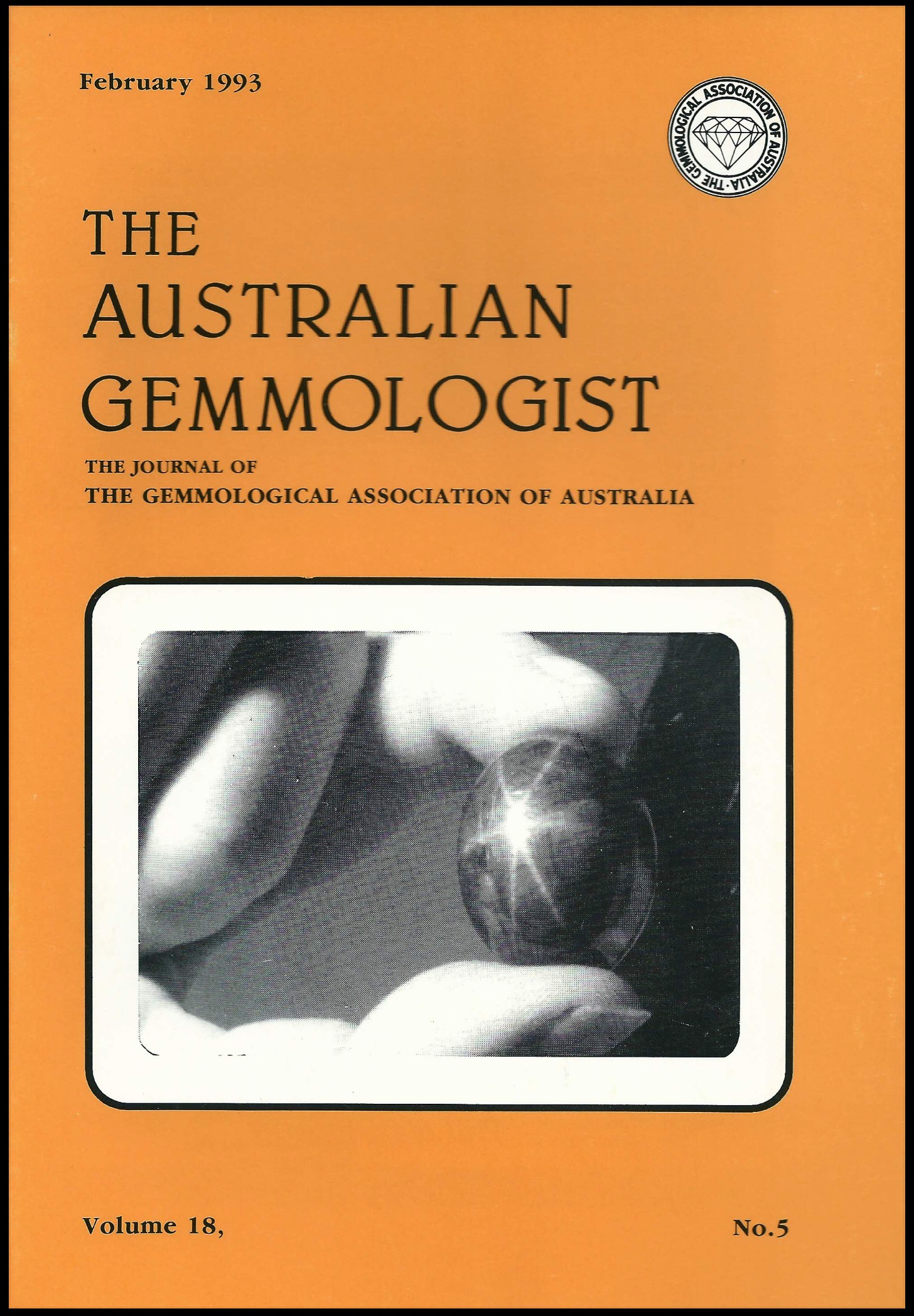
The Appalacian star ruby
Journal Article
Anonymous (1993) The Appalacian star ruby. Australian Gemmologist, Vol. 18, No. 5, Feb., p. 174.
Sinkankas/Born No.: NIS / NIB | RWHL
corundum, quality.10, gems
Describes the Appalachian star ruby, a large star ruby reported to originate from the northeastern United States and featured on the journal’s cover. The stone weighs 139.43 carats and measures 28.6 mm in length. Its principal distinguishing feature is a six-rayed star, described as perfect, which becomes visible when the stone catches the light. The account emphasises the quality of this star alongside the ruby’s substantial weight, presenting the combination of size and a well-defined optical effect as the specimen’s notable attributes. It explicitly distinguishes this assessment from a claim to record size: the Appalachian ruby is not described as the heaviest star ruby in the world. In discussing larger examples, the note refers to a ruby from India believed to weigh more than 1,000 carats. That comparison is qualified as a belief rather than presented as a documented measurement of an identified specimen, and the Indian stone is not named. A second comparison concerns the famous Rosser Reeves ruby displayed at the Smithsonian Institution. The Appalachian specimen is stated to exceed the Rosser Reeves ruby in weight, although the latter’s weight and dimensions are not supplied. These comparisons establish the emphasis of the report: the Appalachian ruby is noteworthy for its fine star and considerable size even though heavier star rubies are reported. The geographical description remains broad, identifying only the northeastern United States rather than a particular state, mine, or deposit. The account provides no information about the stone’s discovery, ownership, cutting history, colour, transparency, or treatment status. Nor does it report laboratory measurements beyond its weight and length, or describe microscopic inclusions or tests used to establish its nature or origin. The six-rayed star is reported as a visual characteristic without discussion of its internal cause. The contribution is therefore a brief descriptive notice of a featured gemstone, supported by reference to the cover illustration, rather than a detailed gemmological investigation.