
Four Treasures Reference Database
Record No. 40
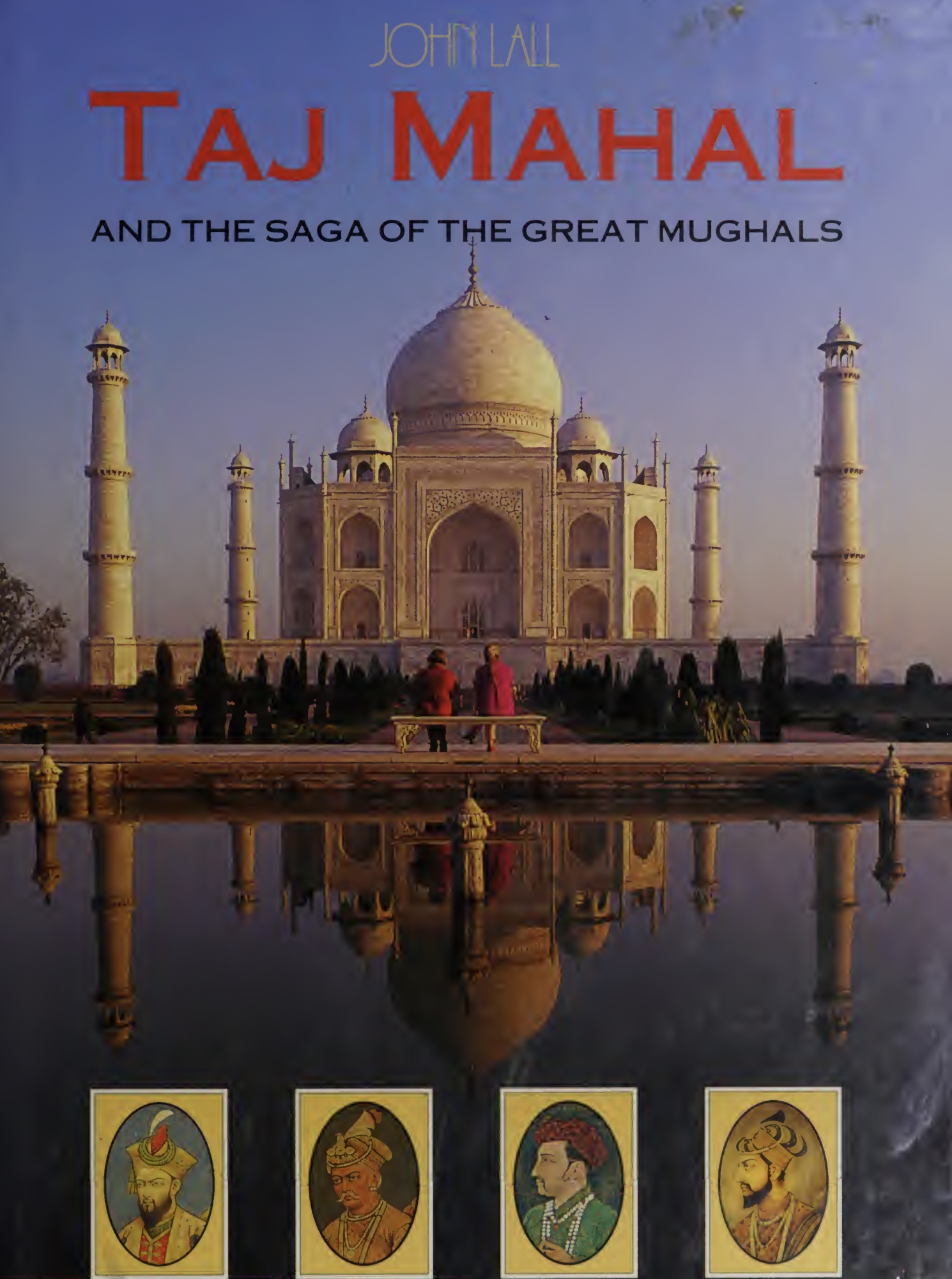
Taj Mahal and the Saga of the Great Mughals
Book
Lall, J. (1994) Taj Mahal and the Saga of the Great Mughals. London, Tiger Books International, 96 pp.
ISBN/ISSN: 1855015900 | Sinkankas/Born No.: NIS / NIB | RWHL
India, Taj Mahal, Indian jewelry, gems, Indian lapidary
John Lall’s Taj Mahal and the Saga of the Great Mughals (1994) is a richly illustrated historical and architectural study of the Mughal dynasty and its monuments at Agra, culminating in the construction of the Taj Mahal by Emperor Shah Jahan in memory of his wife Mumtaz Mahal. Lall, a former Indian Civil Service officer who served as Commissioner of Agra during the 1950s, traces the development of Mughal power from Babur’s conquest of northern India in 1526 through the reigns of Humayun, Akbar, Jahangir, Shah Jahan, and Aurangzeb, emphasizing their contributions to architecture, decorative arts, jewellery, and imperial culture. The book is divided into four principal sections covering the dynasty’s history, political expansion, architectural achievements, and the Taj Mahal itself. Of particular gemological interest is its extensive photographic documentation of Mughal jewellery, ornamental stones, and decorative inlay techniques. Illustrations include necklaces, earrings, forehead ornaments, turban jewels, bracelets, anklets, enamelled gold ornaments, and jade objects set with emeralds, rubies, and diamonds. The author discusses traditional Indian jewellery techniques, including kundan gemstone setting and meenakari enamelling, and the development of pietra dura inlay under the patronage of Empress Nur Jahan and Shah Jahan. The celebrated Peacock Throne receives special attention. Lall cites the French jeweller Jean-Baptiste Tavernier’s description of its solid-gold construction, jewelled canopy, peacock adorned with blue sapphires and other coloured stones, and a prominent ruby supporting a pear-shaped pearl weighing approximately 50 carats. Tavernier reportedly counted 108 exceptional rubies, some weighing 200 carats or more, together with 116 emeralds and numerous pearls. The throne was carried away following Nadir Shah’s sack of Delhi in 1739 and subsequently dismantled. The Koh-i-Noor diamond is also discussed in connection with Humayun’s acquisition of Mughal treasures at Agra and its eventual incorporation into the British Crown Jewels. In examining the Taj Mahal, Lall identifies Ustad Ahmad Lahori as its principal architect and describes the contributions of Indian, Persian, and Central Asian craftsmen to its construction. Particular attention is devoted to the marble’s decorative stone inlays and the international sources of the materials employed. Citing the Tarikh-i-Taj Mahal, he records jasper from the Punjab, carnelian from Baghdad, amethyst from Persia, and sapphire from Sri Lanka. The floral inlays decorating the mausoleum and its cenotaphs incorporate agate, carnelian, bloodstone, lapis lazuli, and other coloured stones, individually shaped and fitted into white Makrana marble with extraordinary precision. Lall notes that some floral designs contain as many as 31 or 64 separate stone elements. The intricately carved marble screen surrounding the cenotaphs reportedly required ten years to complete. The author also examines the monument’s deterioration through historical plundering, including the removal of gemstones from its decorations, and warns of the destructive effects of atmospheric pollution on its marble surfaces. Numerous colour photographs document the Taj Mahal, Agra Fort, Fatehpur Sikri, the tomb of Itmad-ud-Daulah, and outstanding examples of Mughal jewellery and decorative craftsmanship. The volume provides a valuable illustrated introduction to the relationship between Mughal imperial patronage, gemstone use, jewellery design, ornamental stone carving, and monumental architecture.