
Four Treasures Reference Database
Record No. 4641
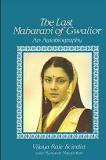
The Last Maharani of Gwalior: An Autobiography
Book
Scindia, V.R. and Malgonkar, M. (1987) The Last Maharani of Gwalior: An Autobiography. Albany, State University of New York Press, 279 pp.
Sinkankas/Born No.: NIS / NIB | RWHL
India, maharajas, gems
The Last Maharani of Gwalior: An Autobiography recounts the life of Vijaya Raje Scindia (1919–2001), written with Manohar Malgonkar, tracing her upbringing in a Nepalese aristocratic family, marriage into the ruling Scindia dynasty of Gwalior, and subsequent career in Indian politics. Born Lekha Divyeshwari in Sagar, central India, she was raised by her maternal grandmother following her mother’s death shortly after childbirth. Her grandfather, Khadga Samsher Jung Bahadur Rana, had been a powerful figure in Nepal before political intrigues forced him into exile. The narrative describes the traditions, religious practices, wealth, and elaborate domestic arrangements of aristocratic Indian households during the final decades of British rule. Her marriage to Maharaja Jivajirao Scindia in 1941 introduced her to one of India’s wealthiest princely families, whose history occupies a substantial portion of the book. She recounts the rise of the Scindias from their Maratha origins, their military struggles against the British East India Company, and the construction of the magnificent palaces of Gwalior. Particularly interesting are descriptions of the family’s extraordinary collections of gemstones, jewelry, and precious objects. She relates the history of the Gajmani, an unusual pearl-like object reportedly recovered from the forehead of a legendary Nepalese elephant and believed to possess supernatural powers. Although described as resembling a pearl in appearance, it was identified in the narrative as a piece of bone. Her grandfather had it mounted in a peacock-shaped brooch decorated with emeralds and diamonds; after passing through several family members, it was eventually presented to King Mahendra of Nepal. Another remarkable object was an exceptionally large emerald carved into a Shiva lingam, preserved in the Scindia family shrine at Gwalior. The book also describes two historic doors incorporating mosaics of jade, one installed in the Gopal temple at Ujjain and the other preserved in the family shrine at Ranimahal. Scindia associates these doors with treasures removed from a Hindu temple during medieval invasions and subsequently recovered by her ancestors. Accounts of the immense wealth accumulated by earlier Scindia rulers include extraordinary quantities of diamonds, pearls, rubies, emeralds, gold, and silver. The descriptions of Jaivilas Palace, with its monumental Viennese crystal chandeliers, imported marble, elaborate furnishings, and lavish ceremonial displays, provide further insight into the material culture of Indian royalty. Beyond these historical and gemological details, the autobiography examines the transformation of princely India following independence in 1947, the integration of Gwalior into the Indian Union, and the eventual abolition of princely privileges. Following her husband’s death, Vijaya Raje Scindia entered public life and became an influential political figure. She recounts her opposition to Indira Gandhi’s government, her imprisonment during the Emergency of 1975–1977, and the personal and political conflicts that accompanied her transition from Maharani to elected representative. The volume offers a firsthand perspective on the disappearance of India’s princely order, preserving valuable observations concerning royal jewelry, gemstone collections, ceremonial objects, palatial architecture, and the changing fortunes of one of the subcontinent’s most prominent dynasties.