
Four Treasures Reference Database
Record No. 4785
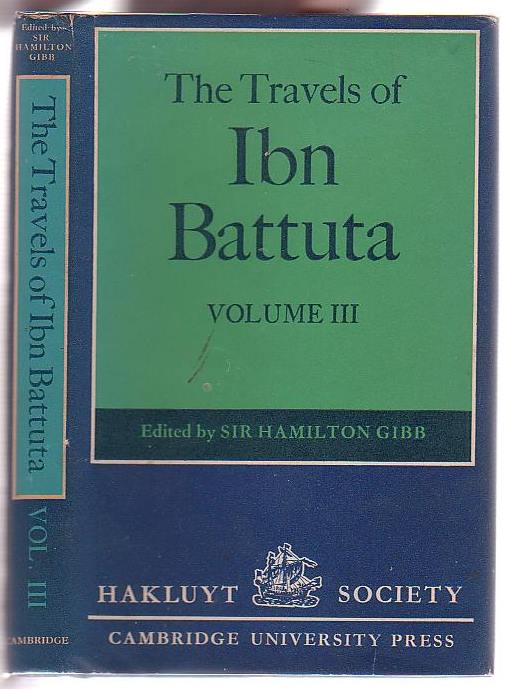
The Travels of Ibn Battuta
Book
Ibn Battuta and Gibb, H.A.R. (1971) The Travels of Ibn Battuta. Cambridge, Hakluyt Society, 4 Vols. + Index, Vol. 3 , see p. 571
ISBN/ISSN: 521010330 | Sinkankas/Born No.: NIS/NIB | RWHL
corundum, Afghanistan.12, Tajikistan.12, spinel, gems, balas ruby, lapis lazuli, Badakhshan
H.A.R. Gibb’s annotated English translation presents Ibn Battuta’s fourteenth-century account of travel through the Islamic world and beyond. Volume 3 follows his journeys through Central Asia, Afghanistan and northern India, including his service at the court of Sultan Muhammad ibn Tughluq in Delhi. Descriptions of towns, religious institutions, commerce and court ceremonial combine personal observations with historical anecdotes and information obtained from others. Of particular gemological interest is the passage on p. 571, where Ibn Battuta describes the ruined city of Balkh and its surviving architectural inscriptions decorated with lapis-blue pigment. He corrects the common attribution of lapis lazuli to Khurasan, explaining that it actually comes from the mountains of Badakhshan. He also connects that region’s name with the gemstone called badakhshi, popularly pronounced balakhshi, providing evidence for the geographical origin of the historical name “balas ruby,” associated with red spinel. Gibb’s accompanying notes locate the lapis lazuli mines in the upper Kokcha valley and compare the passage with Marco Polo’s descriptions of lapis lazuli and balas rubies. The passage documents medieval knowledge of gemstone sources and terminology, without claiming a personal visit to the mines.