
Four Treasures Reference Database
Record No. 4934
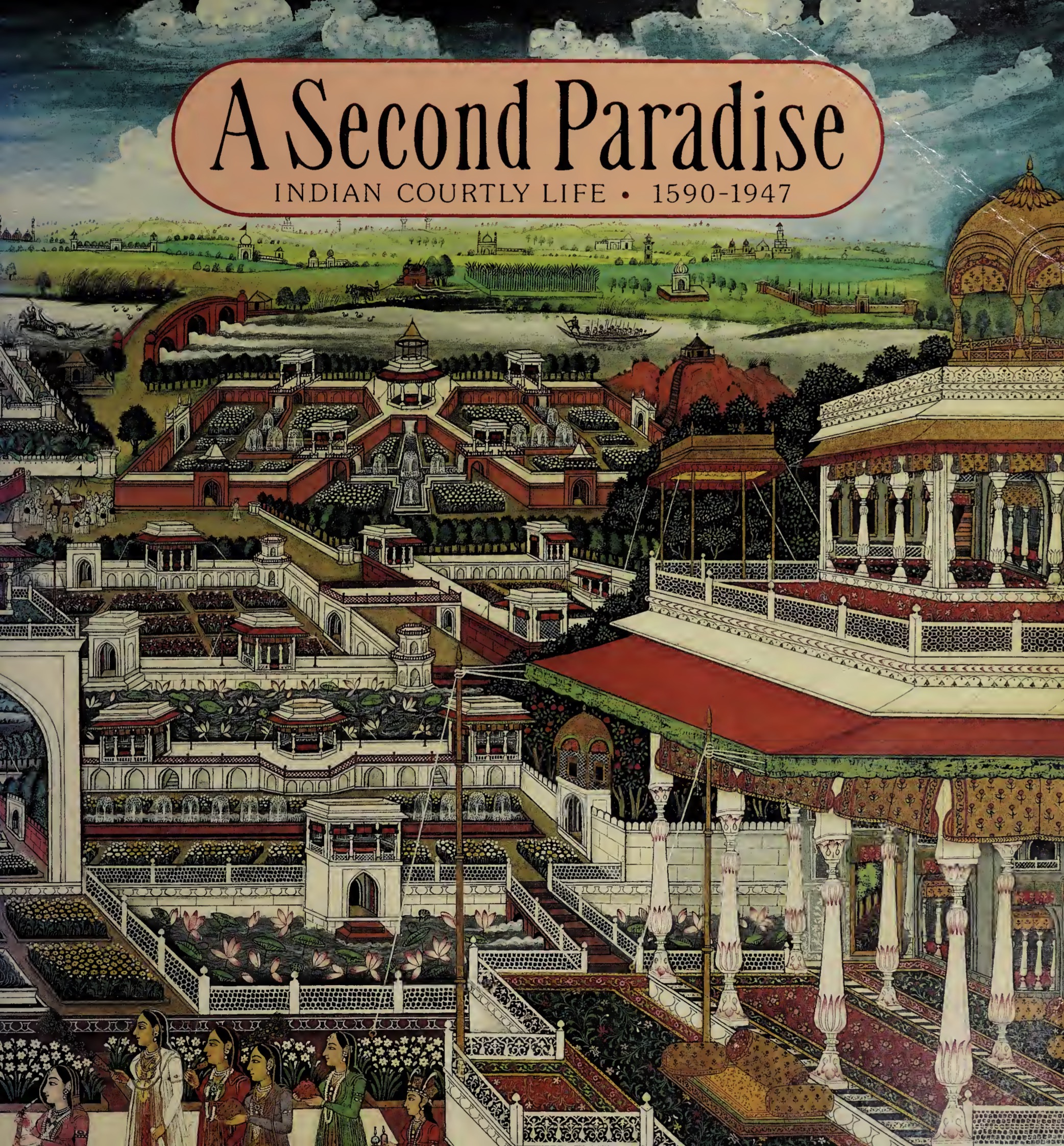
A Second Paradise: Indian Courtly Life 1590–1947
Book
Patnaik, N., Welch, S.C. and Bannu (1985) A Second Paradise: Indian Courtly Life 1590–1947. Garden City, NY, Doubleday & Co., 192 pp.
Sinkankas/Born No.: NIS/NIB | RWHL
corundum, quality.10, gems, Indian lapidary
Naveen Patnaik’s A Second Paradise: Indian Courtly Life 1590–1947, with an introduction by Stuart Cary Welch and illustrations by Bannu (Ved Pal Sharma), presents an illustrated account of the splendor, customs, artistic patronage, and ceremonial traditions of India’s princely courts from the Mughal period to independence in 1947. Published in association with the Metropolitan Museum of Art and the 1985 Festival of India, the book combines historical narrative, Mughal and Rajput miniature paintings, early photographs, and contemporary illustrations to reconstruct the material and cultural world of Indian rulers. Jacqueline Kennedy Onassis served as editor, while Welch contributes an introduction examining Indian painting and the development of Mughal, Rajput, and British-period artistic traditions. Patnaik’s narrative describes the education of princes, court ceremonies, royal processions, marriages, festivals, hunting, music, dance, architecture, clothing, and the elaborate etiquette governing the lives of maharajas, nawabs, begums, and courtesans. Gemstones and jewelry figure prominently as symbols of sovereignty, wealth, divine favor, and personal adornment. Indian rulers wore elaborate necklaces, jeweled armbands, anklets, rings, and turban ornaments, including the sarpej, while royal horses and elephants were adorned with gold and precious stones. Particular attention is given to the navaratna tradition, in which nine gemstones represented the celestial bodies and were believed to confer auspicious planetary influences. Rubies were associated with the sun and sapphires with Saturn, illustrating the intersection of gemology, astrology, and royal ceremonial practice. The book discusses India’s historical gemstone sources, including the diamond mines of Golconda, Kashmir sapphires, Burmese rubies, and pearls from the Persian Gulf, while also mentioning emeralds associated with Tonk. The Koh-i-Noor diamond receives attention through the account of its seizure by Nadir Shah and its subsequent acquisition by the British following the annexation of Punjab. Maharaja Duleep Singh’s dispossession and exile provide a particularly revealing example of how exceptional gemstones became symbols of political conquest and imperial authority. The Mughal court of Shah Jahan is portrayed as a center of extraordinary luxury, with the jewel-encrusted Peacock Throne, ceremonial daggers with carved jade and gemstone handles, and architectural decoration incorporating colored stones. The bazaars of Shahjahanabad contained workshops of goldsmiths and jewelers, alongside merchants selling carved jade, ivory, textiles, and other luxury goods. The author also describes the use of Chinese jade vessels as supposed detectors of poison, reflecting historical beliefs concerning the protective properties of precious materials. Traditional miniature painting techniques receive detailed treatment in Welch’s account of Bannu’s workshop, including the preparation of mineral pigments, the use of agate burnishers, and the application of powdered gold to create jewel-like surfaces. The illustrated sections reproduce court portraits and scenes of elaborate dress, documenting changes in jewelry fashions from Mughal and Rajput traditions to the European-influenced styles of the British period. During the late nineteenth and early twentieth centuries, Indian princes increasingly patronized European jewelers, notably Cartier, replacing some traditional enamel settings with Western designs and incorporating gemstones acquired through international trade. The volume concludes with the decline of princely authority under British rule and the dissolution of the princely states following independence. For gemologists and jewelry historians, the book provides valuable visual and historical evidence of gemstone use, royal ornamentation, traditional jewel-setting practices, the symbolic significance of precious stones, and the transformation of Indian courtly jewelry over more than three centuries.