
Four Treasures Reference Database
Record No. 5176
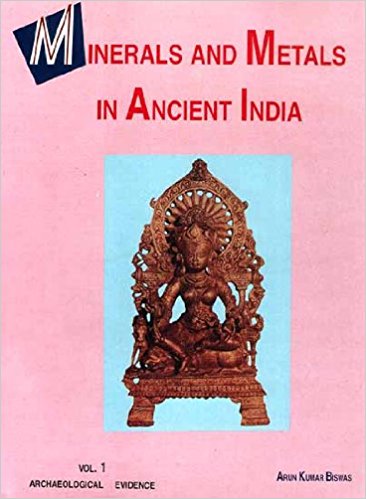
Minerals and Metals in Ancient India
Book
Biswas, A.K. and Biswas, S. (1994) Minerals and Metals in Ancient India. New Delhi, D.K. Printworld, 2 Vols., 524, 259 pp.
Sinkankas/Born No.: NIS / NIB | RWHL
corundum, history.1, India.12, gems, Indian lapidary
A two-volume study of the production and use of minerals and metals in the Indian subcontinent, this work brings archaeological evidence into comparison with indigenous literary traditions. Its geographical scope includes present-day India, Pakistan and Bangladesh, with occasional reference to neighbouring regions. The first volume, devoted to archaeological evidence, follows material culture from pre-Harappan settlements through the Harappan civilisation and later excavated sites to approximately AD 1200. Chronologically arranged accounts draw on excavation reports and scientific examinations of artefacts to discuss mineral use, mining, metal extraction, alloy preparation and the manufacture of objects. Sites ranging from Mehrgarh to Taxila provide evidence for changing technologies and the circulation of materials. Subsequent thematic treatments address mining, iron and steel, zinc and brass, and other aspects of metallurgical development. Gemstones and ornamental minerals receive substantial attention alongside metals, while Buddhist relic caskets and religious metal images illustrate the relationship between materials, craftsmanship and artistic production. The authors emphasise achievements in carburised iron, crucible steel, forge-welding and zinc metallurgy, presenting arguments for the importance and originality of Indian technological traditions. The second volume examines Sanskrit sources from the Rigveda to the early fourteenth-century Rasaratnasamuccaya, extending beyond the first volume’s provisional chronological limit. It considers Vedic writings, Panini, Kautilya and the Mahabharata, followed by the development of gemmological literature, alchemy and mineral-based medicine. Technical vocabulary is interpreted in the light of modern mineralogical and metallurgical knowledge, with acknowledgement that some identifications and textual dates remain disputed. Discussion of ratnasastra and rasasastra connects the classification and valuation of gems with the processing of minerals and metals for practical, medicinal and alchemical purposes. The concluding analysis compares literary claims with archaeological and historical evidence and considers the social and intellectual circumstances of scientific activity. Maps, figures, tables, photographs, references and indexes support the compilation. The work assembles a broad documentary record of ancient material knowledge, although its archaeological interpretations require critical use: a contemporary review identified reliance on outdated excavation reports, inconsistencies between the volumes and errors in some metallurgical descriptions.