
Four Treasures Reference Database
Record No. 5316
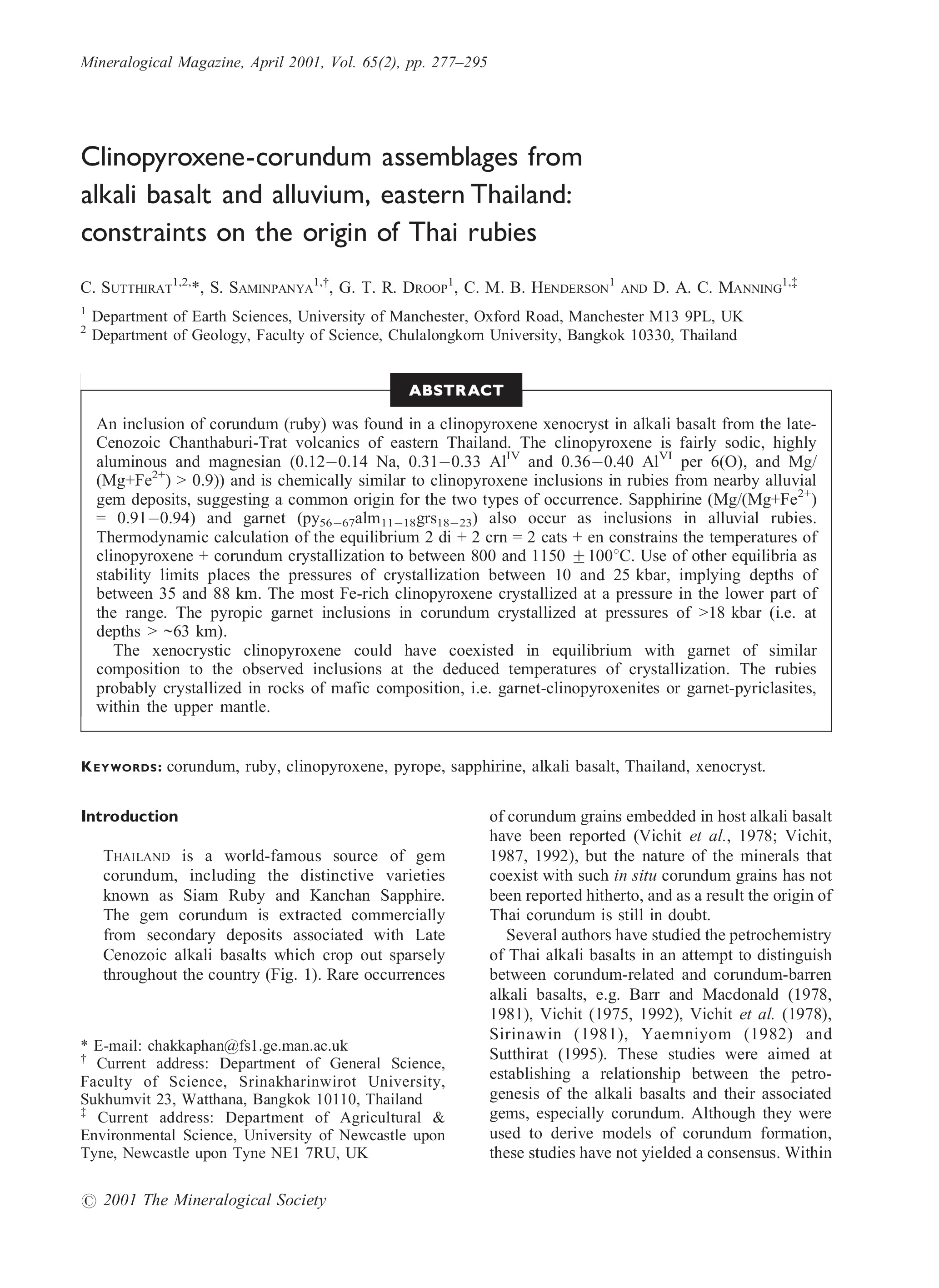
Clinopyroxene–corundum assemblages from alkali basalt and alluvium, eastern Thailand: Constraints on the origin of Thai rubies
Journal Article
Sutthirat, C., Saminpanya, S., Droop, G.T.R., Henderson, C.M.B. and Manning, D.A.C. (2001) Clinopyroxene–corundum assemblages from alkali basalt and alluvium, eastern Thailand: Constraints on the origin of Thai rubies. Mineralogical Magazine, Vol. 65, No. 2, pp. 277–295.
RWHL*
Close Abstract
Hide Keywords
Copy Reference
corundum, geology.11, Thailand.12, gems
A clinopyroxene xenocryst with an inclusion of ruby, found in alkali basalt from the Late Cenozoic Chanthaburi-Trat volcanic rocks of eastern Thailand, was chemically similar to clinopyroxene inclusions in rubies from nearby alluvial gem deposits. This suggests a common origin for both minerals. The clinopyroxene is fairly sodic, highly aluminous, and magnesian; sapphirine and garnet also occur as inclusions in the alluvial rubies. Thermodynamic calculations constrain the temperature of clinopyroxene + corundum crystallization to between 800° and 1150°C ± 100°C. Other equilibria indicate a pressure of crystallization of 10–25 kbar, implying depths of formation between 35 and 88 km. The rubies are presumed to have crystallized in rocks of mafic composition (i.e., garnet clinopyroxenites or garnet pyroclasites) within the upper mantle.RAH